Base
Hardened build
minimal ports, security patches applied at build time

PowerJob is a modern distributed task scheduling and computing framework that gives your teams one place to schedule, dispatch and monitor jobs across a fleet of worker nodes.
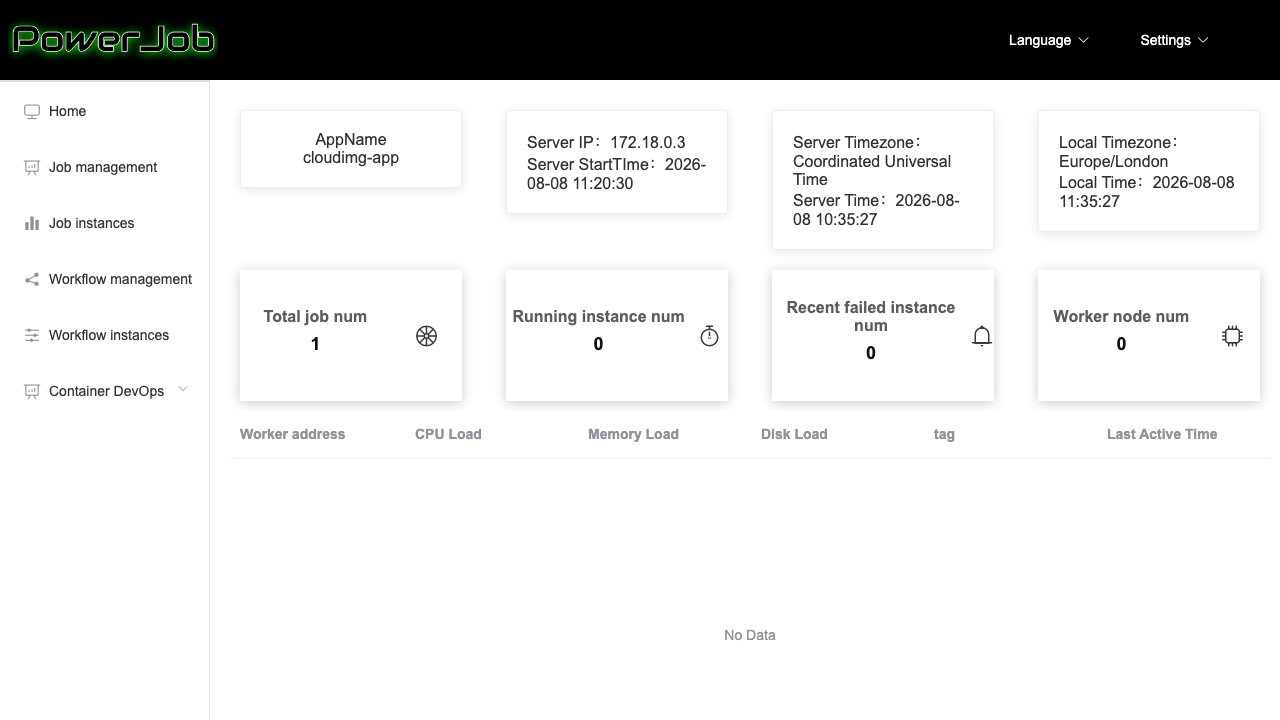
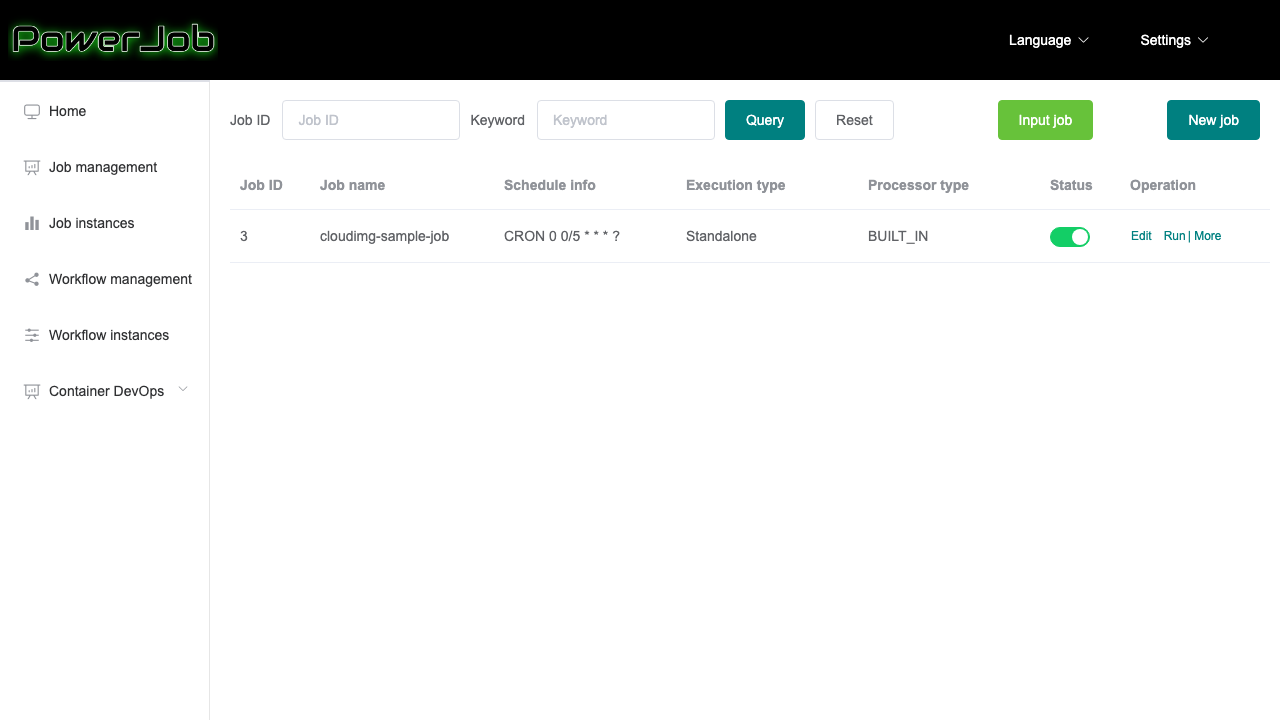
PowerJob is an open source, high performance distributed task scheduling and computing framework. It provides a central server with a management web console where you define, schedule and dispatch jobs, and lightweight workers, embedded as an SDK inside your own applications, that run those jobs. The console supports cron and fixed rate scheduling, several worker routing strategies, workflows that orchestrate jobs as a DAG, map and map reduce distributed processing, block and failover handling, run logs, alerting and a live dashboard of scheduling activity, so batch work, data pipelines and periodic tasks run reliably without a bespoke cron setup on every machine.
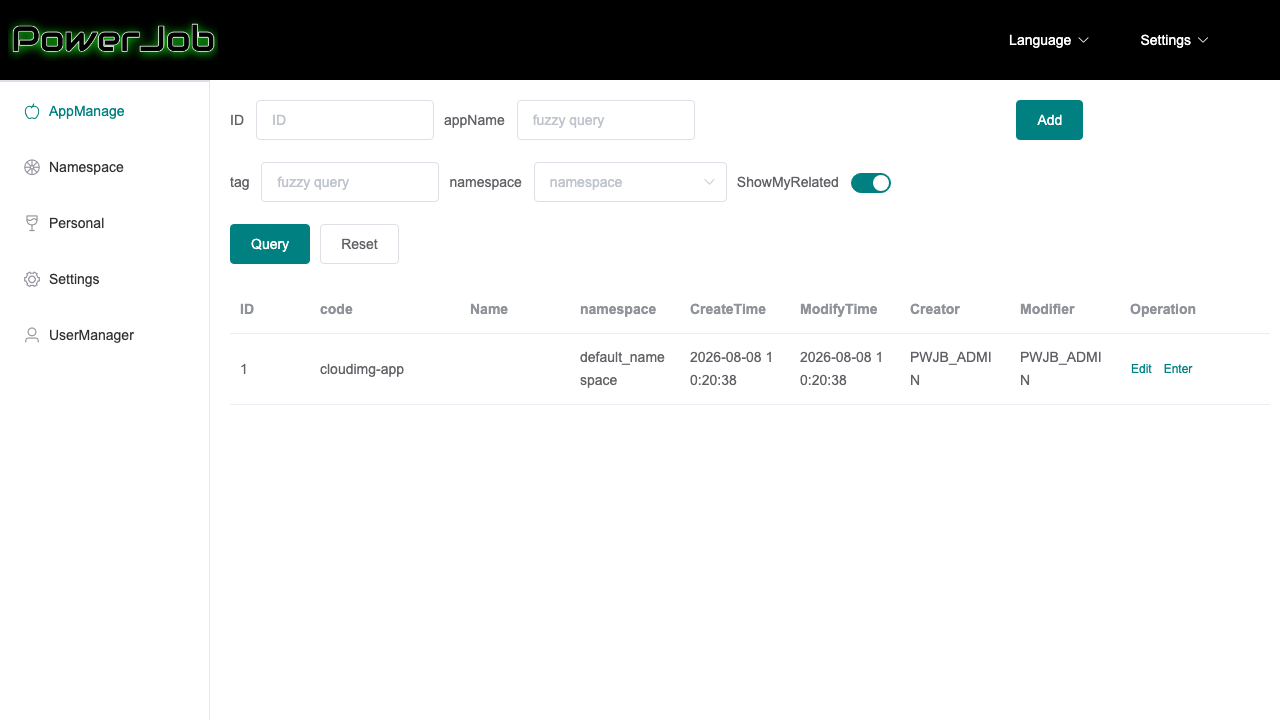
The server is a web application backed by a relational database that holds the scheduler's applications, jobs, instances and run history. You register your own worker applications against the console, then create jobs and route them to those workers, with full visibility of what ran, when and with what outcome. It is a self hosted alternative to ad hoc cron and homegrown schedulers for teams that want centralised control, workflow orchestration and auditing of their scheduled and distributed work.
Every cloudimg PowerJob instance rotates all of its secrets on first boot: the built in administrator password, the scheduler database password and a per instance worker application secret are each regenerated uniquely per instance, so no shared or default credential is ever live. This matters for a scheduler that can dispatch commands to your workers, where a known default admin or worker secret would be remote code execution across the fleet. The programmatic OpenAPI is authentication gated, the server runs as the vendor's official release container pinned by digest, the scheduler database is bound to the internal network only, and each build ships with a paired deployment guide and 24/7 cloudimg support.
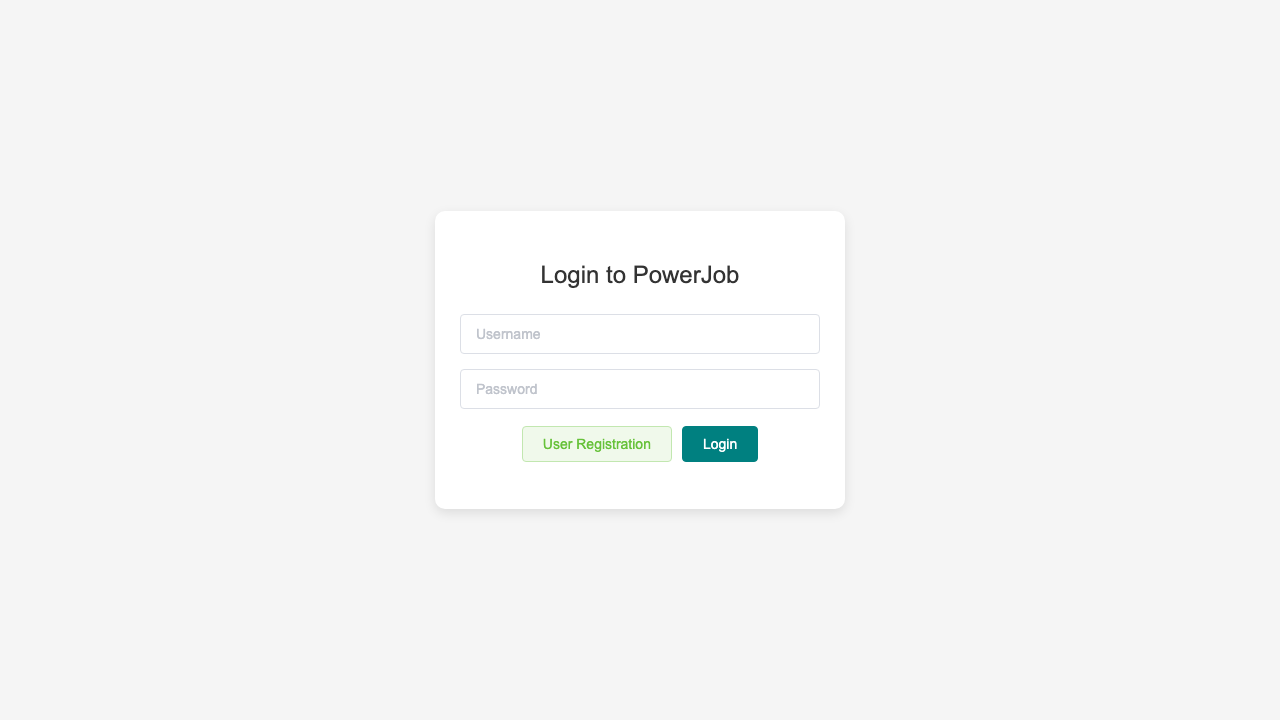
Real screenshots taken while testing this image against its deployment guide.

Docker Community Edition is the free, open source container runtime that allows you to package applications and their de...
Docker Community Edition preconfigured across several Linux variants, running containers within minutes of launch.

Self hosted GitLab CE with CI/CD, a container registry and Let's Encrypt SSL, preconfigured for AWS.

Around that core it adds a side by side editor with comments and a review state for each key, conflict detection when a ...
Apache Allura is the open source project hosting platform, or forge, that powers SourceForge.

This image runs Altair GraphQL Client 8.5.7, an open source GraphQL IDE, on Ubuntu 24.04 LTS.