Base
Hardened build
minimal ports, security patches applied at build time

a SPARQL 1.1 server exposing a persistent RDF triplestore over HTTP, with a built in web query and admin UI, ready to load and query RDF on first boot.
Apache Jena Fuseki is the SPARQL server from the Apache Jena project. It exposes a persistent RDF triplestore, backed by TDB2, over HTTP with SPARQL 1.1 Query and Update, the SPARQL Graph Store Protocol, and a built in web UI for running queries and managing datasets. It is a standards based back end for knowledge graphs, linked data and semantic web applications.
cloudimg ships Apache Jena Fuseki hardened and fully patched, running as a managed service over a persistent TDB2 store on its own dedicated data disk. The upstream default leaves every endpoint open and the admin console reachable only from localhost, so cloudimg replaces it with a hardened Apache Shiro policy: the admin UI and all dataset write endpoints require authentication, and a unique administrator password is generated on first boot and stored in a root only file. Every deploy is paired with a step by step guide and backed by 24/7 cloudimg support.
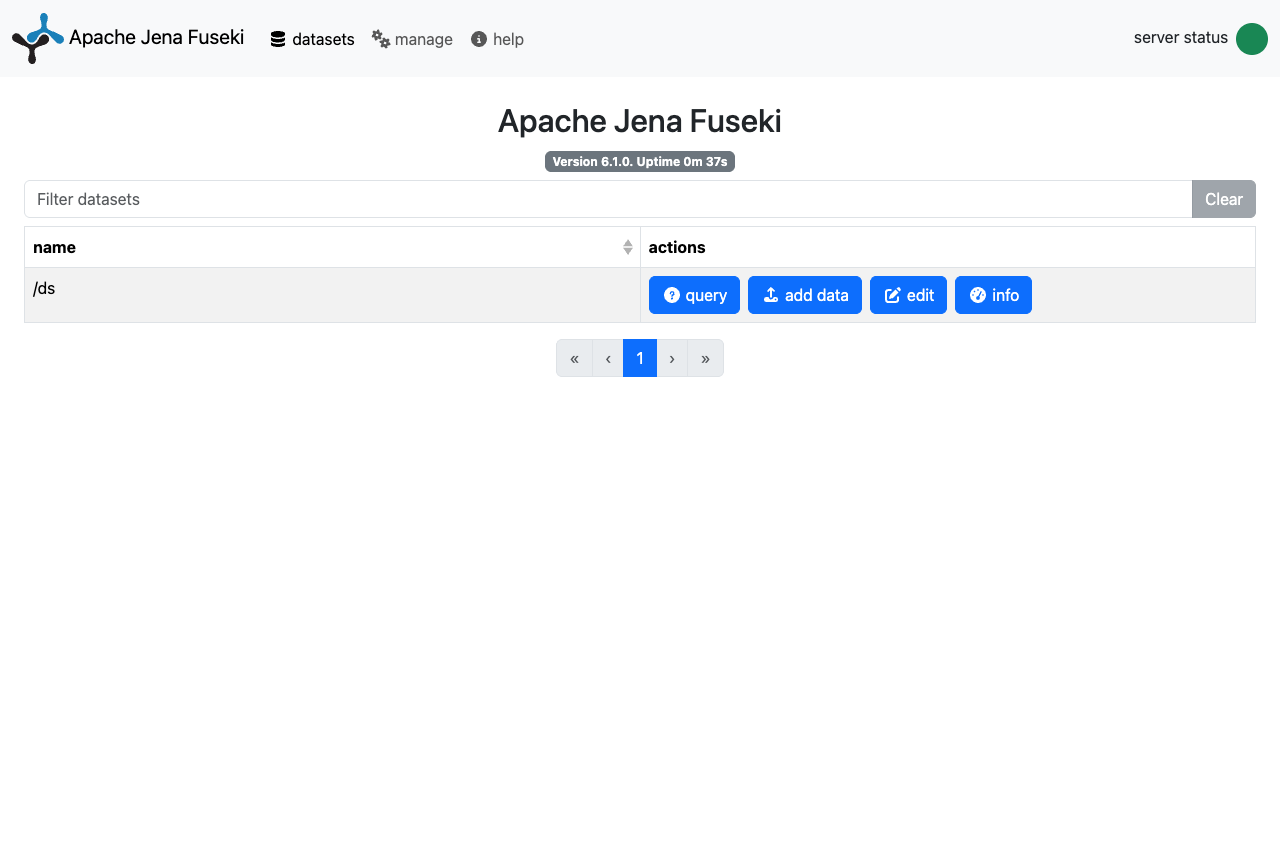
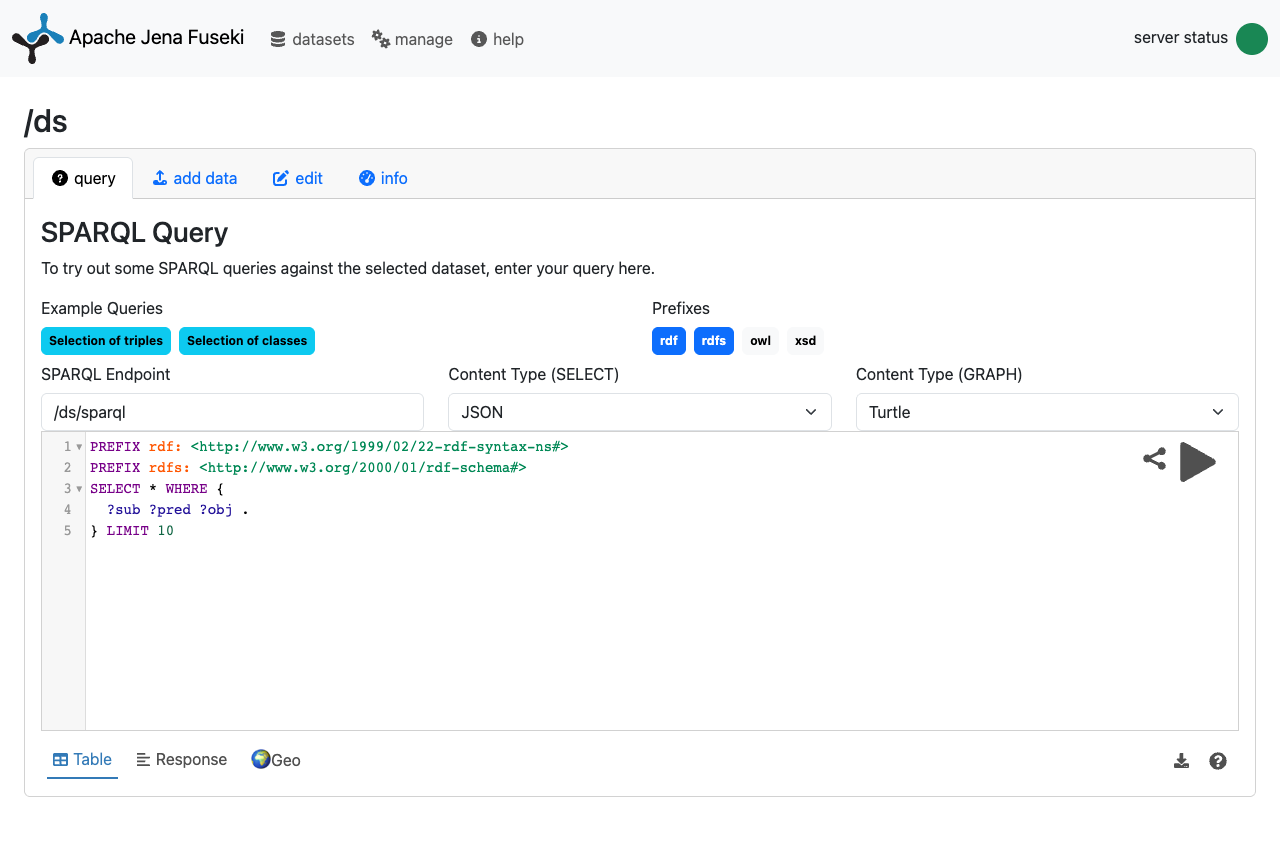
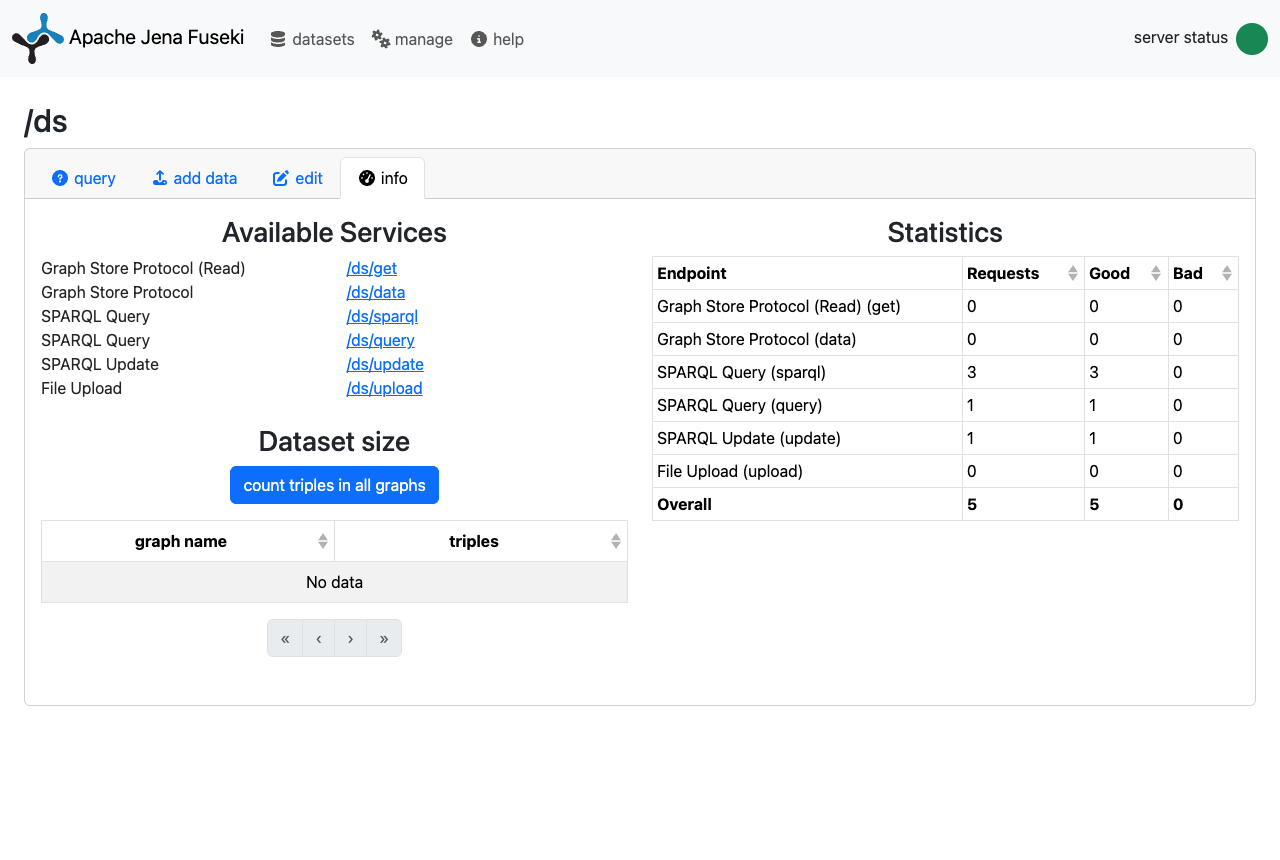
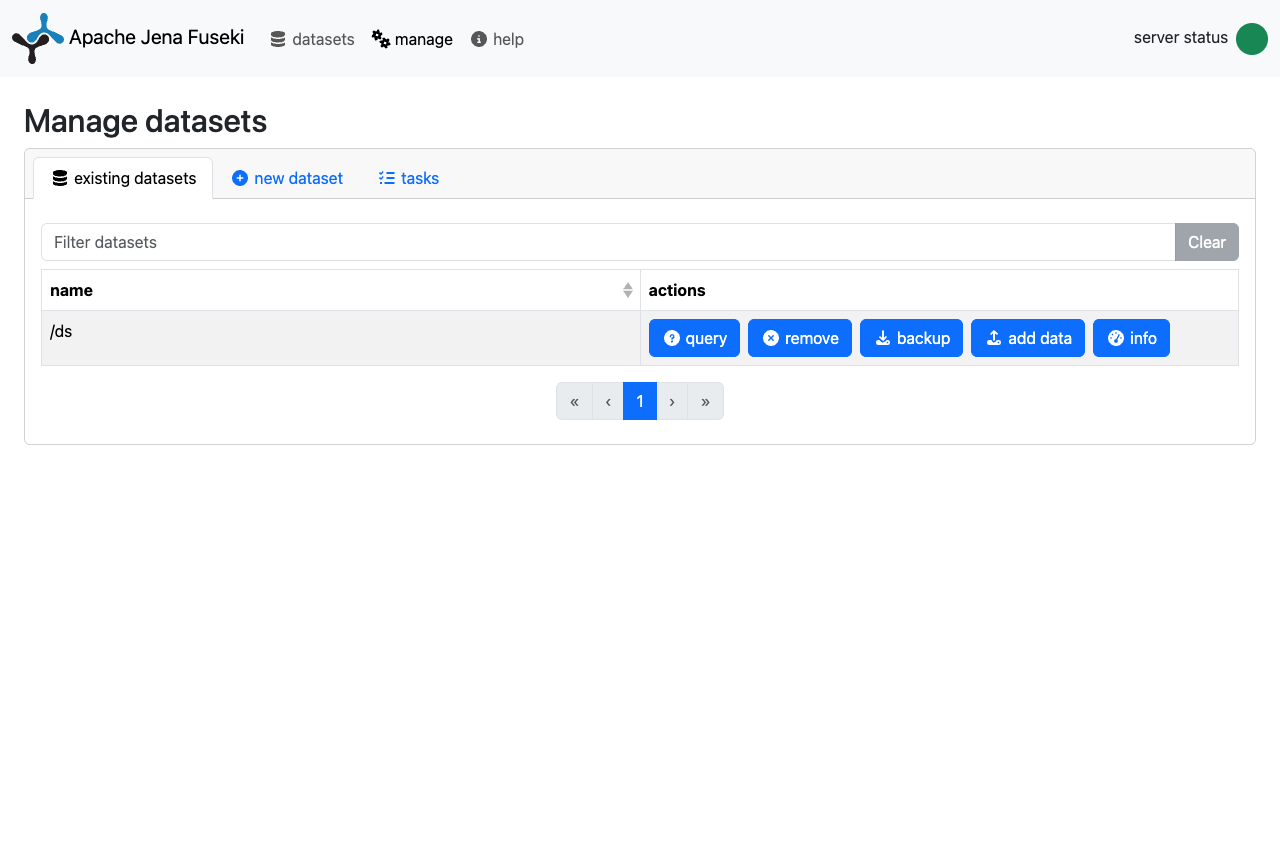
Real screenshots taken while testing this image against its deployment guide.
This is a repackaged open source software product wherein additional charges apply for cloudimg support services.
## Apache Jena Fuseki - Production-Ready SPARQL Server AMI
Deploy a fully configured SPARQL 1.1 server and RDF triplestore on AWS in minutes - not hours. This AMI delivers Apache Jena Fuseki preinstalled and running as a managed system service over a persistent TDB2 store, so you can load RDF data and run SPARQL queries and updates immediately after launch.
### Why This AMI Instead of a DIY Install
### Application Stack
### SPARQL 1.1 and RDF
The server exposes a SPARQL 1.1 Query endpoint, a SPARQL 1.1 Update endpoint and the SPARQL Graph Store HTTP Protocol over a persistent TDB2 dataset named ds. Point your applications, ETL jobs or the built-in web query editor at the endpoints and start querying and loading RDF (Turtle, N-Triples, RDF/XML, JSON-LD and more) immediately. Additional datasets can be created through the admin UI or by dropping assembler files into the configuration directory.
### Web Query and Admin UI
The Fuseki web UI is served on port 80 through nginx. Use the built-in SPARQL query editor to run queries against your datasets, upload RDF files, and inspect dataset statistics. Sign in with the generated administrator credentials to manage datasets, run backups, and access administrative functions.
### Security
Secure First Boot: A one-shot service generates a fresh administrator password unique to each instance, rewrites the Shiro user configuration, and stores the password in a root-only file. No shared or default credentials ship in the image.
Endpoint Hardening: The admin UI and API and every dataset write endpoint (SPARQL Update, Graph Store Protocol data and file upload) require HTTP basic authentication. Read-only SPARQL query endpoints and the UI stay open for easy evaluation; lock them down further in shiro.ini for production.
Encryption at Rest: The dedicated data disk holding the triplestore can leverage AWS EBS encryption. Enable EBS encryption when launching the instance or use encrypted snapshots.
Network Isolation: Deploy in a private VPC subnet and use security groups to restrict access to only the ports your clients require (80 for the web UI, 3030 for direct Fuseki access).
### Use Cases
### Evaluation Path
Launch this AMI on a small instance type to evaluate the server with minimal AWS infrastructure cost. The server is fully functional on any supported instance size, allowing you to validate SPARQL query and update, RDF loading, UI access and authentication before scaling up for production workloads.
### 24/7 cloudimg Support
Technical support by email and live chat covers server deployment, dataset and endpoint configuration, TDB2 tuning and backups, Shiro authentication and TLS setup, and JVM administration.
All product and company names are trademarks or registered trademarks of their respective holders. Use of them does not imply any affiliation with or endorsement by them.

This image runs Apache AGE, the open source extension that adds graph database functionality and the openCypher query la...

This image runs Apache Cassandra, the open source distributed NoSQL database built for scalability and high availability...

This image runs Apache CouchDB, the open source document oriented NoSQL database, on a single node.

Apache Doris is an easy-to-use, high-performance, unified analytical (OLAP) database for real-time analytics at scale.
This image runs Apache IoTDB, the high-performance, lightweight open source time-series database purpose-built for IoT a...

Apache Kvrocks is a distributed, persistent key-value NoSQL database built on RocksDB and fully compatible with the Redi...