Base
Hardened build
minimal ports, security patches applied at build time

BaGetter, a lightweight self-hosted private NuGet feed server, ready to host and serve your own .NET packages from first boot.
BaGetter is a lightweight, self-hosted server for hosting your own private NuGet package feed. It implements the standard NuGet v3 protocol, so any .NET toolchain can restore from it and push to it with the tools developers already use, and it presents a clean, browsable web gallery for searching packages, reading their metadata and dependencies, and copying install commands. Packages and their symbols are stored on the server you control, with metadata in a self contained database and package files on local disk. It can also mirror packages from the public nuget.org feed on demand, so a build that asks for a public package is served a locally cached copy, giving a team a fast, resilient, single source for both its private and public dependencies.
It suits teams and individuals who want their private .NET libraries to stay on infrastructure they own: an internal package feed for a company's shared libraries, a caching proxy in front of nuget.org for reliable and fast restores, or a private feed for open source authors who publish their own packages.
cloudimg delivers BaGetter fully installed and configured behind nginx, so the web gallery and the NuGet v3 API answer the moment the instance boots with nothing to assemble. It ships secure by default with no shared credential: upstream BaGetter allows anyone to push packages by default, so on the first boot of every instance a unique push API key is generated and written to a root only file, and the feed refuses to start until that per instance key is in place, so no two instances share a key and none is ever baked into the image. Package browsing and restore stay open for your network while pushing is gated by the key. The package store and its database live on a dedicated data volume that is captured into the image and re provisioned on every instance, the base is fully patched with unattended security upgrades enabled, and every deployment is paired with a step by step deploy guide, backed by 24/7 cloudimg support.
Real screenshots taken while testing this image against its deployment guide.
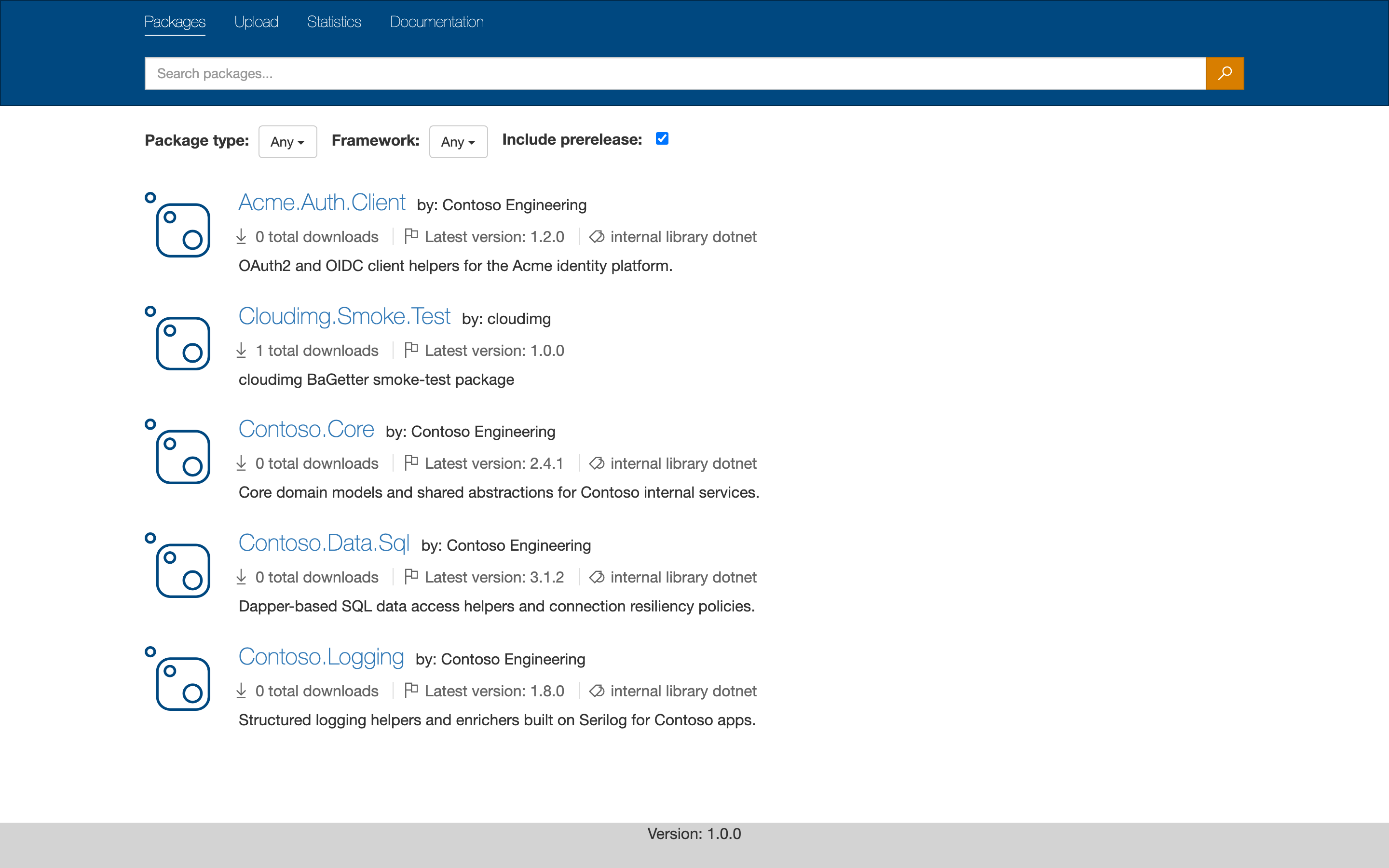
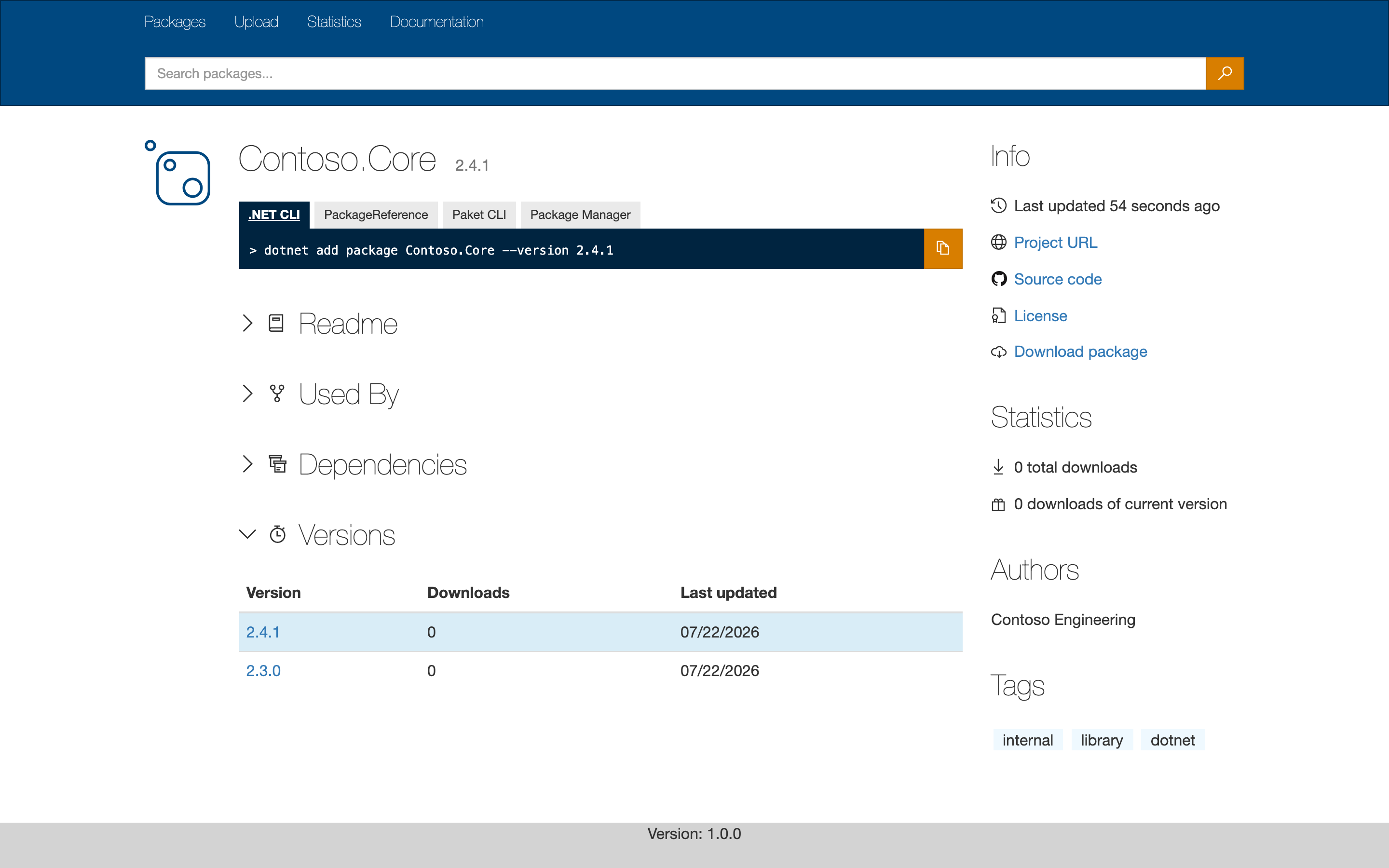
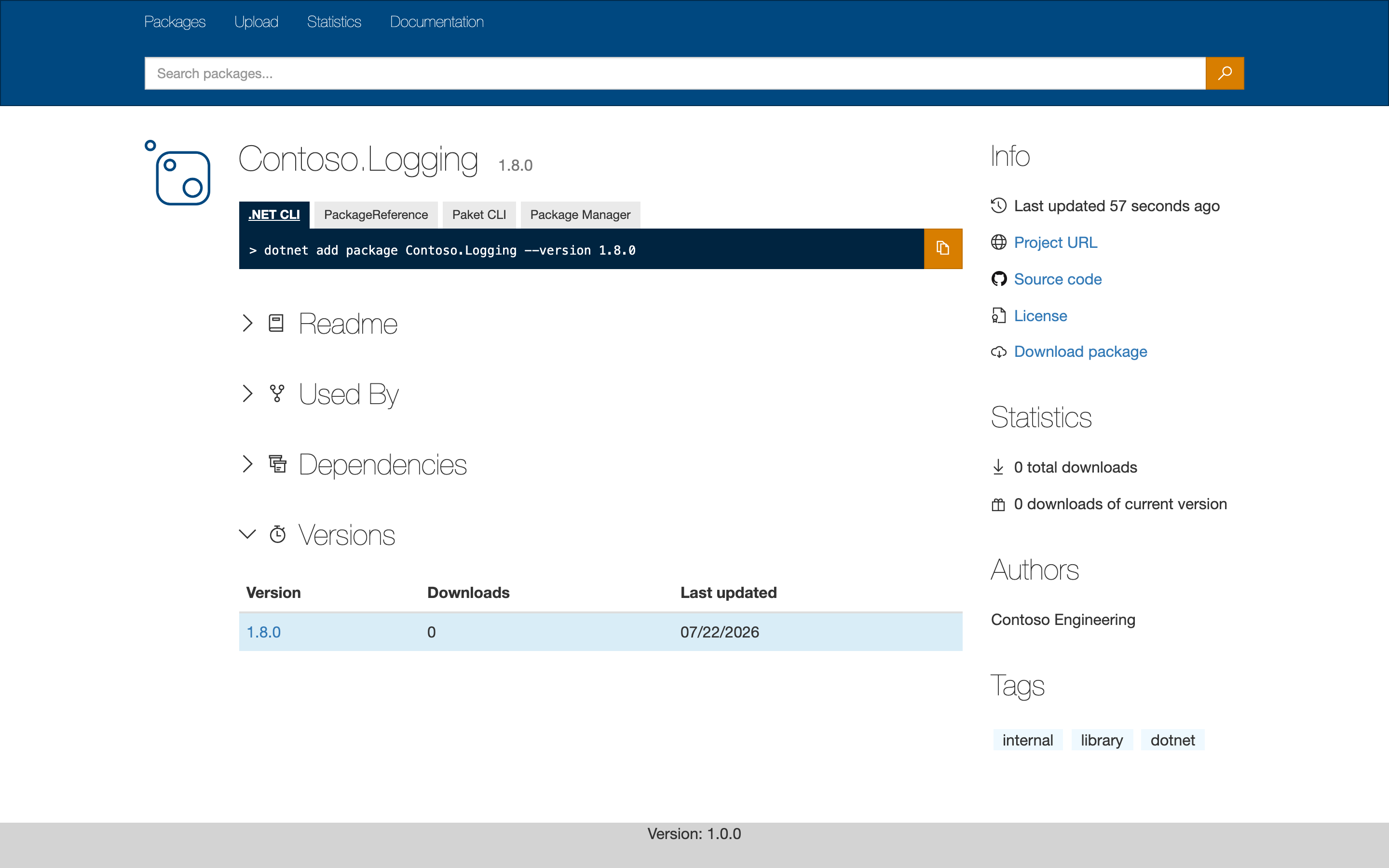
This is a repackaged open source software product wherein additional charges apply for cloudimg support services.
## Why This AMI Instead of Self-Deploying?
BaGetter is a lightweight, self-hosted, open source NuGet package feed server. It hosts your organisation's private .NET packages, exposes the standard NuGet v3 service index that any NuGet client can restore from, and provides a browsable web gallery for discovering what is published. Deploying it yourself means installing a .NET runtime, building or publishing the application, running it as a hardened service, generating and wiring up a push API key so the feed is not open to anonymous uploads, and putting a TLS reverse proxy in front so the gallery and API are never served in the clear. This AMI eliminates that effort entirely - a working, secured NuGet feed is running within minutes of launch, not hours, and is backed by 24/7 expert support.
The current release available is BaGetter 1.6.5.
## What This Image Ships
BaGetter is served by a dedicated unprivileged system user under systemd with automatic restarts, clean logging and a hardened service sandbox. It stores package metadata in SQLite and package content on the filesystem, both placed on a dedicated data volume that is separate from the operating system disk so your published packages are independently resizable and snapshottable. The web gallery and the NuGet v3 API are the same standard endpoints every NuGet client already understands, so pushing and restoring packages works with the tools your developers use today.
## Secure By Default
A stock NuGet server can accept anonymous package uploads if no push key is configured, which means anyone who can reach it can publish or overwrite packages. This image eliminates that risk:
## Ready To Use
Browse to the instance over HTTPS on port 443 to explore the gallery, add the service index as a restore source in your NuGet client, and push packages with the generated API key. An unauthenticated health endpoint is provided for load balancer probes, so monitoring needs no credential even though package push does.
## What You Avoid By Using This AMI
## cloudimg Support
24/7 technical support by email and chat with a one-hour average response for critical issues. Our engineers help with deployment, connecting NuGet clients, TLS termination, upstream mirroring, backups and scaling.
## Use Cases
BaGetter is a trademark of its respective owner. All product and company names are trademarks or registered trademarks of their respective holders. Use of them does not imply any affiliation with or endorsement by them.
This image runs Apache Archiva, the open source build-artifact repository manager - a central, governed store for the bi...

Apache JMeter is the de-facto open-source tool for load and performance testing of web applications, APIs, databases and...

This image runs Appsmith Community Edition, the open source low-code platform for building internal tools, admin panels,...

This image runs Atlantis 0.46 (Apache-2.0), the open source server that automates Terraform and OpenTofu pull request wo...

Pre-configured self-hosted Atuin sync server: an end-to-end-encrypted, searchable shell-history sync backend for the Atu...

This image runs Beszel, the open source, lightweight server and container monitoring hub - a clean web dashboard with hi...