Base
Hardened build
minimal ports, security patches applied at build time

open source observability for machine learning, LLM and data pipelines, preinstalled and password gated by cloudimg
Evidently is an open source platform for evaluating, testing and monitoring machine learning, large language model and data pipelines. It computes data drift, data quality and model performance reports over your datasets and renders them in an interactive dashboard, storing each report as a versioned run inside a project so you can track how your data and models change over time.
cloudimg ships Evidently as a systemd service behind an nginx reverse proxy with a unique dashboard password generated on first boot, because the open source dashboard has no login of its own. The workspace of projects and report snapshots lives on a dedicated, independently resizable data volume that survives instance replacement, a demo report is seeded so the dashboard shows real data at first login, and every image is paired with a step by step deploy guide and backed by 24/7 cloudimg support.
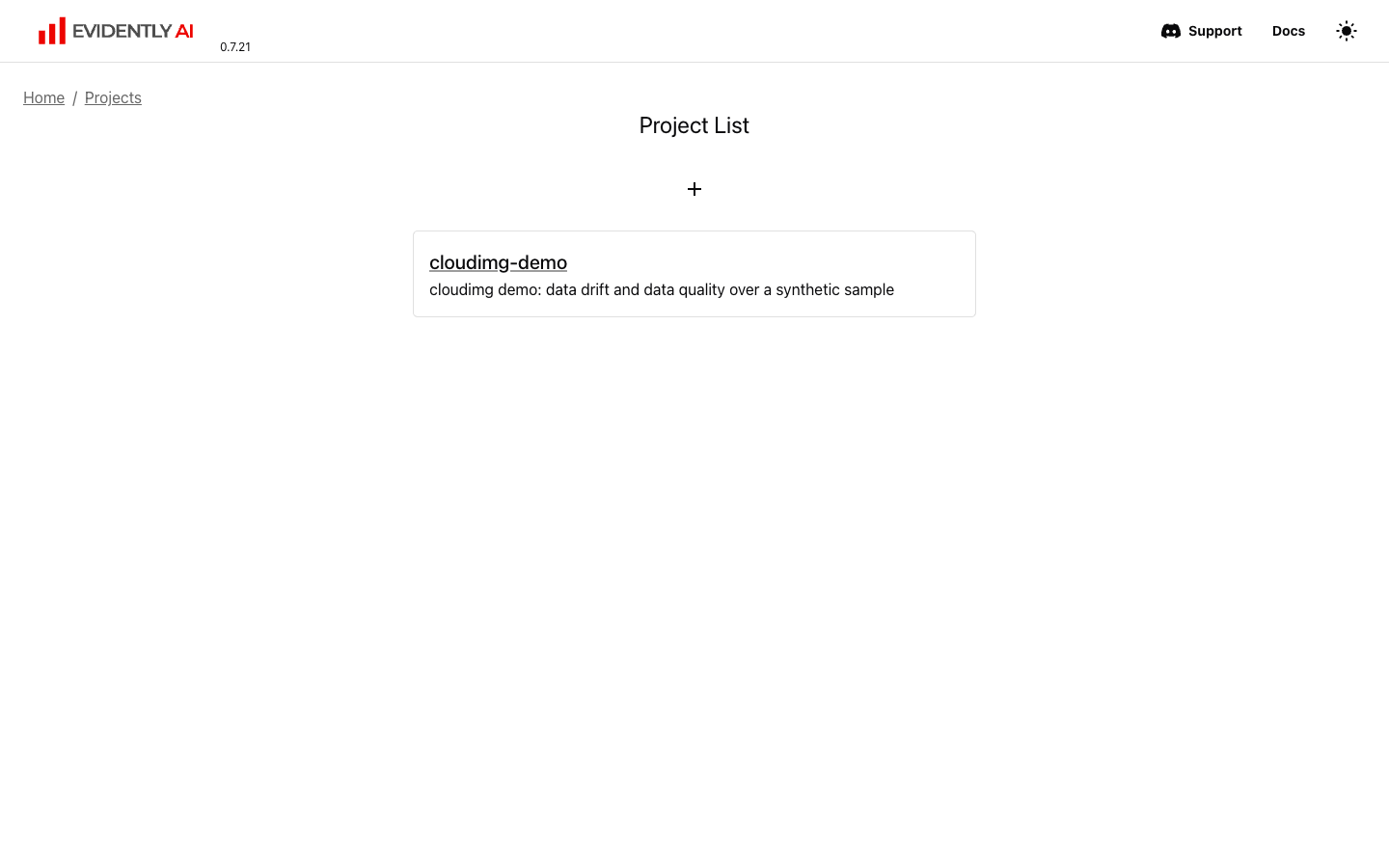
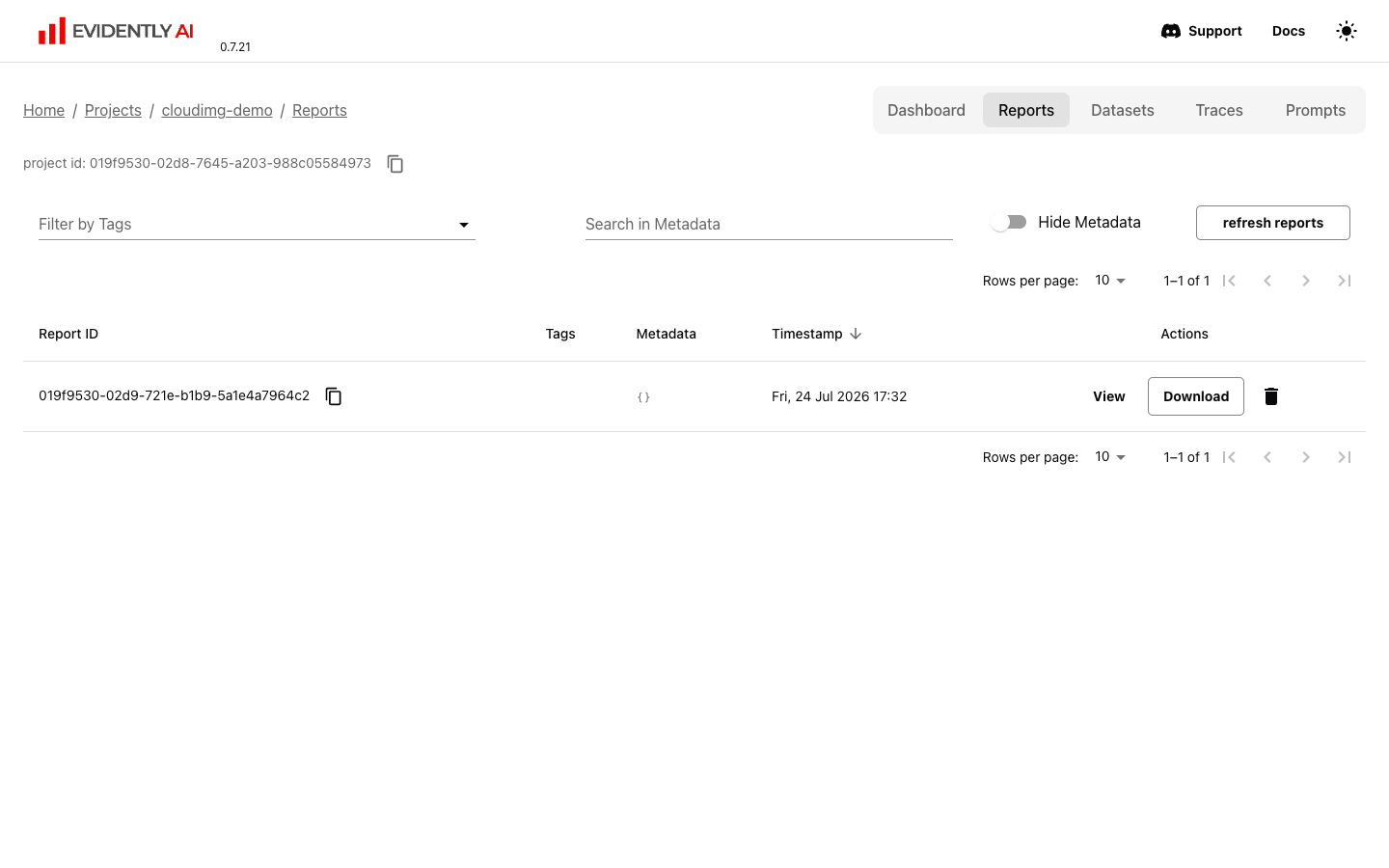
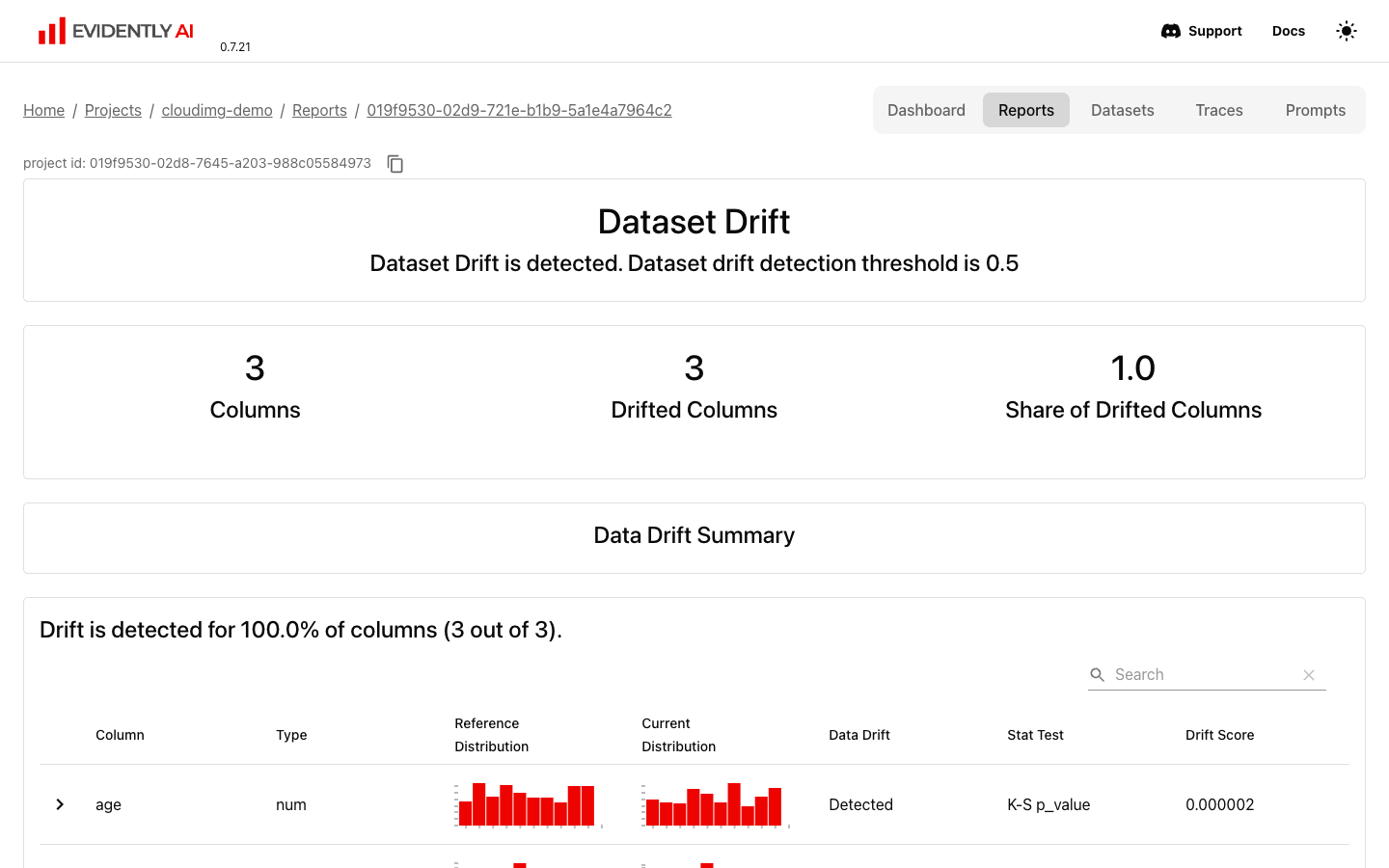
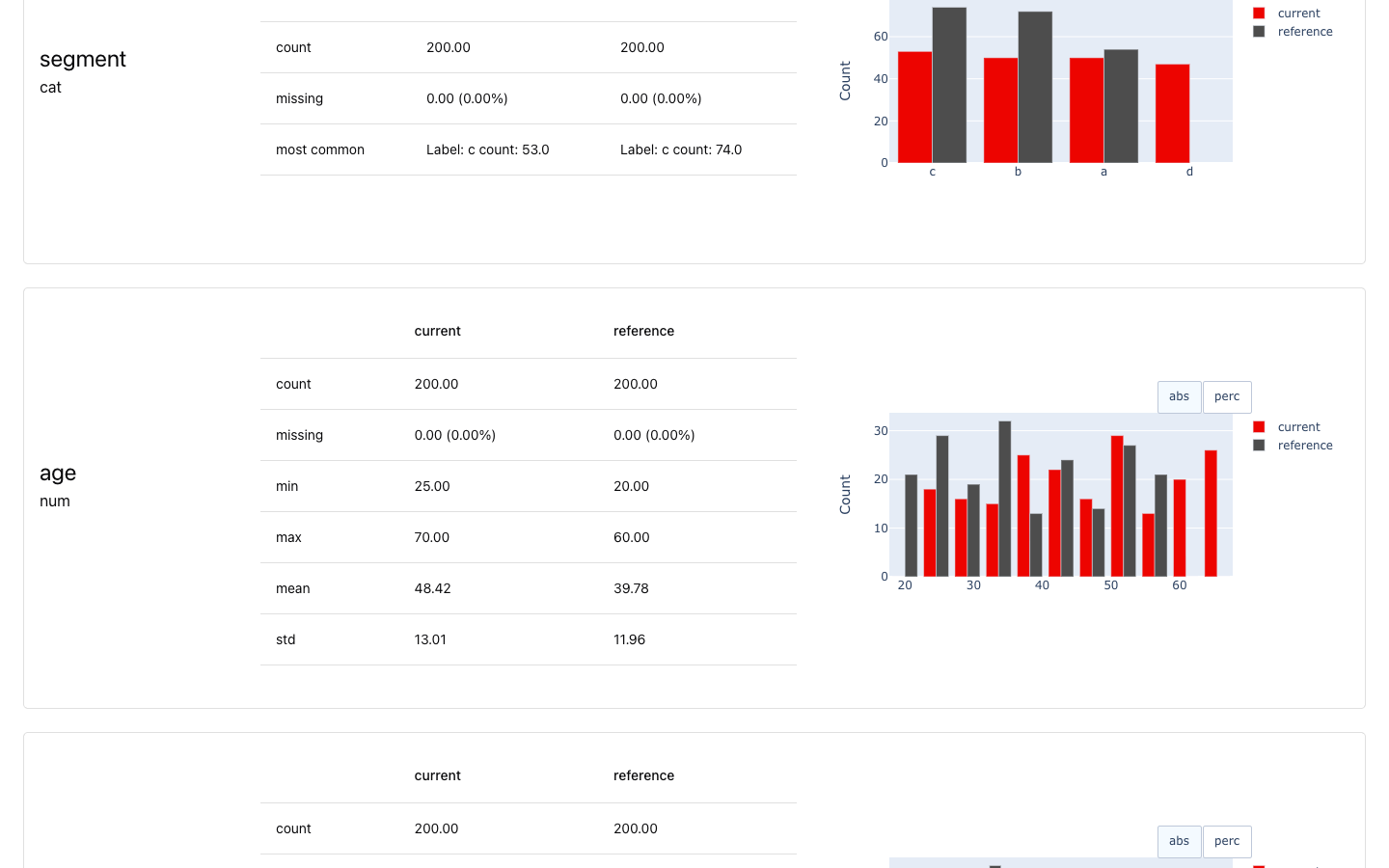
Real screenshots taken while testing this image against its deployment guide.
This is a repackaged open source software product wherein additional charges apply for cloudimg support services.
## Evidently ML Observability Platform - Preinstalled and Production-Ready
Evidently is an open source platform for evaluating, testing, and monitoring machine learning, large language model, and data pipelines. This image delivers Evidently fully installed and configured as a system service on EC2, so a private observability dashboard is running within minutes of launch - no manual setup, no Docker orchestration, no dependency troubleshooting.
## Why This Image Over a Manual Install
Installing Evidently from source requires configuring Python environments, setting up process supervision, configuring a reverse proxy, provisioning storage, and implementing authentication - the upstream project ships no login mechanism. This image eliminates that entire workflow:
## Real Data on First Login
The open source Evidently UI ships empty. On first boot, a one-shot service seeds a demo project containing a genuine data drift and data quality Report over a synthetic sample. The dashboard shows a real, explorable Report the moment you log in rather than a blank workspace. To monitor your own data, compute Evidently Reports over your datasets with the bundled Evidently Python SDK and add their snapshots to a project in the workspace.
## Secure First Boot
On first boot a one-shot service generates a fresh dashboard password unique to that instance, stores it as a bcrypt hash in an nginx HTTP Basic Auth file, and writes the plaintext password to a root-only file. Unauthenticated requests to the dashboard are refused; an unauthenticated health endpoint is exposed for load balancer probes only. No shared or default credentials ship in the image, and the round trip is verified on every boot.
## Security Practices
## Use Cases
## Getting Started
1. Launch the AMI from AWS Marketplace
2. SSH into the instance and retrieve your unique dashboard password from the root-only file
3. Open port 80 in your browser, sign in, and explore the seeded demo Report
4. Install the Evidently Python SDK in your pipeline environment and push Report snapshots to the workspace
For a guided pilot deployment or instance sizing consultation, contact the cloudimg team through the support channels listed on this page.
## Evaluation Resources
The seeded demo project serves as a hands-on evaluation artifact - explore a real data drift and data quality Report immediately after launch without writing any code. When ready to evaluate with your own data, use the bundled Evidently Python SDK to compute Reports over CSV files and Pandas DataFrames; the seeded demo project's own generator script ships on the image as a working example.
## About cloudimg
cloudimg provides 24/7 technical support by email and live chat. Our engineers help with deployment, workspace configuration, building data drift and model quality Reports, wiring Evidently into batch or streaming pipelines, TLS configuration, data disk resizing, and runtime performance tuning.

ContextForge MCP Gateway is IBM's open-source gateway, registry and proxy for the Model Context Protocol (MCP), the stan...

This image runs Crawl4AI, a fast, open source web crawler and scraper that converts web pages into clean, LLM-ready Mark...

This image runs Dify, a source-available platform for building and operating LLM applications.

Docling Serve is the HTTP API service around Docling, an open source toolkit that converts documents into clean, structu...

The image installs Gorse as the official single all in one gorse-in-one binary (master, server and worker in one process...
This image runs Infinity 0.0.77, the high-throughput, low-latency server for text embedding and reranking models (michae...