Base
Hardened build
minimal ports, security patches applied at build time

an API key pool manager and transparent relay that puts many LLM provider keys behind one endpoint
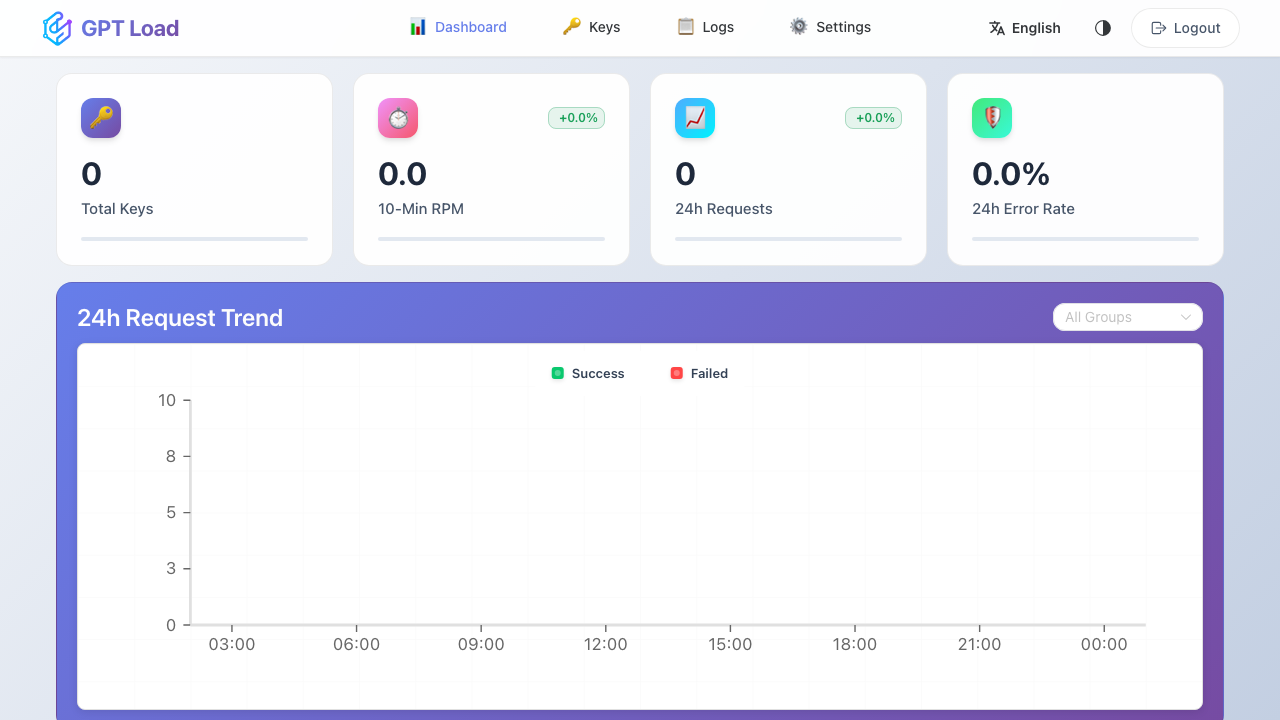
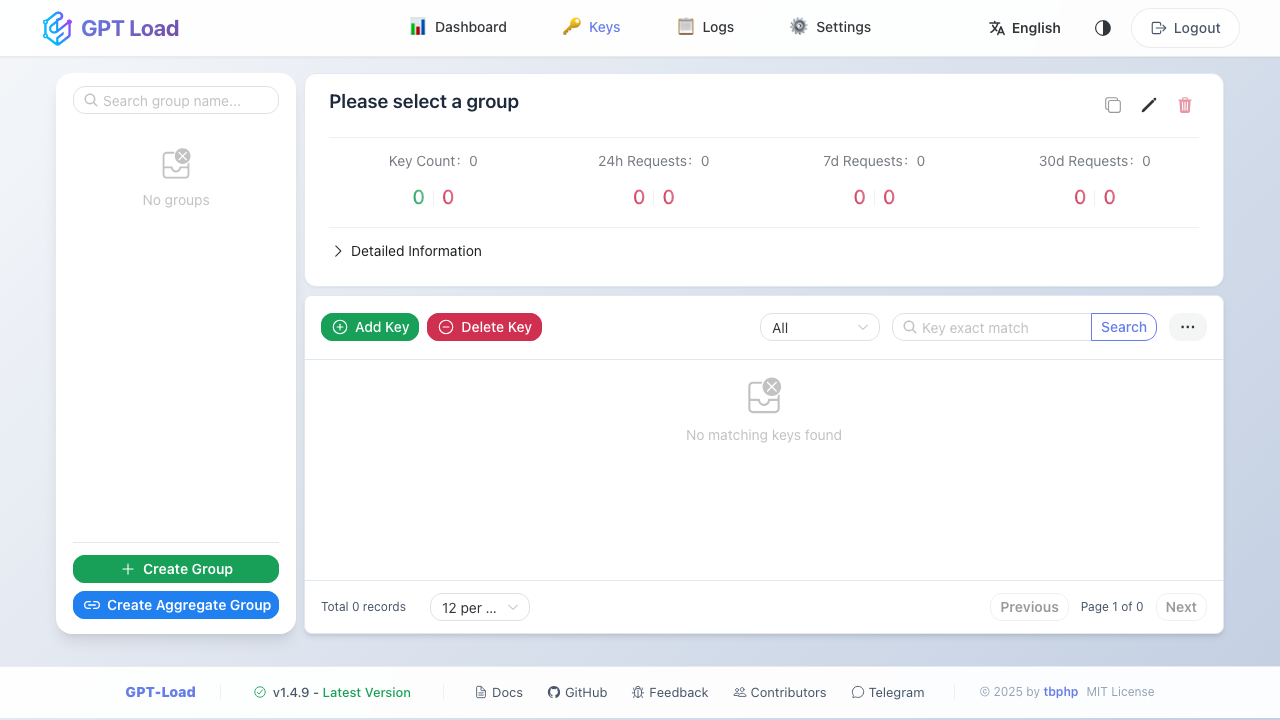
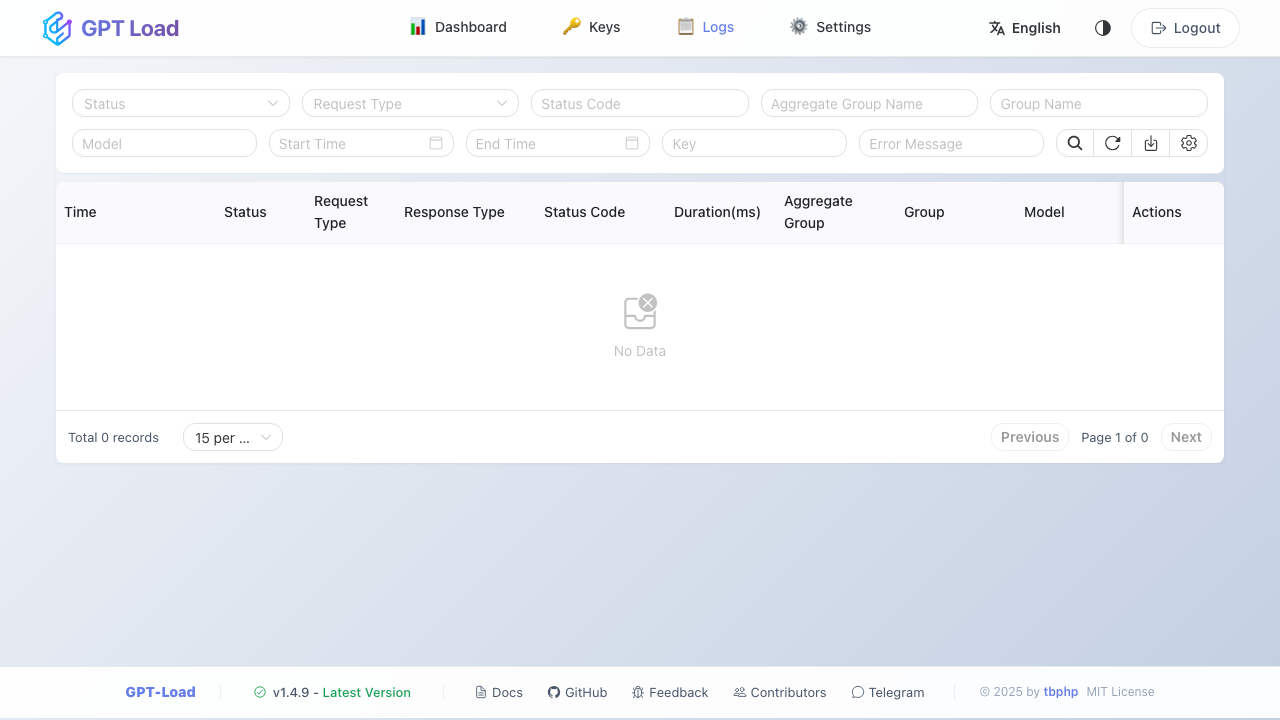
GPT-Load is an open source, high performance API key pool manager and transparent relay for large language model providers. You give it many API keys for a provider and it gives your applications a single endpoint to call. Each request is forwarded natively, with no protocol translation and no rewriting of the response, so streaming and provider specific fields arrive exactly as the provider sent them. Behind that endpoint GPT-Load rotates across the pool, health checks every key in the background, blacklists keys that begin to fail and applies per group rate limits, and it records every relayed call with its group, the key used, the response status and the latency. It is a single Go executable with its management dashboard compiled in and its state held in an embedded database, so there is no separate database server, cache server or container runtime to operate. It suits teams who have accumulated many keys for one provider and want quota headroom, failover and visibility without changing a line of client code.
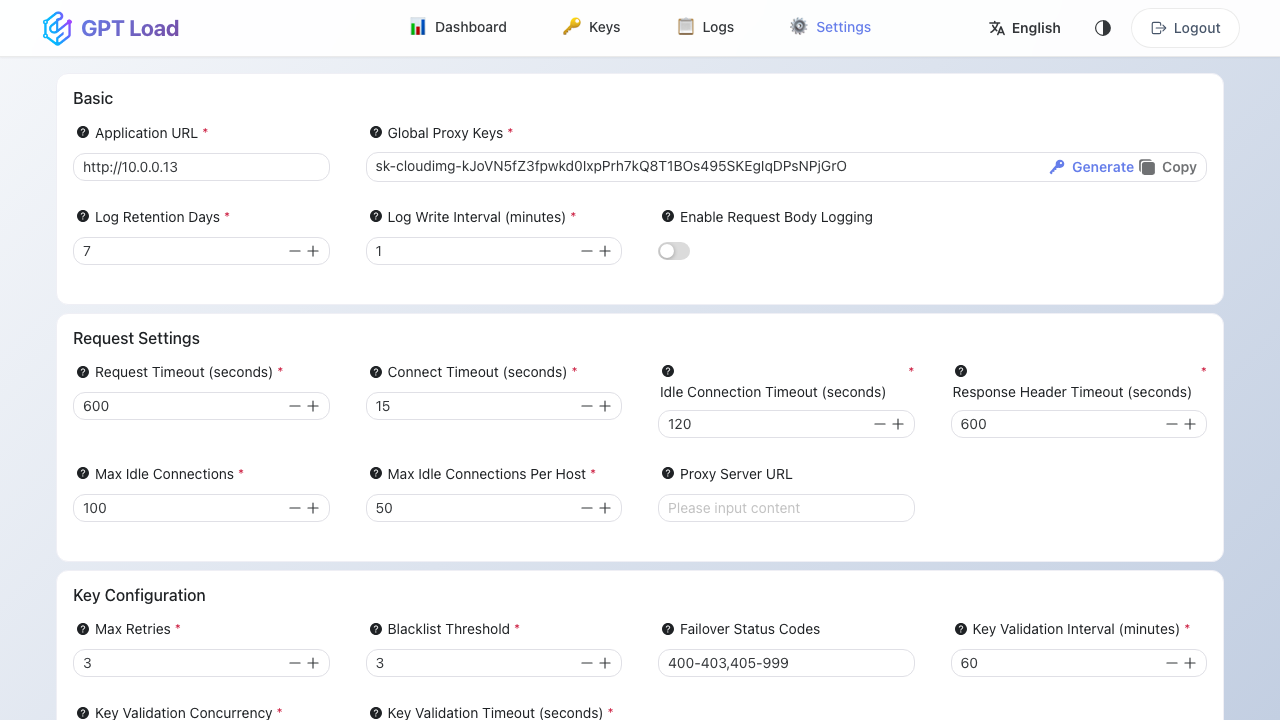
The upstream project is written to sit behind a perimeter you provide, so out of the box its dashboard, its health endpoint, its static assets and any unmatched path all answer an anonymous caller, and its own authentication is fail open on two routes. cloudimg closes that before the port is ever reachable: an nginx gate denies by default at server scope, GPT-Load itself is bound to loopback so it is never reachable directly, and the gate refuses to start at all until first boot has generated this virtual machine's secrets and proved the denial, so the appliance is closed rather than open even when something goes wrong. The recorded anonymous reachability of the stock upstream build ships on the image so you can see exactly what was closed. No provider key and no default password exist anywhere in the image; every credential is generated uniquely on each virtual machine at first boot, stored in a root only file, and pooled provider keys are encrypted at rest. Your applications keep working unchanged because the gate accepts the one per instance credential in all five idioms GPT-Load's own clients already send. The release binary is pinned by SHA-256 and tied to its upstream release commit, all 352 dependencies compiled into the product were examined and none is restrictive, and every deployment is fully patched with a paired deploy guide and 24/7 cloudimg support.
Real screenshots taken while testing this image against its deployment guide.

Upstream ships Agent Zero as a Docker image. This VM runs that official image, pinned by its digest, as a systemd manage...

This image runs Argilla 2.8.0, the open source data annotation and curation platform for building high quality datasets ...

Because the endpoint is OpenAI compatible, existing application code usually needs only a base URL change.

A web interface lets you add data to "brains" (datasets), explore the extracted graph as a mind map and ask questions.

ContextForge MCP Gateway is IBM's open-source gateway, registry and proxy for the Model Context Protocol (MCP), the stan...

Crawl4AI is a fast, open source web crawler and scraper that converts web pages into clean, LLM ready Markdown and struc...