Base
Hardened build
minimal ports, security patches applied at build time

Skip hours of manual broker setup - launch a hardened Apache RocketMQ instance with unique credentials and start messaging in minutes, backed by 24/7 cloudimg support.
This image arrives installed, configured and hardened, so there is no manual setup before you can use it. It is built on a patched base, runs with credentials generated uniquely for your instance on first boot, and passes an automated health check before every release. Every deployment is backed by 24/7 support from cloudimg engineers.
Real screenshots taken while testing this image against its deployment guide.
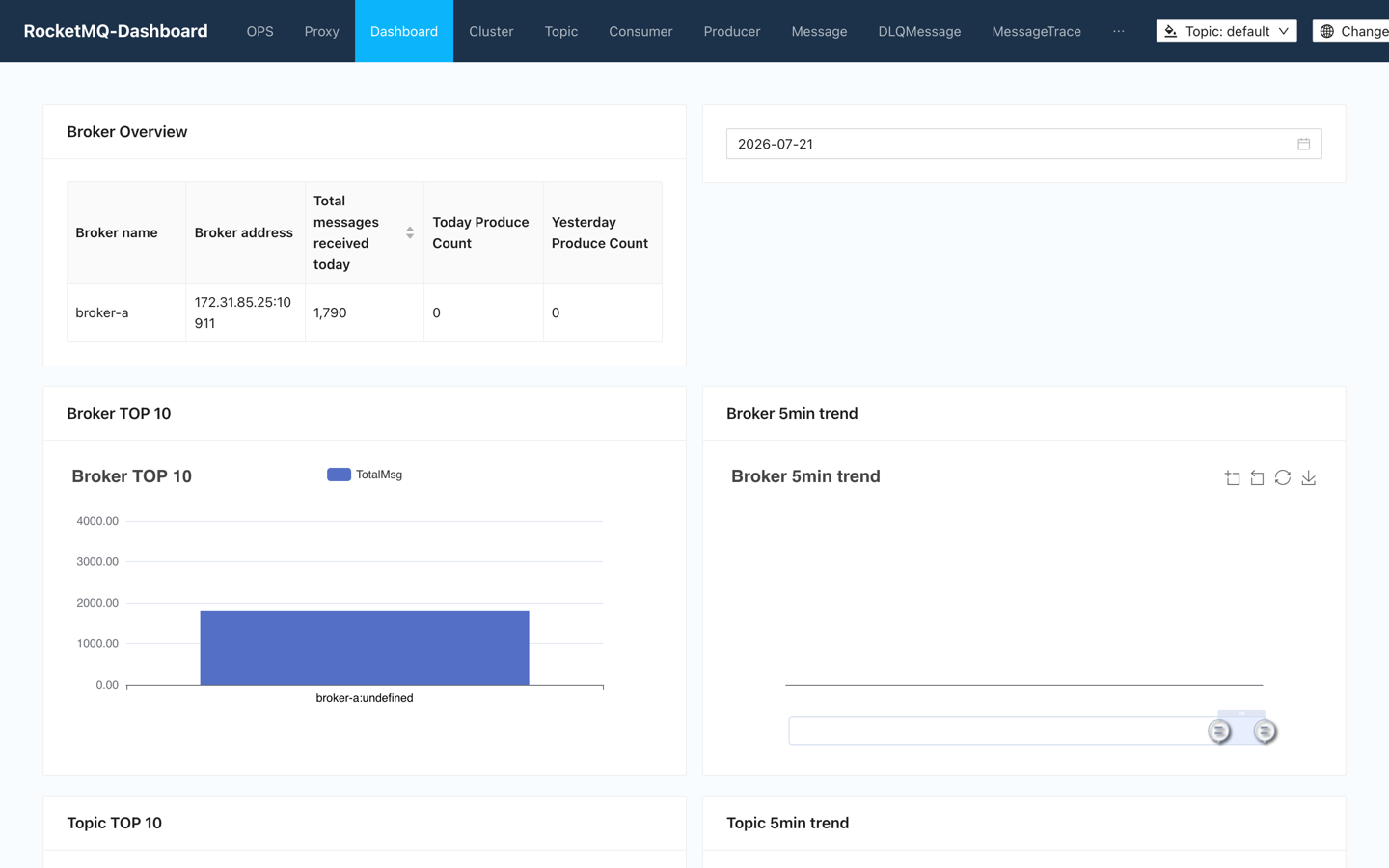
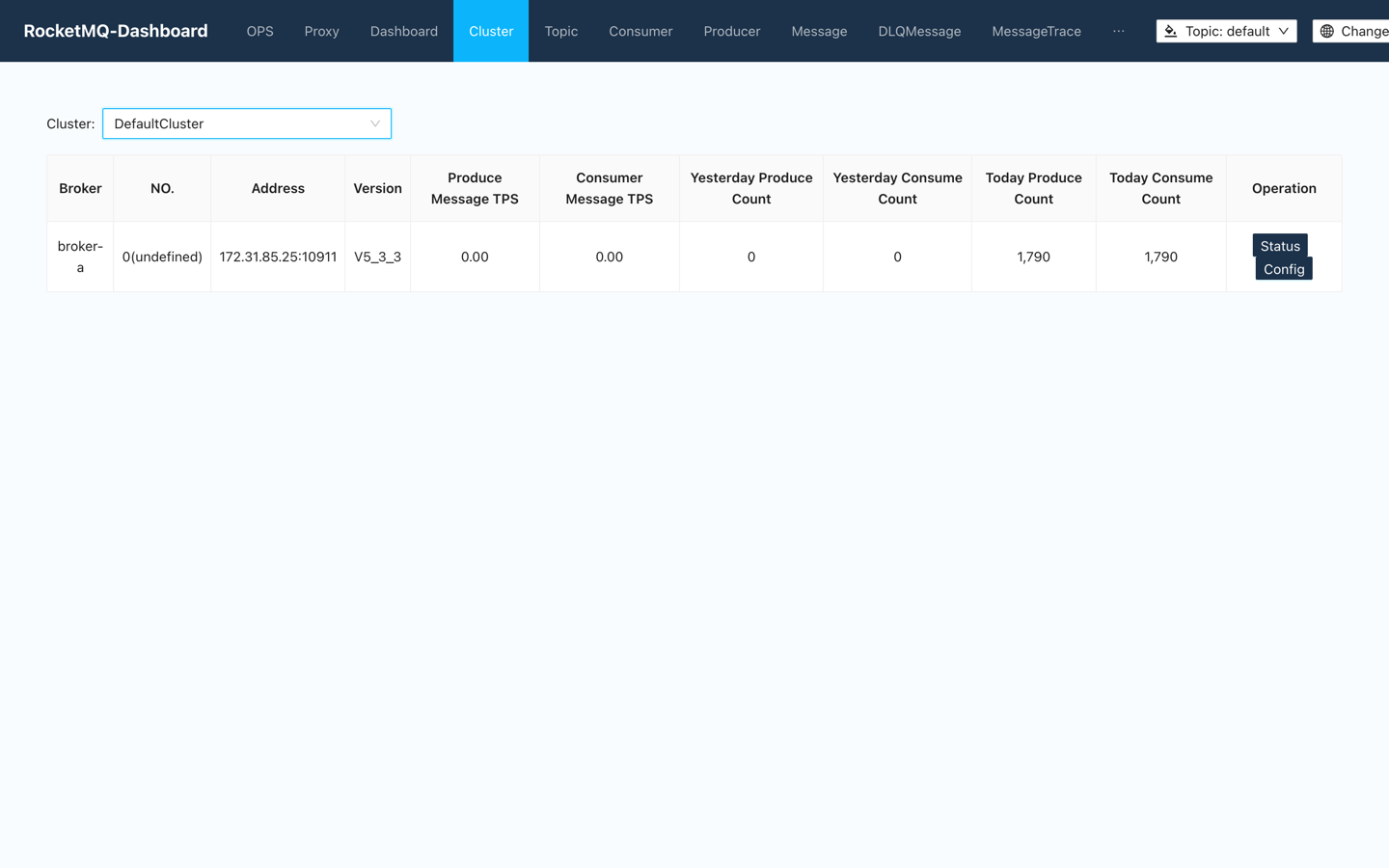
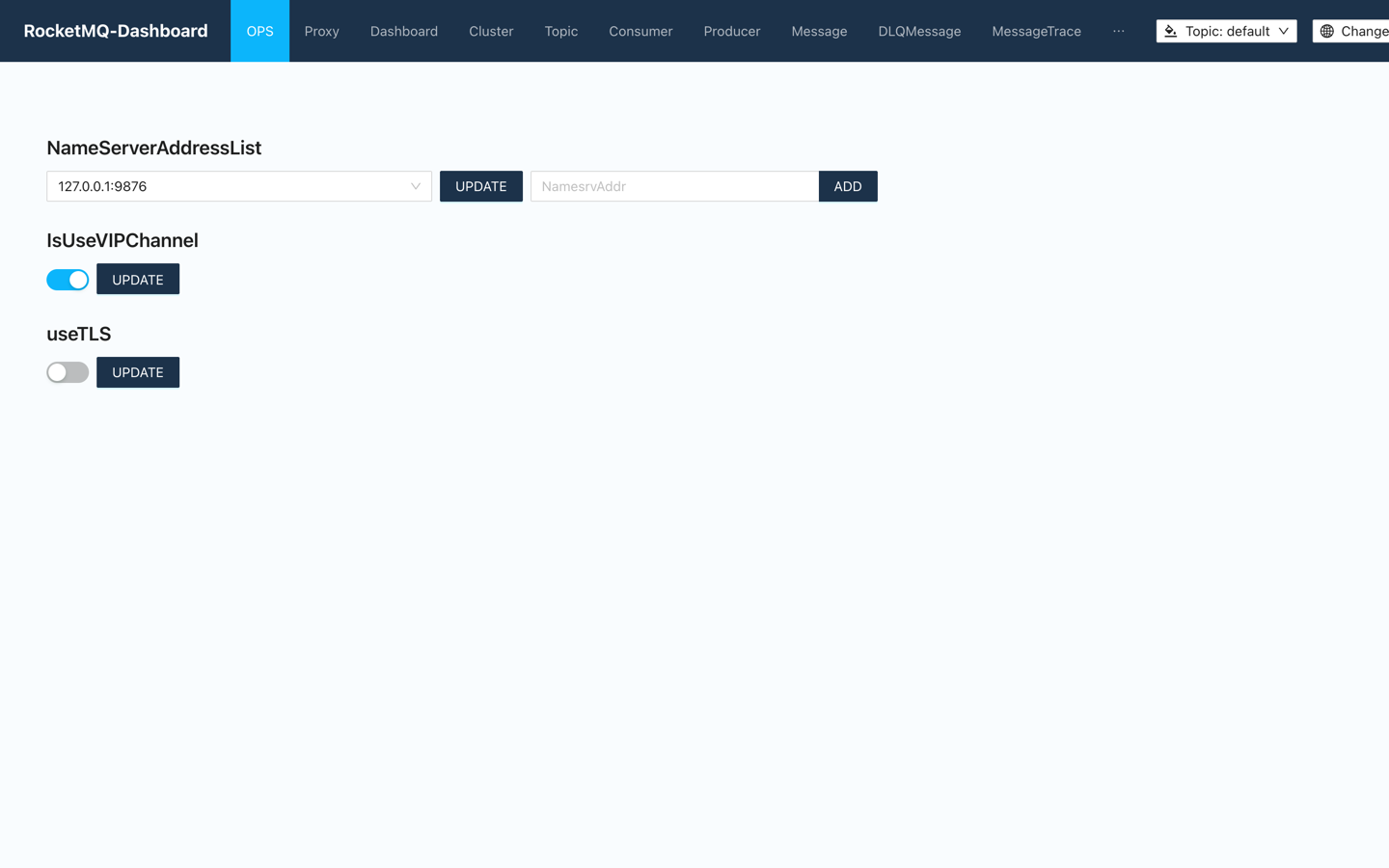
This is a repackaged open source software product wherein additional charges apply for cloudimg support services.
## Apache RocketMQ - Production-Ready Distributed Messaging Platform AMI
Deploy a fully configured, low-latency messaging and streaming platform on AWS in minutes - not hours. This AMI delivers Apache RocketMQ preinstalled and running as managed system services so you can start publishing and consuming messages immediately after launch.
### Why This AMI Instead of a DIY Install or Managed Service
### Application Stack
### Messaging and Streaming Capabilities
The NameServer listens on 9876 as the routing registry; the Broker listens on 10911 for producers and consumers. Point your RocketMQ clients at the instance on those ports and start publishing and consuming. RocketMQ supports normal, ordered, scheduled/delayed and transactional messages, publish-subscribe topics with consumer groups, and message trace - suitable for event streaming, asynchronous decoupling and reliable task processing at scale.
### Security
Secure First Boot: A one-shot service generates a fresh Dashboard password unique to each instance, writes it to the nginx credentials store and a root-only file, and sets the broker advertised address. No shared or default web credentials ship in the image.
Authenticated Web Console: The RocketMQ Dashboard binds to loopback only and is published on port 80 through an nginx reverse proxy that enforces HTTP Basic authentication, so the console is never exposed unauthenticated.
Encryption at Rest: The dedicated data disk holding the message store can leverage AWS EBS encryption. Enable EBS encryption when launching the instance or use encrypted snapshots.
Network Isolation: Deploy the platform in a private VPC subnet and use security groups to restrict access to only the ports your clients require (9876, 10911, 80).
### Web Management Console
The RocketMQ Dashboard is served on port 80 through nginx. Sign in with the generated credentials to inspect the cluster, topics and consumer groups, browse and send messages, view message trace, and monitor broker health and throughput.
### Use Cases
### Evaluation Path
Launch this AMI on a small instance type to evaluate the platform with minimal AWS infrastructure cost. The NameServer, Broker and Dashboard are fully functional on any supported instance size, letting you validate connectivity, console access and message flow before scaling up for production workloads.
### Architecture Overview
The AMI runs three systemd-managed services in dependency order: NameServer starts first as the routing registry, then the Broker registers and begins accepting producer/consumer connections, and finally the Dashboard provides web-based cluster management. An nginx reverse proxy sits in front of the Dashboard on port 80, enforcing HTTP Basic authentication.

This image runs AnythingLLM, the all-in-one open source application for chatting with your documents using any large lan...

Apache BifroMQ (Incubating) is a distributed MQTT broker written in Java, built around native multi tenancy.

Skip hours of manual setup - get a hardened DolphinScheduler with five pre-wired services running in under five minutes....
This image runs Bluesky PDS, the reference Personal Data Server for the AT Protocol (atproto) - the open, federated soci...

This image runs the full ELK Stack as a single node deployment. Elasticsearch is the distributed search and analytics en...
A preconfigured Elasticsearch, Logstash and Kibana stack with coordinated versions, ready for log analytics on launch.