Base
Hardened build
minimal ports, security patches applied at build time

run SQL over real-time data streams as stateful, fault tolerant pipelines
Arroyo is a distributed stream processing engine that lets you run SQL over real-time data streams. You express your logic as a SQL query and Arroyo turns it into a stateful, fault-tolerant pipeline that processes events continuously as they arrive, with event-time windows, streaming joins, stateful aggregation and exactly-once checkpointing. It connects to Kafka, Kinesis, Redpanda, Pulsar, MQTT and more, and pipelines are authored in a browser console with a SQL editor and live query preview.
The cloudimg image runs Arroyo preconfigured behind an nginx reverse proxy as a self-contained single-node cluster with an embedded metadata store, so there is no external database to provision. Arroyo ships with no authentication of its own, so the image binds every internal service to loopback and adds a login prompt plus a per-instance engine key, both generated fresh on first boot and never baked in. It comes with a paired deployment guide and 24/7 cloudimg support.
Real screenshots taken while testing this image against its deployment guide.
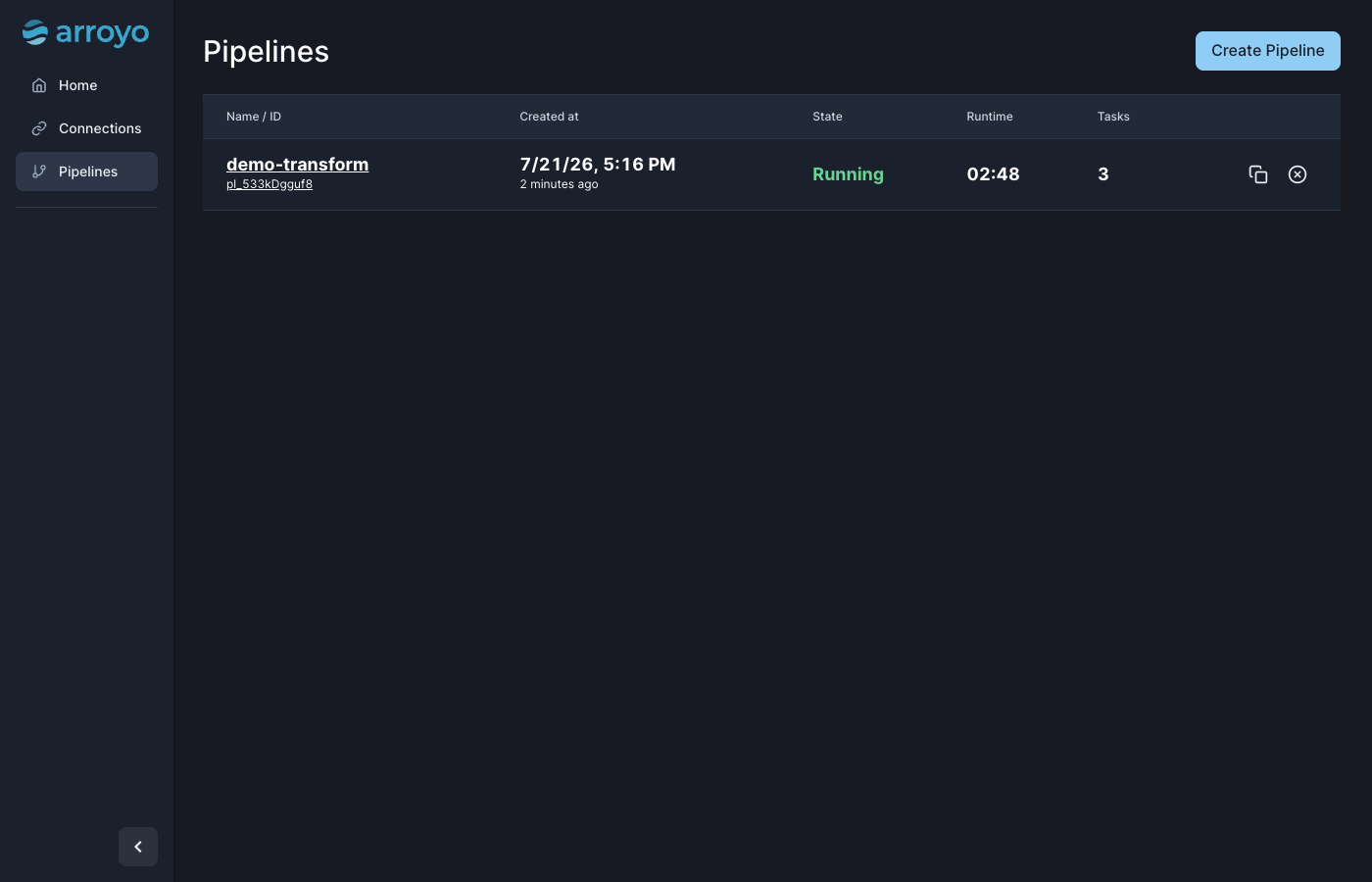
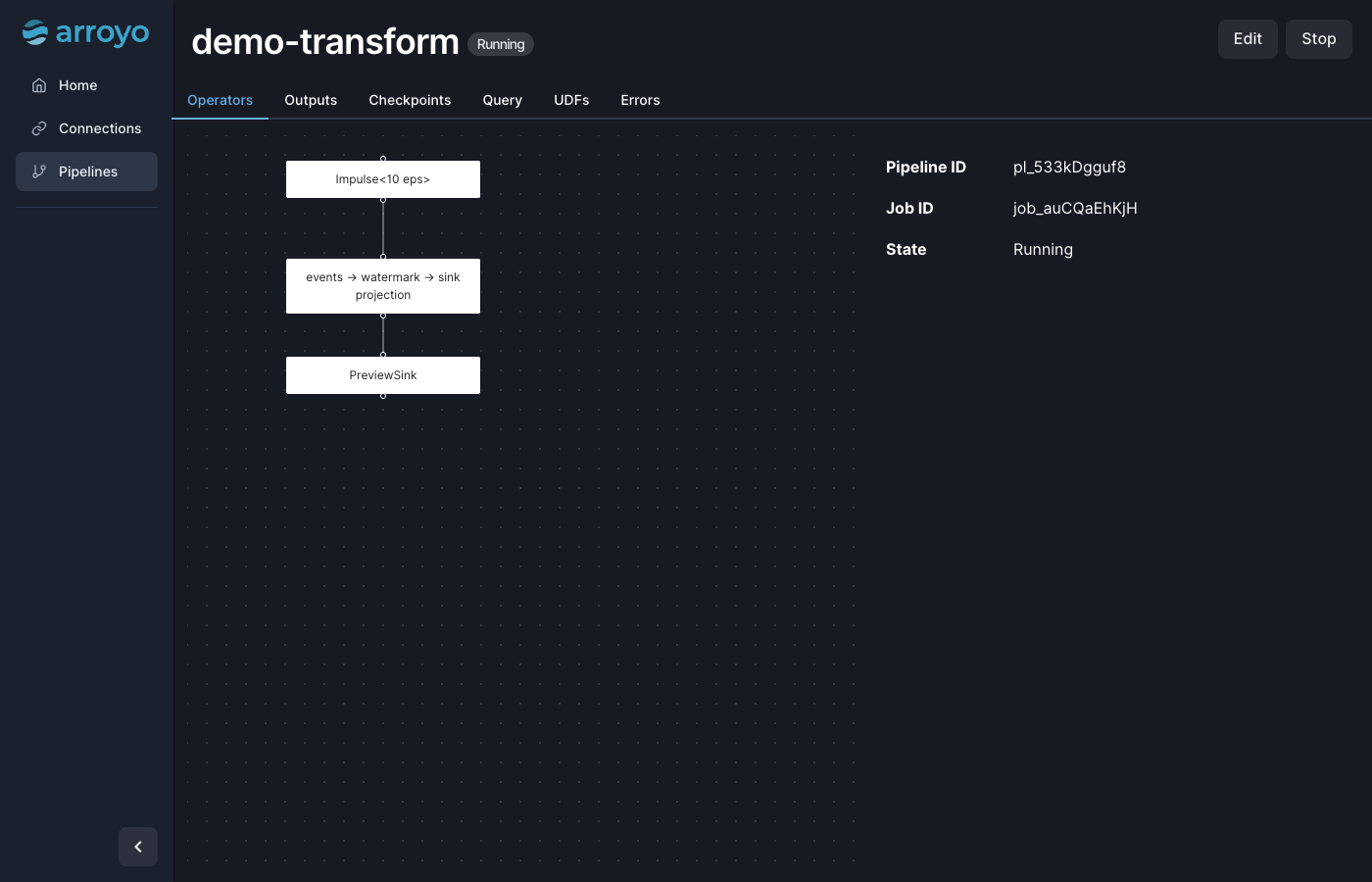
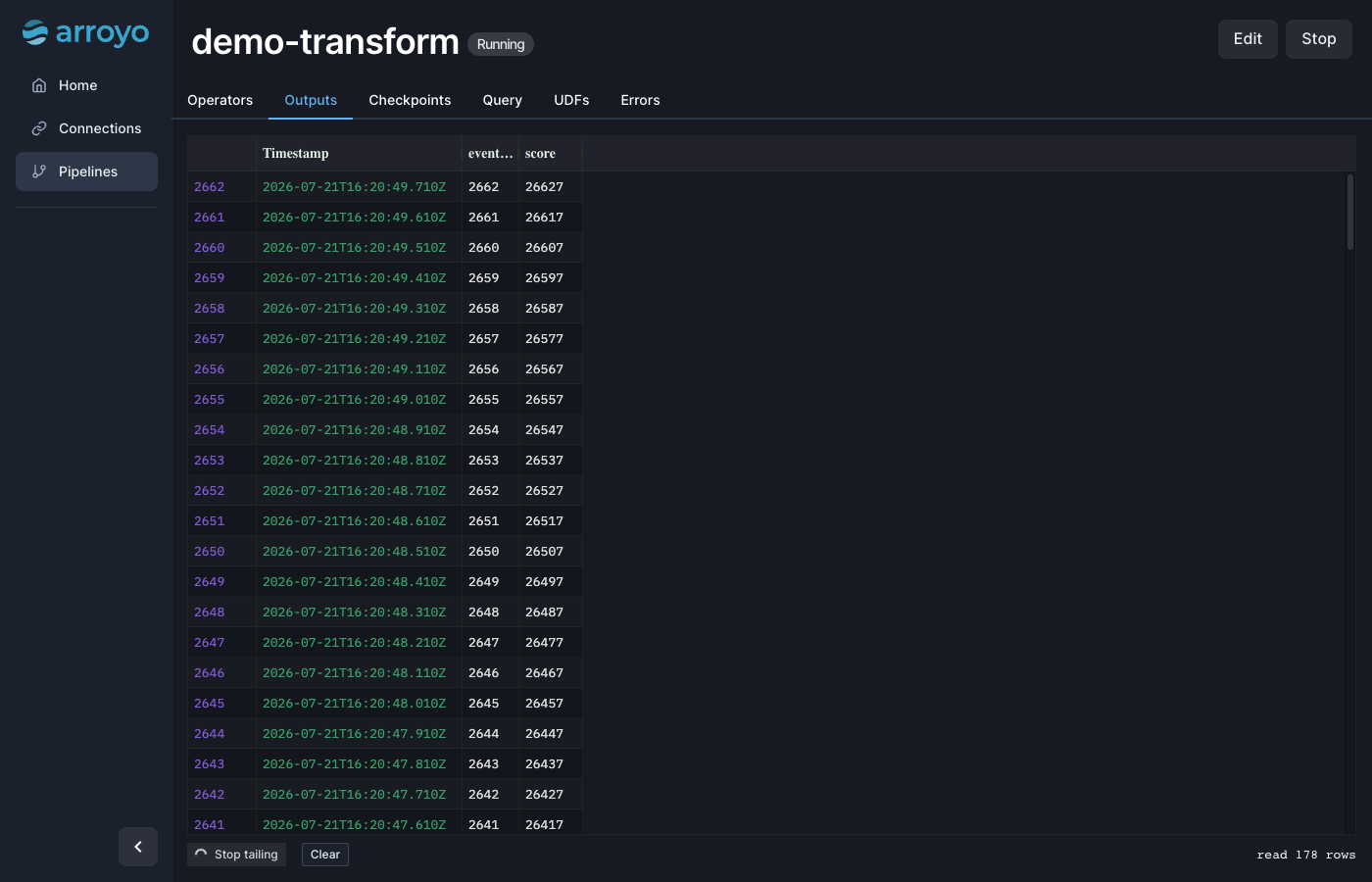
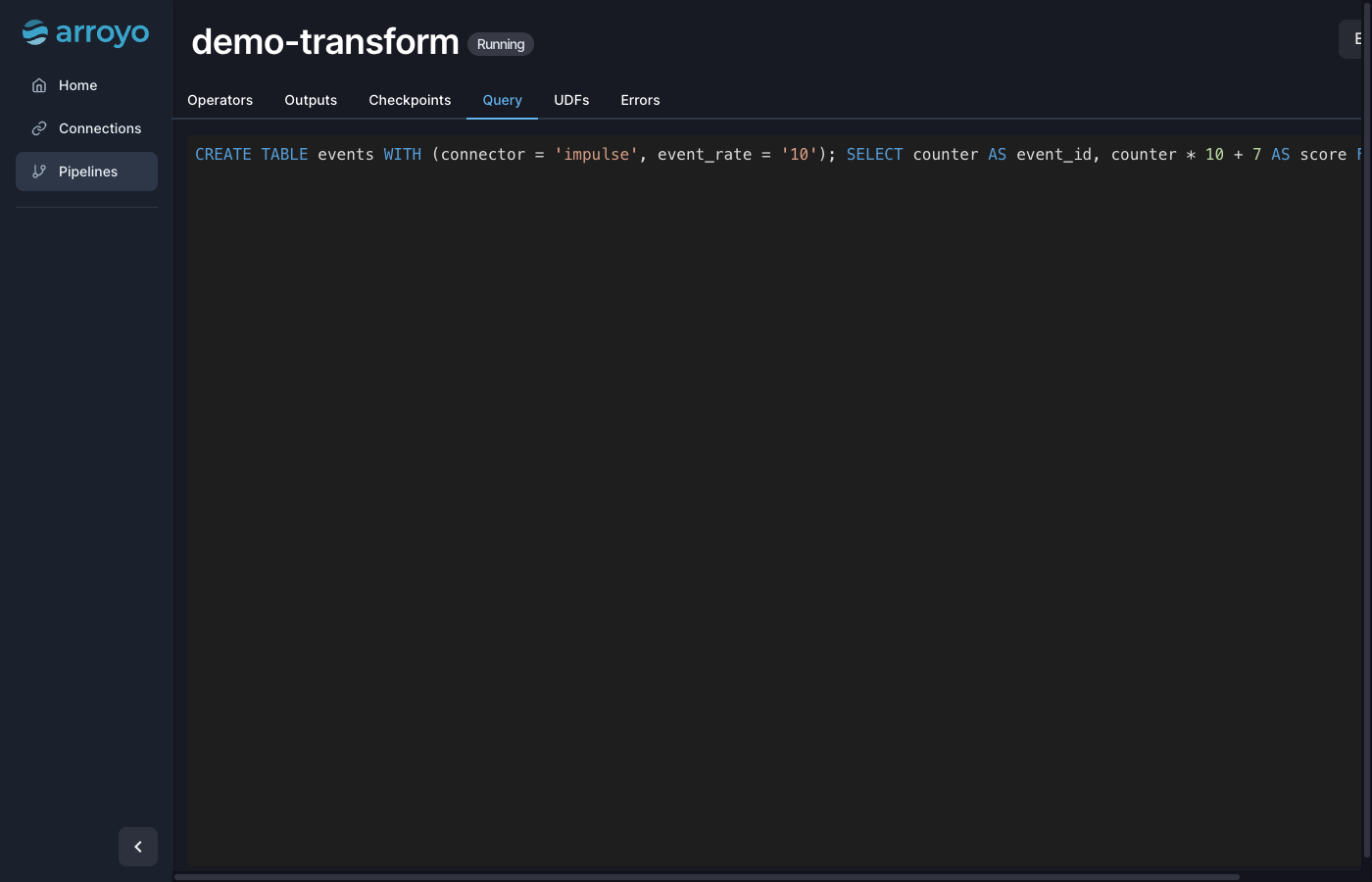
This is a repackaged open source software product wherein additional charges apply for cloudimg support services.
## Why This Image Instead of Self-Installing
Standing up Arroyo yourself means fetching and verifying the release, writing a cluster configuration, deciding on a metadata store, binding every internal service so it is not exposed, adding an authentication layer that Arroyo does not provide on its own, and fronting it all with a reverse proxy. This image resolves every one of those decisions: launch an instance, read your unique credentials over SSH, and open the console in your browser. A working stream processing engine is running within minutes of launch, with no manual package installation, no dependency troubleshooting, and no proxy configuration required.
## Overview
Arroyo is a distributed stream processing engine that lets you run SQL over real-time data streams. Instead of writing and operating bespoke streaming applications, you express your logic as a SQL query and Arroyo turns it into a stateful, fault-tolerant pipeline that processes events continuously as they arrive. It supports event-time semantics with watermarks, tumbling, hopping and sliding windows, streaming joins, stateful aggregation, user-defined functions, and exactly-once processing backed by periodic checkpointing, so results stay correct even across restarts and late-arriving data.
## Connect To Your Data
Arroyo connects to the systems streaming data already lives in, with built-in sources and sinks for Kafka, Redpanda, Kinesis, Pulsar, MQTT, NATS, WebSockets, server-sent events, Delta Lake, Iceberg and plain filesystem or object storage. Pipelines are authored in a browser-based console with a SQL editor, live query preview, a visual pipeline graph and per-operator throughput and checkpoint metrics, so you can see exactly what a query is doing before and after you start it.
## Self-Contained Single Node
This image runs Arroyo as a self-contained single-node cluster using an embedded metadata database, so there is no external database to provision, and pipeline state is kept on the machine's own disk. Message sources and sinks are yours to wire up: point Arroyo at your own Kafka, Kinesis or other broker as described in the deployment guide.
## Secure By Default
Arroyo has no authentication of its own and its services listen on all network interfaces out of the box. In this image every one of those services is bound to loopback and reached only through the nginx reverse proxy, which is ready for your TLS certificate. The console is protected by a login prompt, and the engine's own interface additionally requires a key that the proxy presents on your behalf, so nothing reaches the engine unauthenticated. There is no default password to change: the administrator credential and the engine key are generated uniquely on each machine's first boot and are never baked into the image. systemd manages the service for automatic restarts and clean logging, and the credentials are written before the proxy starts, so the console never comes up without a login.
## Ready To Use
1. Launch the instance from the AWS Marketplace listing.
2. SSH in and read the generated administrator credentials from the root-only file.
3. Browse to the instance on port 80 and sign in.
4. Write a SQL query in the console, preview it live, and start it as a pipeline.
5. Connect an external source such as Kafka to stream your own data through it.
## cloudimg Support
24/7 technical support by email and chat for deployment, connecting external sources and sinks, sizing the engine, checkpointing and state, enabling user-defined functions, TLS termination, and upgrades.
Arroyo is distributed under the Apache License 2.0 or the MIT license, at your option. All product and company names are trademarks or registered trademarks of their respective holders. Use of them does not imply any affiliation with or endorsement by them.

Launch a ready-to-use AKHQ Kafka GUI with a pre-configured broker in minutes. Secured by default with unique credentials...

This image runs Apache ActiveMQ Artemis, the high performance, non blocking message broker from the Apache ActiveMQ proj...
This image runs Apache ActiveMQ Classic, the long established open source message broker from the Apache Software Founda...

Centrifugo pre-configured behind an nginx reverse proxy: a scalable real-time messaging server that pushes events to onl...

RabbitMQ is a widely-used open source message broker that implements the AMQP protocol. This image provides RabbitMQ 4.3...

The cloudimg image ships the free and open source, MIT licensed docker-mailserver, run the officially supported way as t...