Base
Hardened build
minimal ports, security patches applied at build time

Bichon, a self hosted email archiving server that pulls your mailboxes into one searchable, compressed long term archive with a web interface.
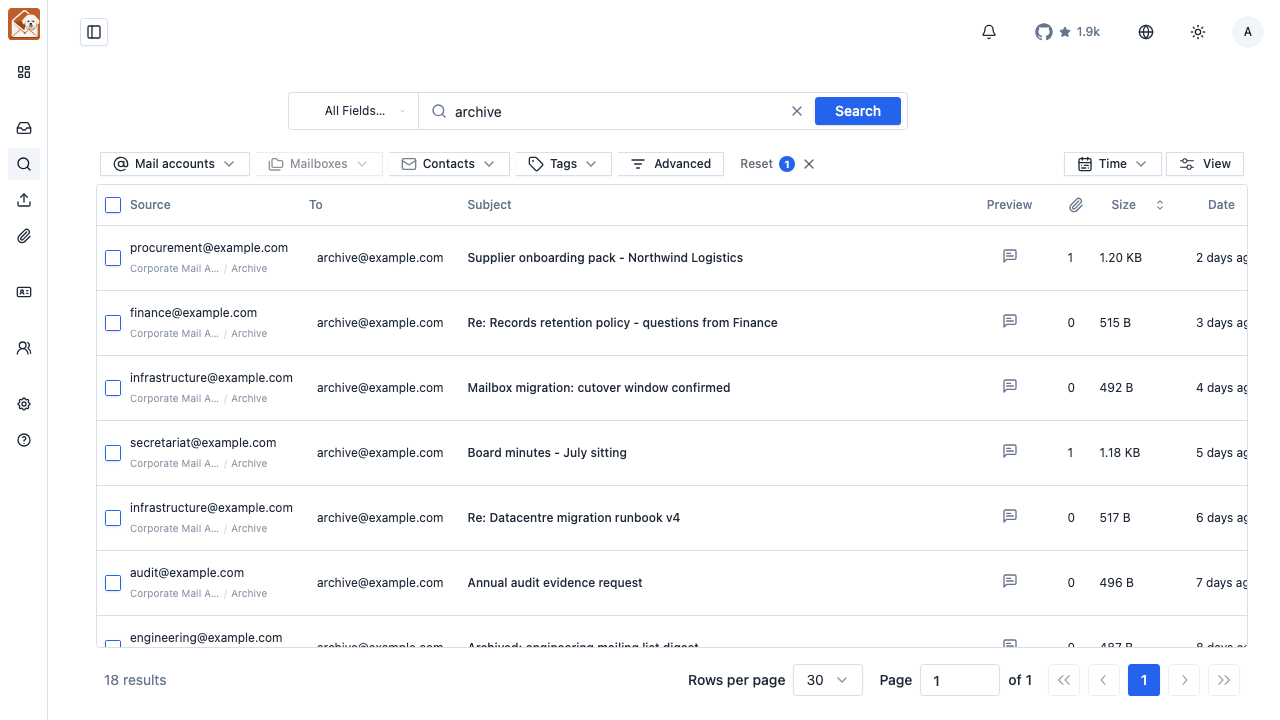
Bichon is an open source email archiving server written in Rust. It connects to your IMAP mailboxes, downloads their contents, and keeps every message in a compressed archive that stays searchable for as long as you need to hold it. A full text index covers subjects, bodies, senders, recipients and attachment properties, so a question like which supplier sent the signed addendum, or every message a departing colleague exchanged with a client, is answered in one query across every account you have connected rather than mailbox by mailbox.
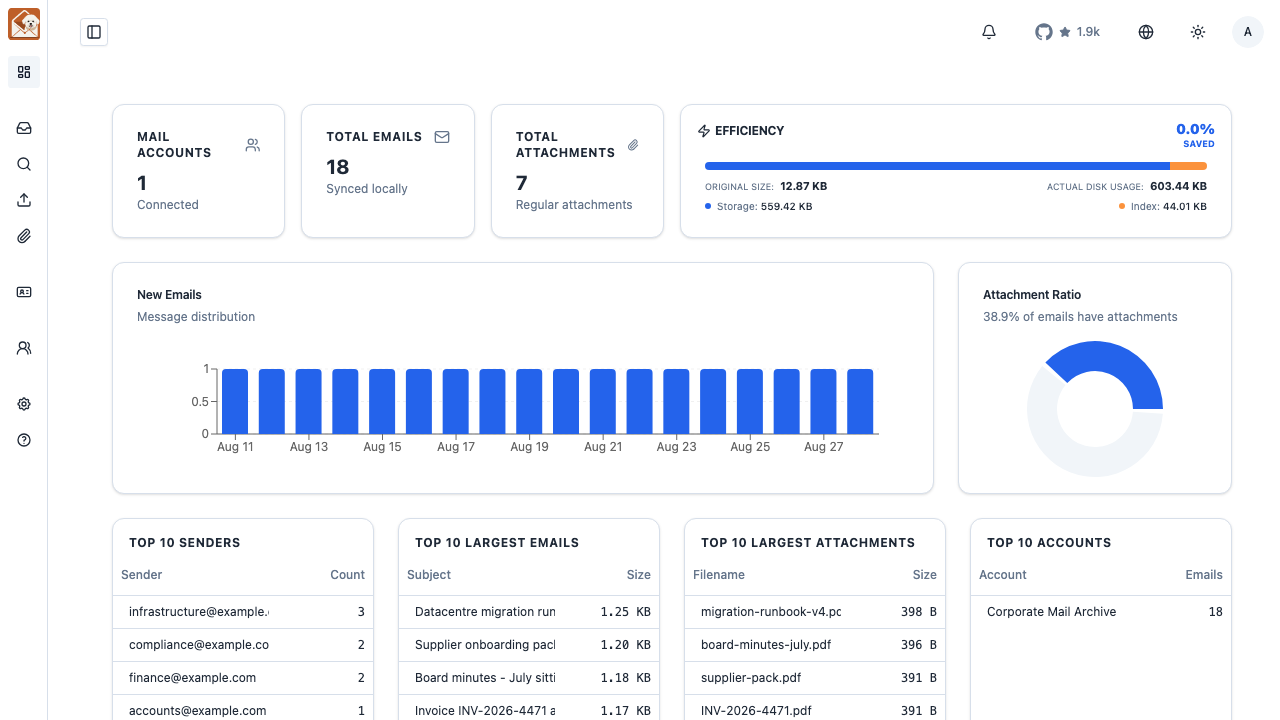
It is deliberately an archiver and not a mail client: it never sends, composes, forwards or replies. What it does instead is preserve. Downloads are incremental after the first pass, identical message bodies and attachments are stored once and referenced by content hash, and everything sits in three embedded storage layers with no external database to run alongside it. Around that core it adds conversation threads, faceted filters by date, size, attachment type and tag, an extracted contacts view, dashboard analytics over volume and storage, import from EML, MBOX, Thunderbird and Outlook PST, export back to MBOX, and bulk restore of archived mail into a live IMAP mailbox. Access is governed by five built in roles and per account permissions, so an archive spanning several teams can be opened to each of them without opening all of it, and every feature is also available over a documented REST API.
Bichon creates a built in administrator with a published default password the first time it starts, which is exactly the kind of detail that turns a self hosted archive of everyone's email into an incident. cloudimg removes that risk rather than documenting it. The image is captured with the archive store completely empty, so it contains no user database at all, not even a rotated one. On the first boot of every machine a one shot service generates a data encryption key and an administrator password unique to that instance, completes the bootstrap on the loopback interface on a private port, replaces the published default, and proves both that the new password works and that the old one is refused before it will allow the public listener to start at all. The published default is therefore never reachable over the network for a single packet. The whole archive lives on a dedicated data volume you can snapshot and resize as it grows, separate from the operating system disk, and the server runs as an unprivileged account with a read only system tree. The upstream release binaries ship unmodified alongside their licence and a pointer to the corresponding source, the base is fully patched with unattended security upgrades enabled, and every image comes with a step by step deploy guide tested against the exact build and 24/7 cloudimg support.
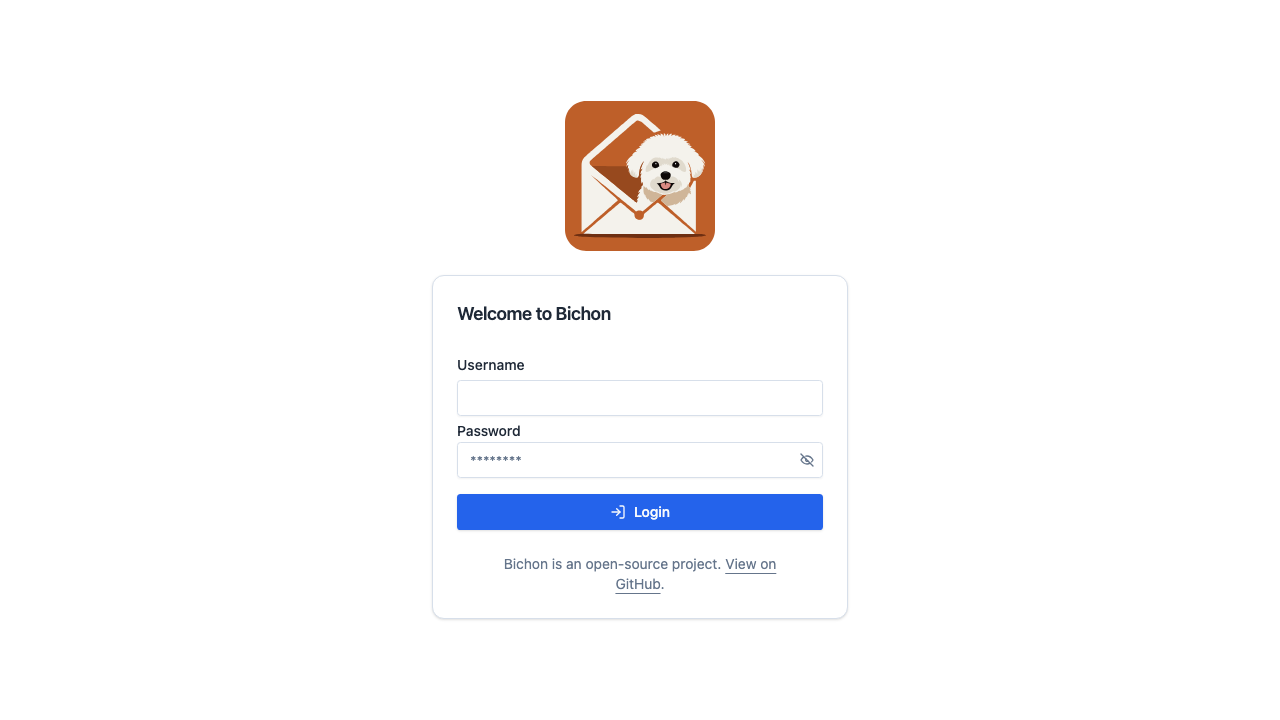
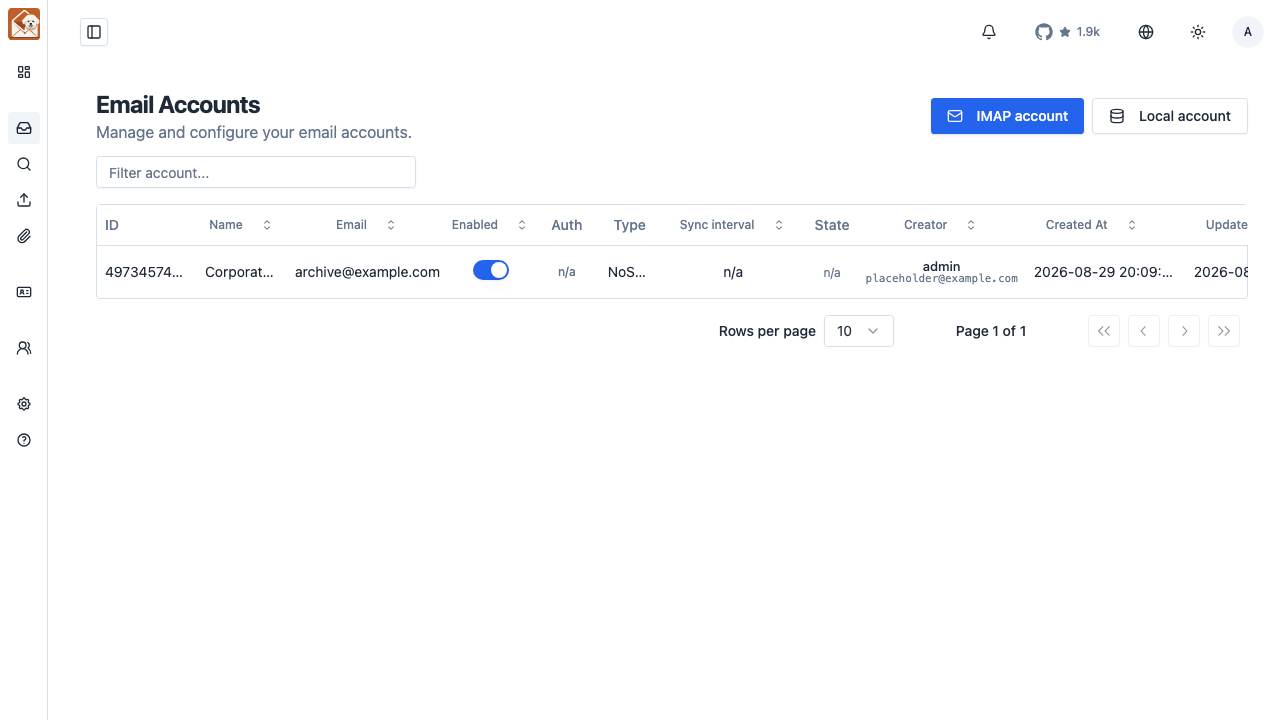
Real screenshots taken while testing this image against its deployment guide.
AIStore is an open source object storage system from NVIDIA, built for the read heavy, high throughput access patterns o...

Alfresco Community Edition is an open source enterprise content management platform.

Apache Ozone is the scalable, distributed object store for Hadoop and cloud-native workloads. It exposes both an S3-comp...

ArozOS on Ubuntu 24.04 LTS preconfigured machine image for Microsoft Azure, hardened and verified with 24/7 support by c...

Backrest is a popular open source web interface and orchestrator for restic, the fast, secure, deduplicating backup prog...

The image installs Bacula 13.0.4 from the Ubuntu 24.04 archive and runs the Director, a Storage Daemon writing to a file...