Base
Hardened build
minimal ports, security patches applied at build time

GNS3 Server, the open source network emulation platform for virtual labs of routers, containers and virtual machines, with its API closed and credentialed on first boot.
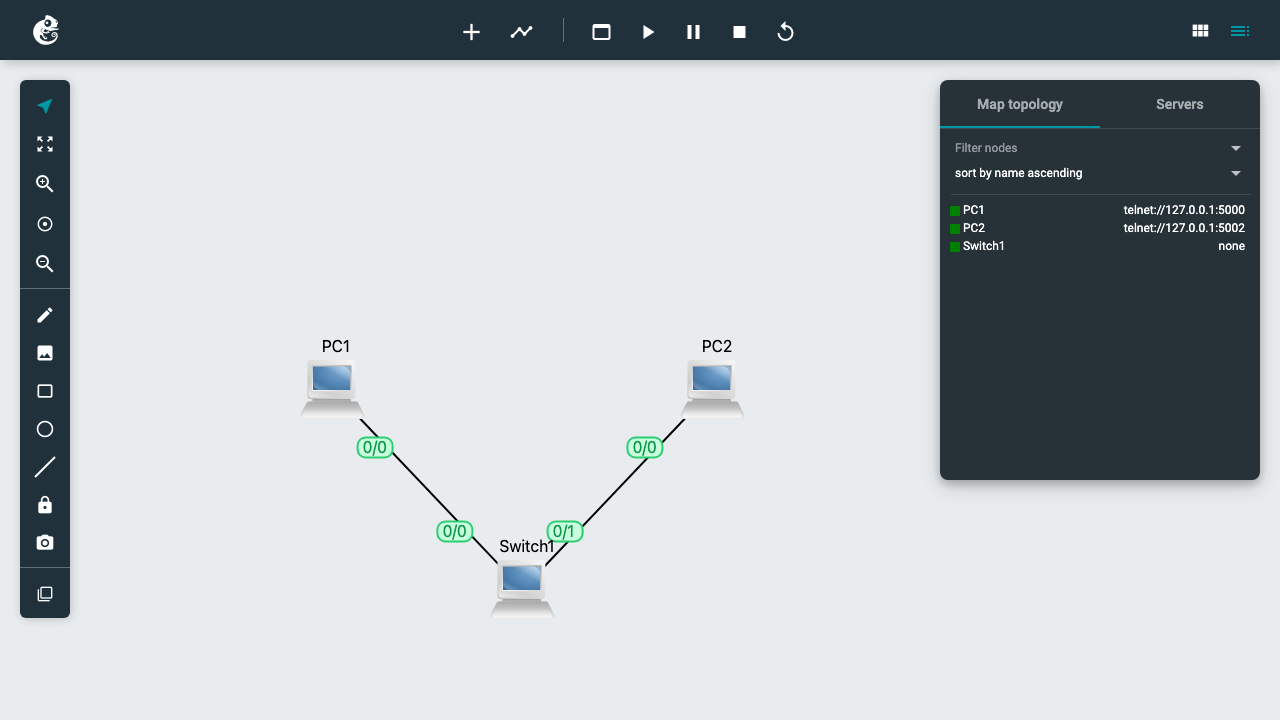
GNS3 Server is the engine behind GNS3, the widely used open source network emulation platform. It runs virtual network topologies built from emulated Cisco routers, Docker containers, QEMU virtual machines and lightweight virtual PCs, wired together into labs you can start, stop, inspect and rebuild at will. Nodes get real consoles, links carry real packets, and captures can be taken anywhere in the topology, so a lab behaves like the network it stands in for.
It is the headless server half of GNS3: engineers drive it from a browser or by pointing the GNS3 desktop client at it, which means the labs run on server hardware rather than a laptop and can be shared by a team. Typical uses are certification study, validating a design or change plan before it reaches production, and keeping reproducible lab environments that anyone can pick up.
cloudimg ships GNS3 Server with the whole emulation stack already installed, pinned and wired together, so a working lab server answers within minutes of launch with no emulator setup at all. It is secure by default, which matters unusually much here: an unprotected GNS3 interface lets anyone who can reach it run containers and virtual machines on the host, so this image closes it at two independent layers, keeps the server itself on the loopback interface behind a TLS reverse proxy, and generates a unique credential on every virtual machine's first boot, written to a file only root can read. No usable credential is baked into the image and no two deployments share one. Device consoles stay on the loopback interface instead of being exposed to the network. It comes with a paired deployment guide and 24/7 cloudimg support.
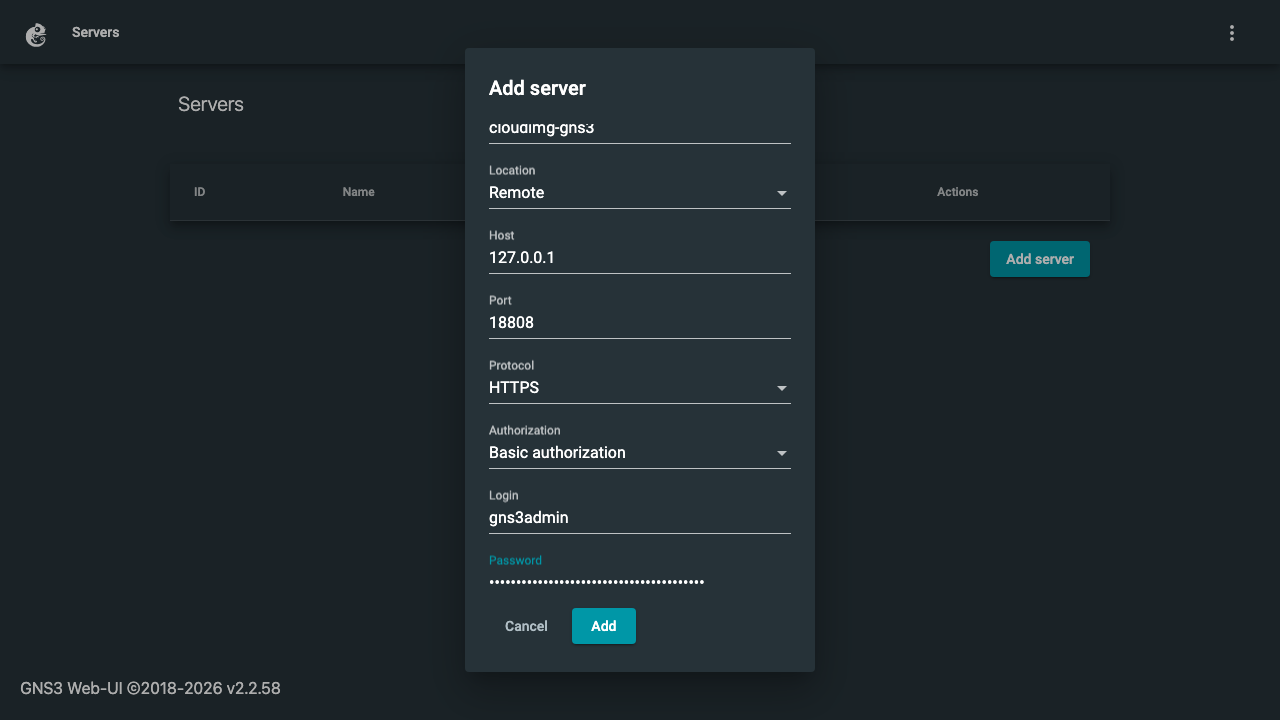
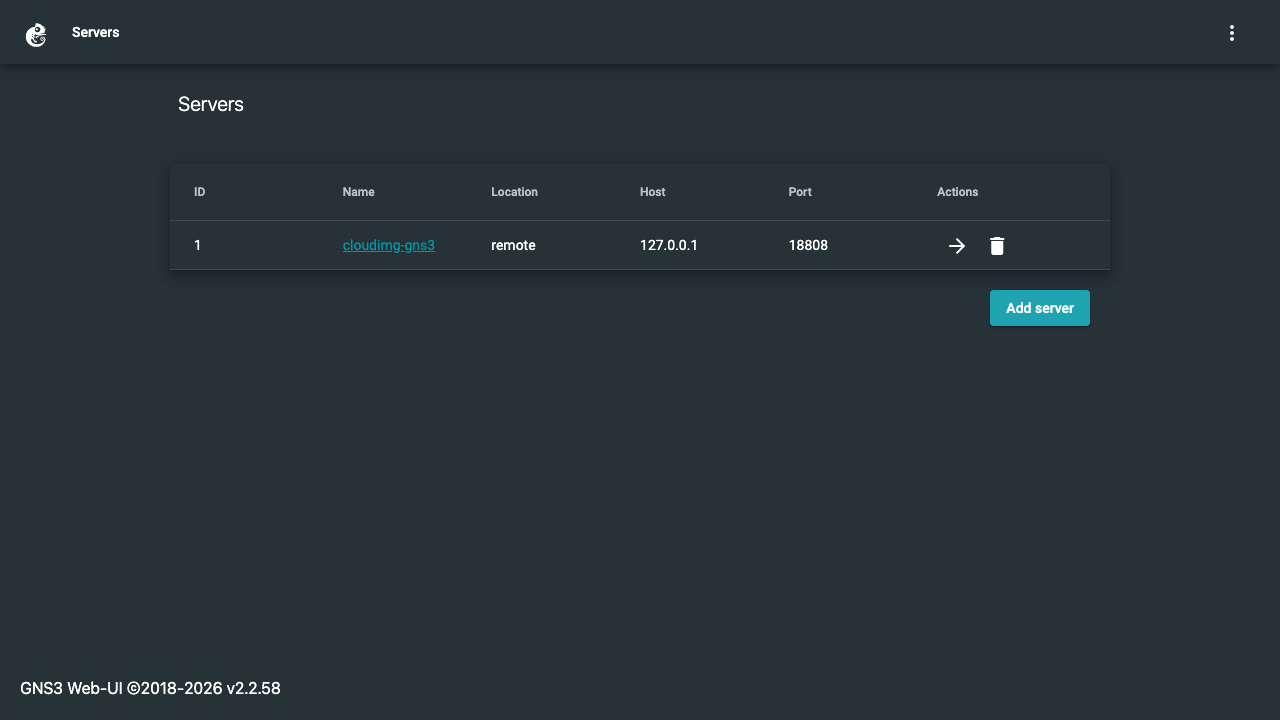
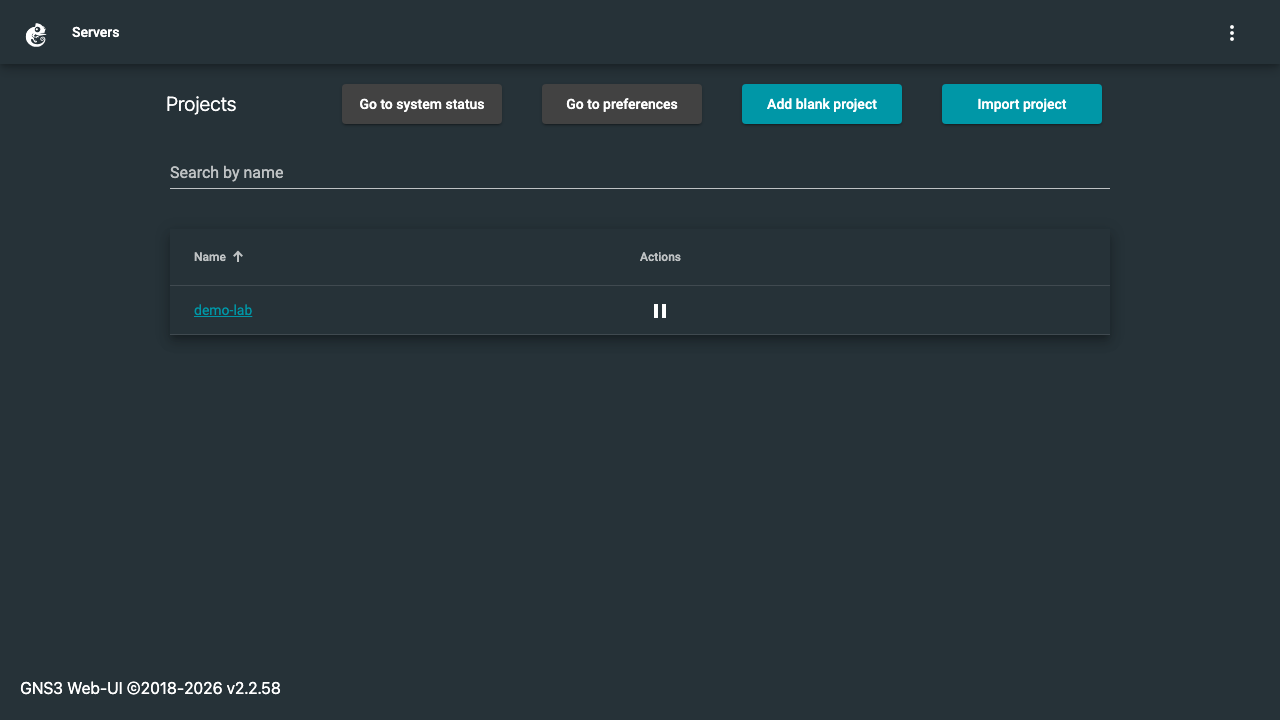
Real screenshots taken while testing this image against its deployment guide.
The image builds 3proxy 0.9.7 from the pinned upstream source (github.com/z3APA3A/3proxy tag 0.9.7), so the exact versio...
3X-UI is a web based management panel for Xray-core, the proxy platform behind protocols such as VLESS, VMess, Trojan an...
The image builds accel-ppp 1.14.0 from the upstream source tag (commit 048d31cb, dated 25 January 2026), verified agains...

AdGuard Home is a network wide DNS server that blocks ads, trackers and malicious domains for every device that points i...

AdGuard Home is a network wide DNS server that blocks ads, trackers and malicious domains for every device that points i...

This image runs Akvorado 2.4.1, the open source network flow collector, enricher and visualizer, on Ubuntu 24.04 LTS.