Base
Hardened build
minimal ports, security patches applied at build time

an open source, POSIX compliant distributed file system, ready to read and write the moment it boots.
MooseFS is an open source, POSIX compliant distributed file system. It spreads files across a cluster of chunkservers, so a MooseFS volume behaves like an ordinary directory on every client while the data underneath is distributed and, once you add chunkservers, replicated.
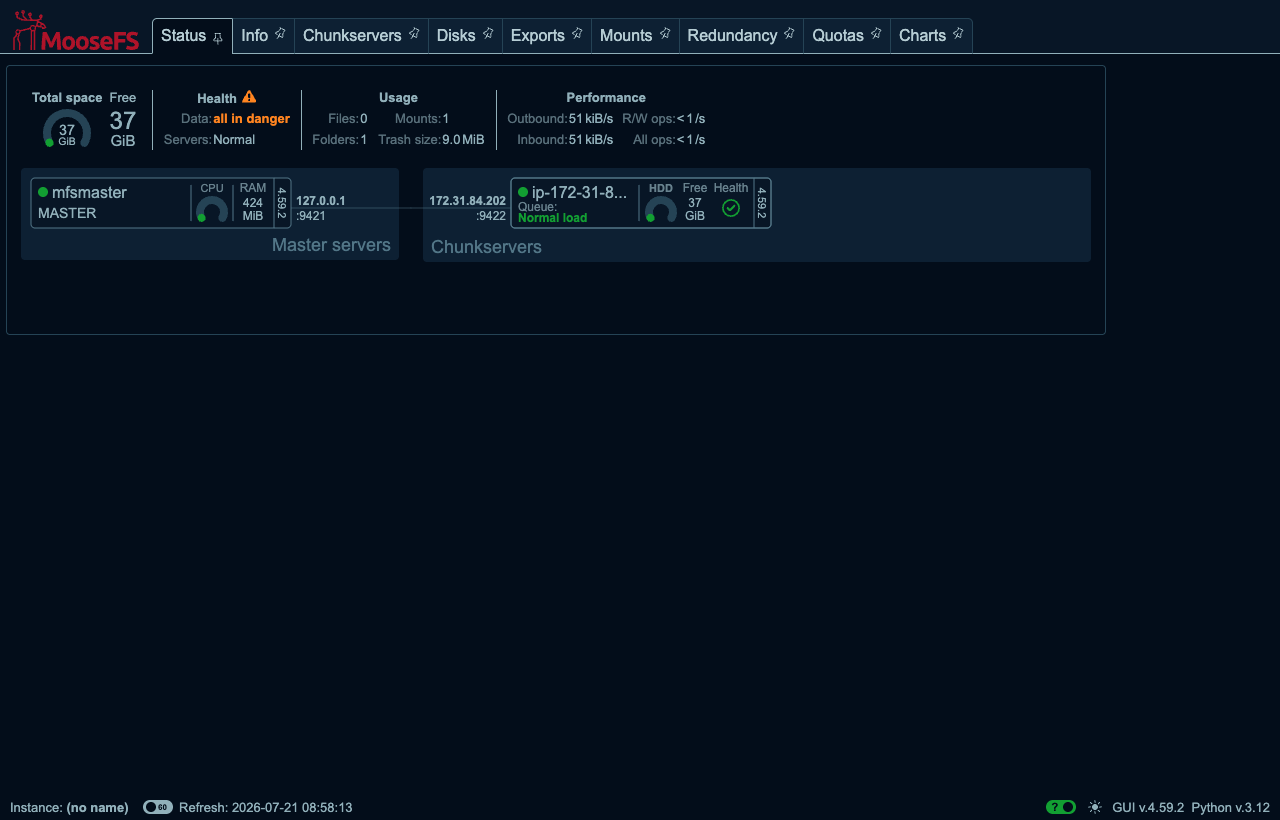
This image is a complete, self contained starter node: a master server, one chunkserver and the FUSE client all run together, and the volume is mounted and ready the moment first boot completes. It suits teams evaluating MooseFS, a scratch or staging store, and the seed of a larger cluster you grow by adding chunkservers on separate machines.
The cloudimg image installs MooseFS on a hardened base with the master metadata and chunk storage on their own data volume, so you can snapshot and resize storage independently of the operating system disk. The web monitor password and its TLS certificate are generated uniquely for your instance on first boot and written to a file only the root user can read, and the MooseFS protocol ports are bound to the host and firewalled off the network. The paired deployment guide covers signing in, using the filesystem and adding chunkservers for redundancy, and every deployment is covered by 24/7 support.
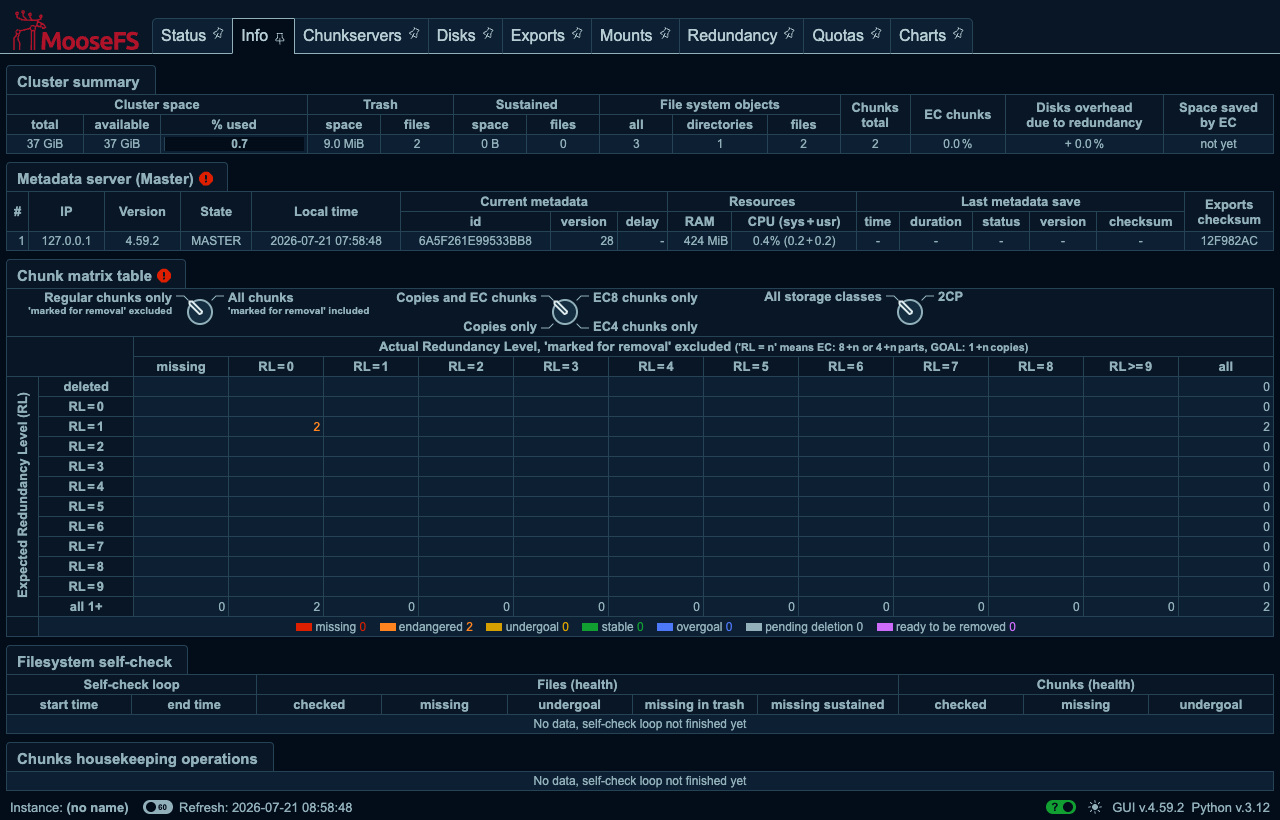
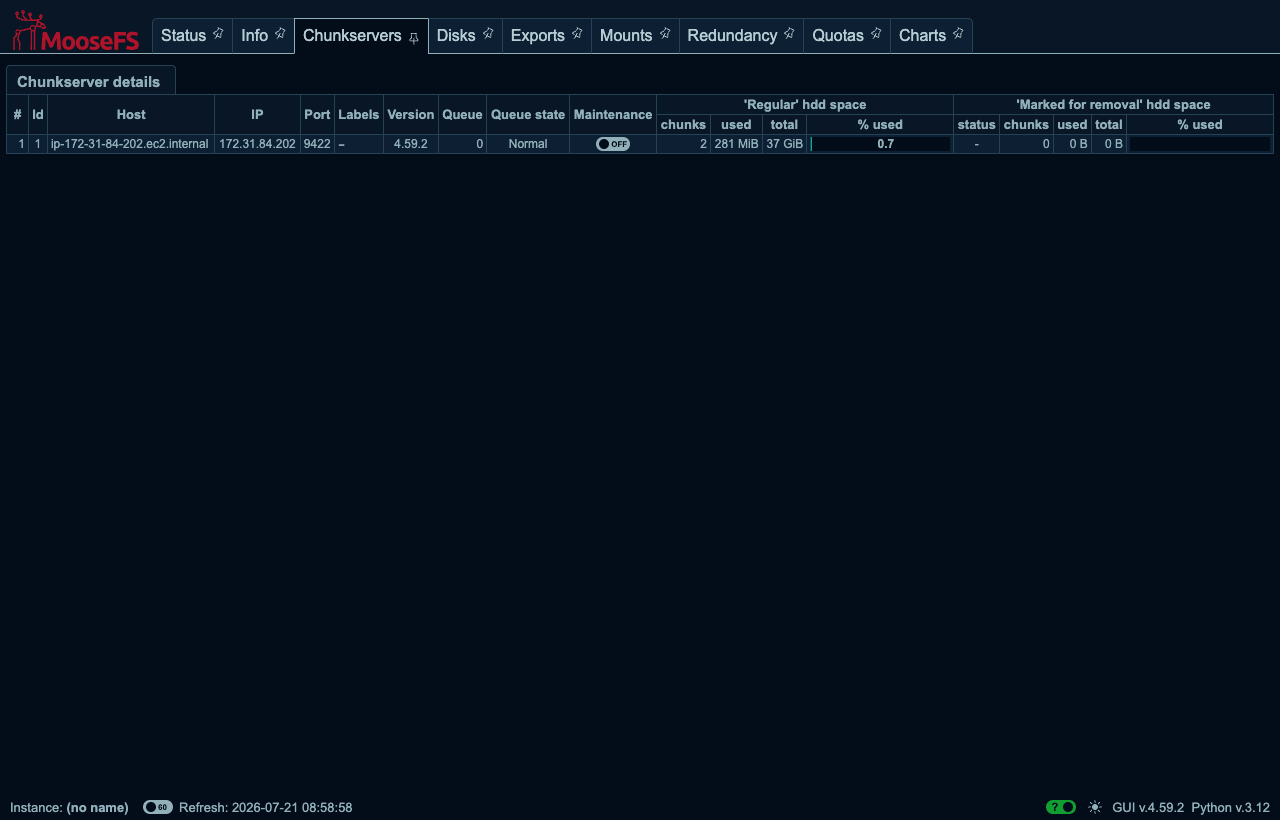
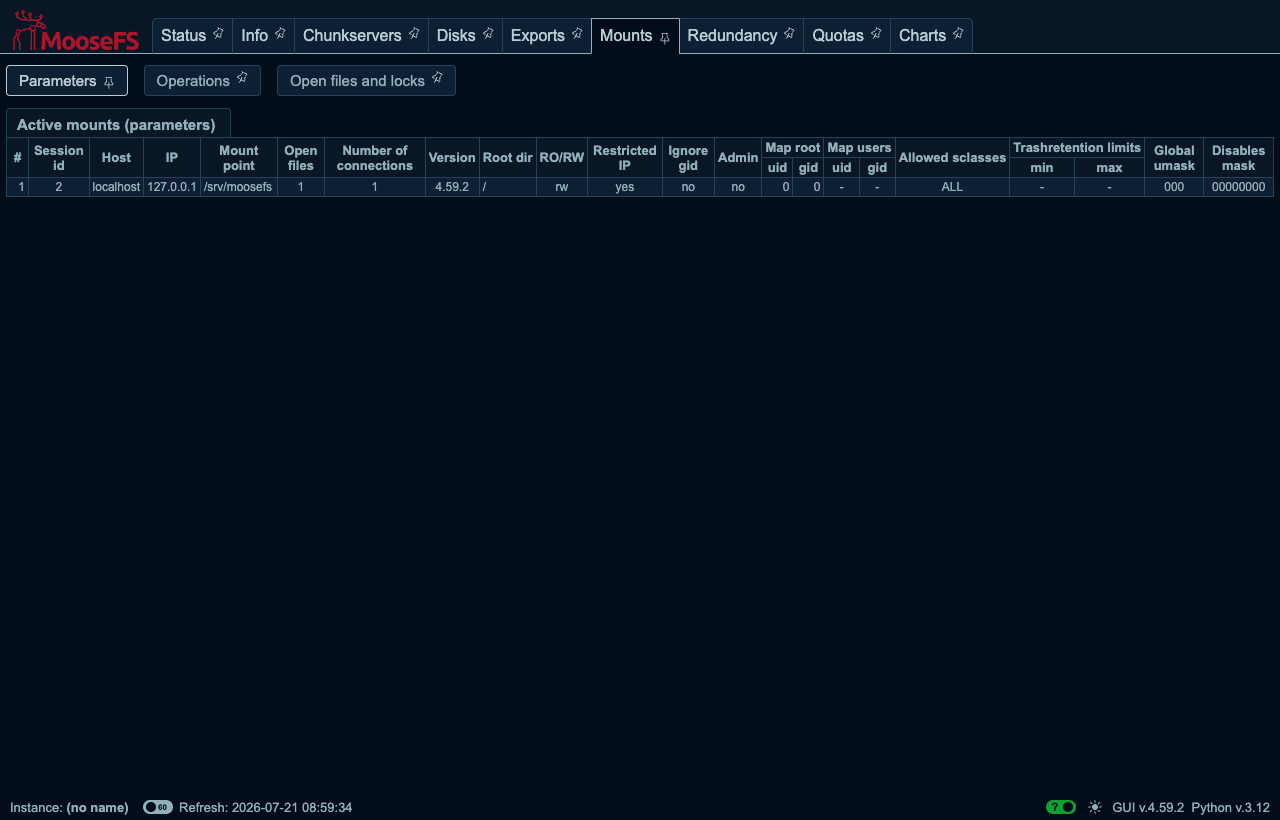
Real screenshots taken while testing this image against its deployment guide.
This is a repackaged open source software product wherein additional charges apply for cloudimg support services.
Overview
MooseFS is an open source, POSIX compliant distributed file system. It spreads files across a cluster of chunkservers, so a MooseFS volume behaves like an ordinary directory on every client while the data underneath is distributed and, once you add chunkservers, replicated. This image delivers a complete, self contained MooseFS starter node: a master server, one chunkserver and the MooseFS FUSE client all run on the single instance, and the MooseFS volume is mounted and ready at /srv/moosefs the moment first boot completes. The version currently available is MooseFS 4 Community Edition.
Single Node By Design, Cluster Ready
A single instance holds one copy of every chunk, so this image on its own is an evaluation and starter topology, not a redundant one. Real fault tolerance comes from adding chunkservers on separate instances and raising the goal, and the deployment guide walks through exactly how to do that.
Secure By Default
The master control port, the chunkserver port and the web monitor are all bound to the host and dropped on every other interface by an nftables guard, so nothing that speaks the MooseFS protocol is exposed to the network regardless of your security group. The only published endpoint is the web monitor, served over TLS by nginx behind HTTP Basic Auth. On first boot the image generates a per instance monitor password and a TLS certificate bound to the instance. No two instances share credentials and there is no default login.
Dedicated Data Volume
A dedicated data volume holds both the master metadata and the chunk storage, mounted before the software is installed and captured into the image, so every instance is re provisioned with storage separate from the operating system disk and independently resizable.
What Is Included
* MooseFS 4 Community Edition from the official MooseFS repository
* Master server, chunkserver, command line tools and the FUSE client, managed by systemd
* A dedicated data volume for the master metadata and the chunk storage
* nginx TLS front for the web monitor
* Latest security patches applied at build time
Licensing
MooseFS Community Edition is open source under the GNU General Public License, version 2. There is no per node or per capacity fee. The cloudimg charge covers packaging, security patching, image maintenance and 24/7 support.
cloudimg Support
24/7 technical support by email and chat, with a guaranteed 24 hour response. Help with deployment, adding chunkservers for redundancy, TLS and access configuration, storage and upgrade planning.
All product and company names are trademarks or registered trademarks of their respective holders. Use of them does not imply any affiliation with or endorsement by them.

Backrest is a popular open source web interface and orchestrator for restic, the fast, secure, deduplicating backup prog...
Cyberduck is a libre file transfer client for FTP, SFTP, WebDAV, Amazon S3, Google Cloud Storage, Microsoft Azure, OpenS...

This image runs File Browser, the open source, self-hosted web file manager - browse, upload, download, edit, preview an...
This image runs a production ready SFTP file transfer server built on OpenSSH, the open source secure shell suite.

Kopia, the fast and secure open source backup and restore tool, preinstalled as a system service running in server mode ...

This image runs MinIO, the high performance open source object storage server that speaks the Amazon S3 API, in single n...