Base
Hardened build
minimal ports, security patches applied at build time
Pre-hardened Dradis Community Edition: a self-hosted, open-source collaboration and reporting platform for security assessments and penetration tests. Import scanner output, organize findings on a shared project tree and generate consistent client reports. A per-instance shared password and application secret, served over TLS, ready in minutes with 24/7 cloudimg support.
This image arrives installed, configured and hardened, so there is no manual setup before you can use it. It is built on a patched base, runs with credentials generated uniquely for your instance on first boot, and passes an automated health check before every release. Every deployment is backed by 24/7 support from cloudimg engineers.
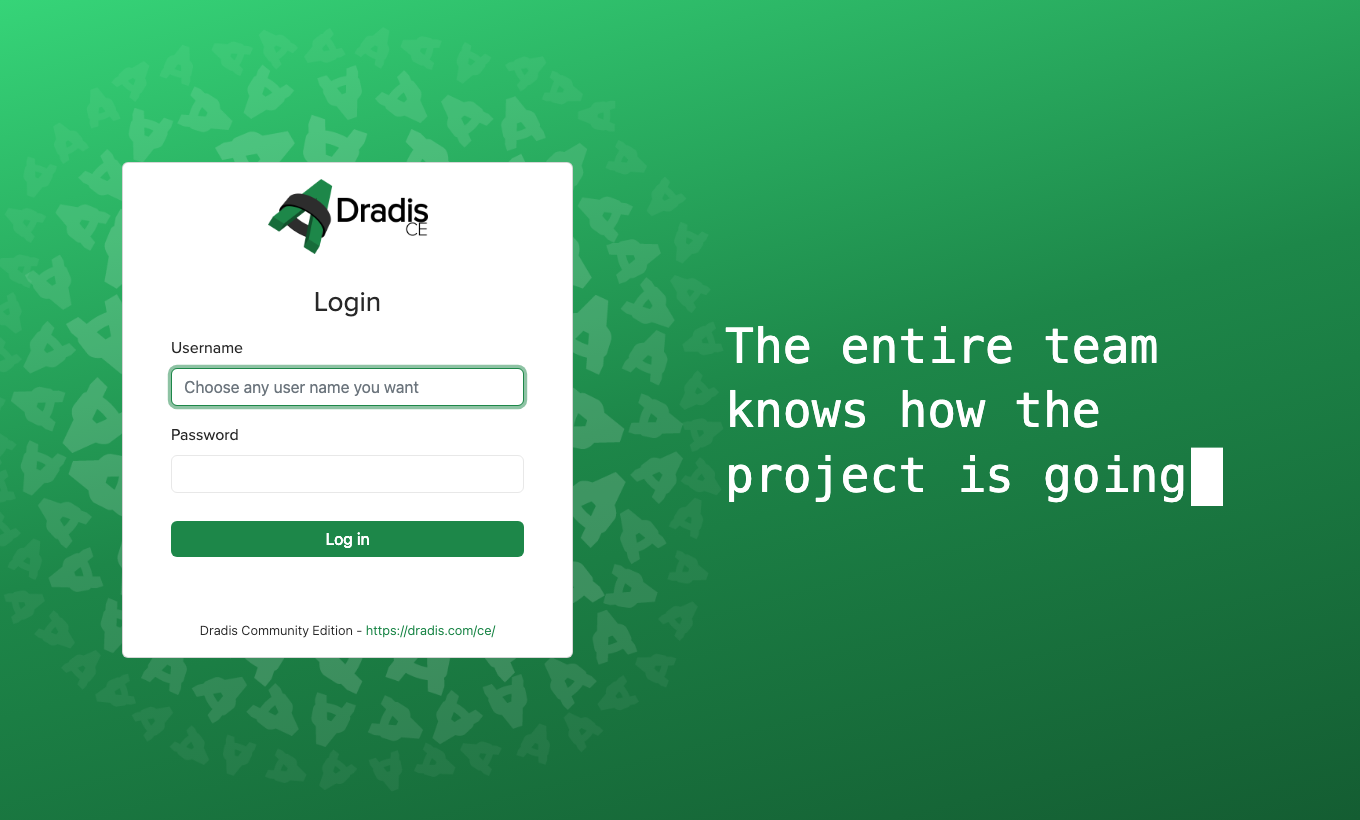
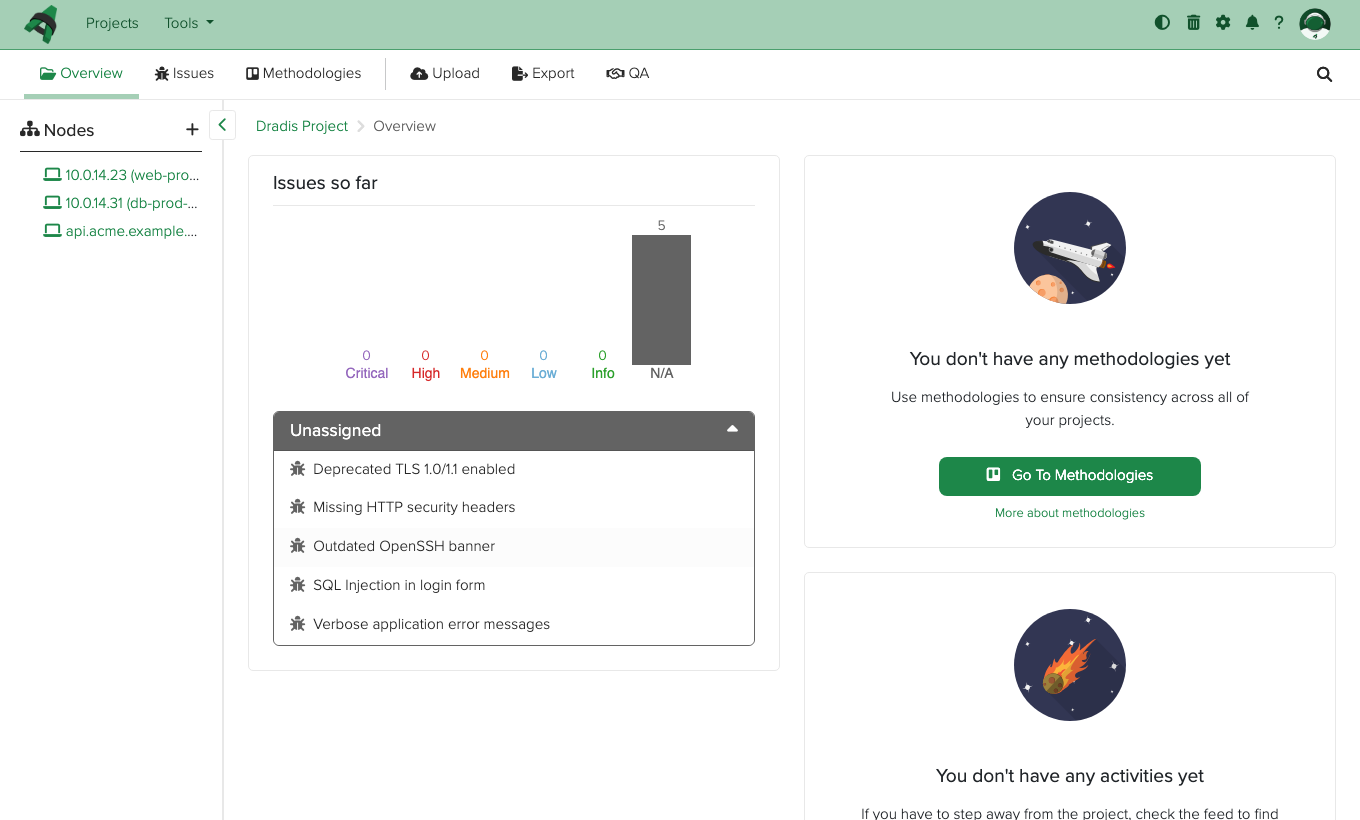
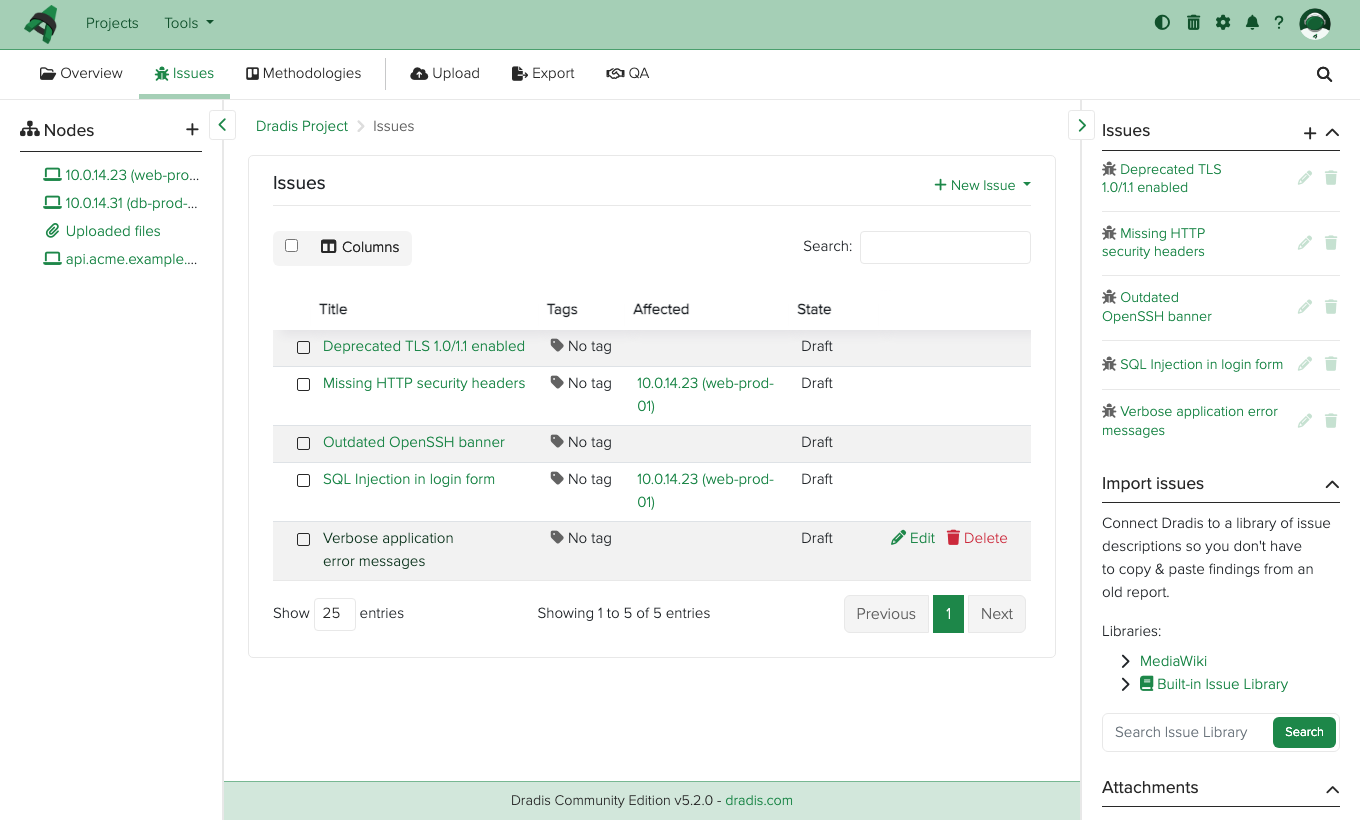
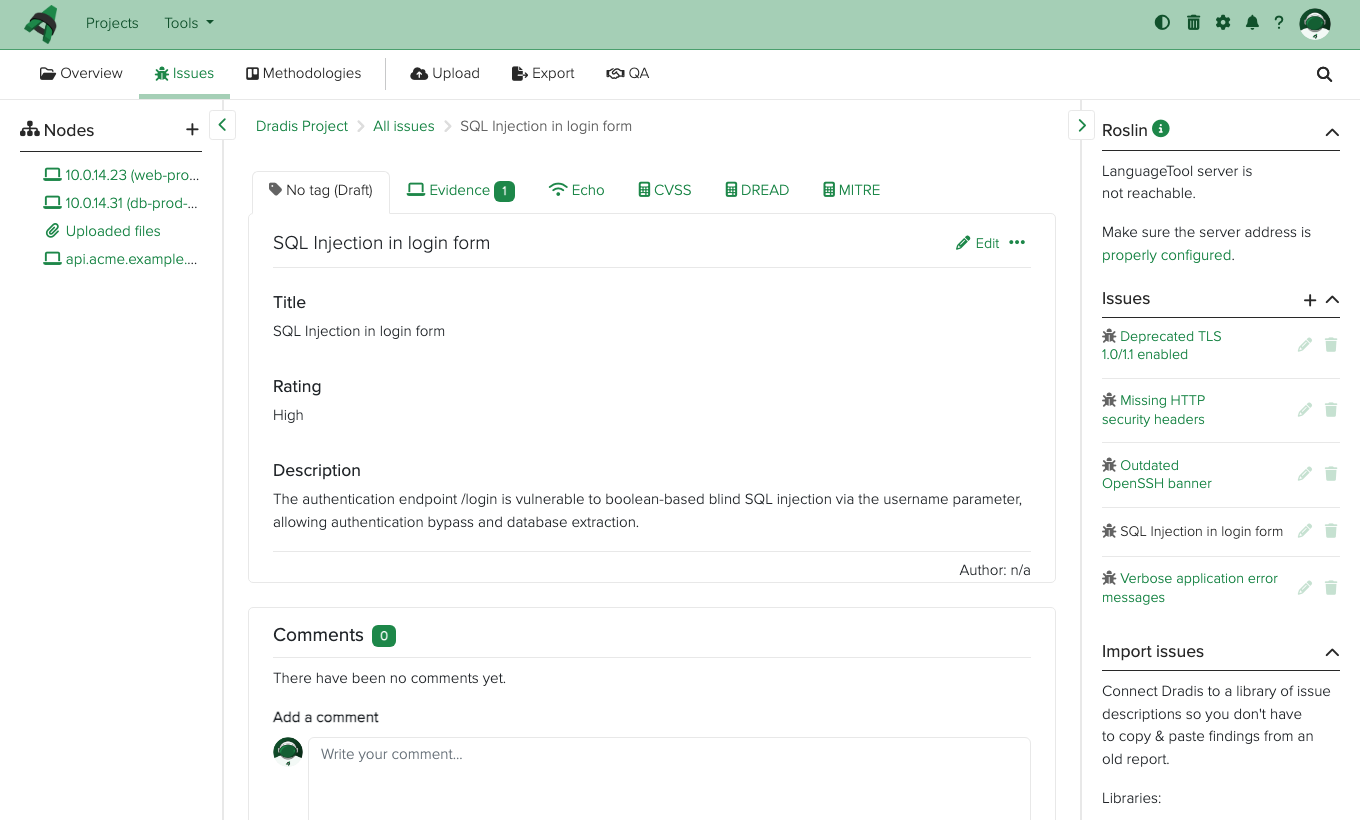
Real screenshots taken while testing this image against its deployment guide.
This is a repackaged open source software product wherein additional charges apply for cloudimg support services.
## Overview
Dradis Community Edition is an open source collaboration and reporting framework for security assessments and penetration tests. It gives a testing team one place to import output from the tools they already use (Nmap, Nessus, Burp Suite, OpenVAS, Qualys and more), organize findings on a shared project tree of nodes, issues and evidence, manage methodologies and testing checklists, and generate consistent client reports. Under the hood Dradis is a Ruby on Rails application backed by SQLite, with Redis and a background worker for long-running jobs. This AMI delivers Dradis installed, hardened and secured so a working reporting platform is operational within minutes of launch.
## Why This Image vs a Manual Install
Standing Dradis up by hand means installing a specific Ruby toolchain, building the application from source at a known-good release, precompiling assets, wiring up Redis and a background worker, generating the Rails secret key base, and putting an authenticated, encrypted front door in front of it so the reporting tool is not left open on the internet. This image completes every one of those steps at build time. Dradis is built from the official upstream source at a pinned release and runs under Puma bound to the loopback interface only; an nginx reverse proxy terminates TLS on port 443 with a per-instance self-signed certificate; the Rails secret key base and the single shared login password are generated on each instance's first boot; and the first-run setup is completed automatically so the instance boots straight to a login-gated dashboard with no open setup page.
## Security Hardening
This image follows a defence in depth approach:
## Concrete Use Cases
## AWS Integration
Deploy on any EC2 instance type; the recommended size is m5.large. Terminate TLS at an Application Load Balancer with your own certificate, or keep the per-instance self-signed certificate. Back up the SQLite database and uploaded evidence using EBS snapshots or AWS Backup, and resize the dedicated data volume independently of the OS disk as your projects grow.
## cloudimg Support
24/7 technical support by email and chat. Help with deployment, enabling per-user accounts, reverse-proxy termination with your own domain and certificate, importing scanner output, tuning report templates, and backup planning for your assessment data.

This image runs AIDE (Advanced Intrusion Detection Environment), the open source, GPL-2.0 licensed host-based file and d...

This image runs Apache Directory Server (ApacheDS) 2.0, the Apache Software Foundation's extensible, embeddable director...
This image runs Beelzebub, the open source low code honeypot and deception framework.

This image runs Certimate, the open source platform that automates the full life cycle of your SSL/TLS certificates.

This image runs Checkov, the open source static analysis and policy-as-code scanner that finds security and compliance m...

This image runs Clair, the open source project for the static analysis of vulnerabilities in application containers.