Base
Hardened build
minimal ports, security patches applied at build time
Kill Bill, the open source subscription billing and payments platform, with its Kaui administration console ready the moment it boots.
Kill Bill is a mature open source platform for subscription billing and payments, released under the Apache License 2.0. It manages the whole recurring revenue lifecycle: catalogs and price plans, subscriptions with trials, upgrades, downgrades and cancellations, usage metering, invoice generation and dunning, payments through pluggable gateways, refunds and chargebacks, credits and account balances, and a full audit trail over every change. It is multi tenant from the ground up, and everything it exposes over its REST API is also available in the Kaui administration console.
A note on the version number: 0.24 is a pre 1.0 version number, not a pre 1.0 project. The 0.24 line has been the production series for years across twenty one patch releases, with a documented security process, and Kill Bill has a production lineage that began at Groupon.
It suits businesses that bill customers on a recurring basis and want the billing engine on infrastructure they control, teams that need invoicing and payment orchestration behind their own product, and integrators who want a documented REST API and a pluggable payment gateway model.
cloudimg delivers Kill Bill 0.24.21 with the Kaui 4.0.31 console, each in its own Apache Tomcat 9 instance as an unprivileged user on the loopback interface, each on the Java runtime its own upstream supports, with MySQL 8 bound to localhost and nginx serving both over HTTPS.
Nothing shared and nothing default ships in the image. The released artifacts carry a built in superuser, an integration test mode that exposes the clock the system bills against, and a session signing secret identical in every deployment; all of them are removed when the image is built. Your VM generates its own administrator password, tenant API key and secret, database passwords, console session and encryption keys and TLS certificate on first boot, into a file only root can read, and nothing serves until that has finished. Only ports 22, 80 and 443 are reachable, enforced by a default deny host firewall. Backed by 24/7 cloudimg support.
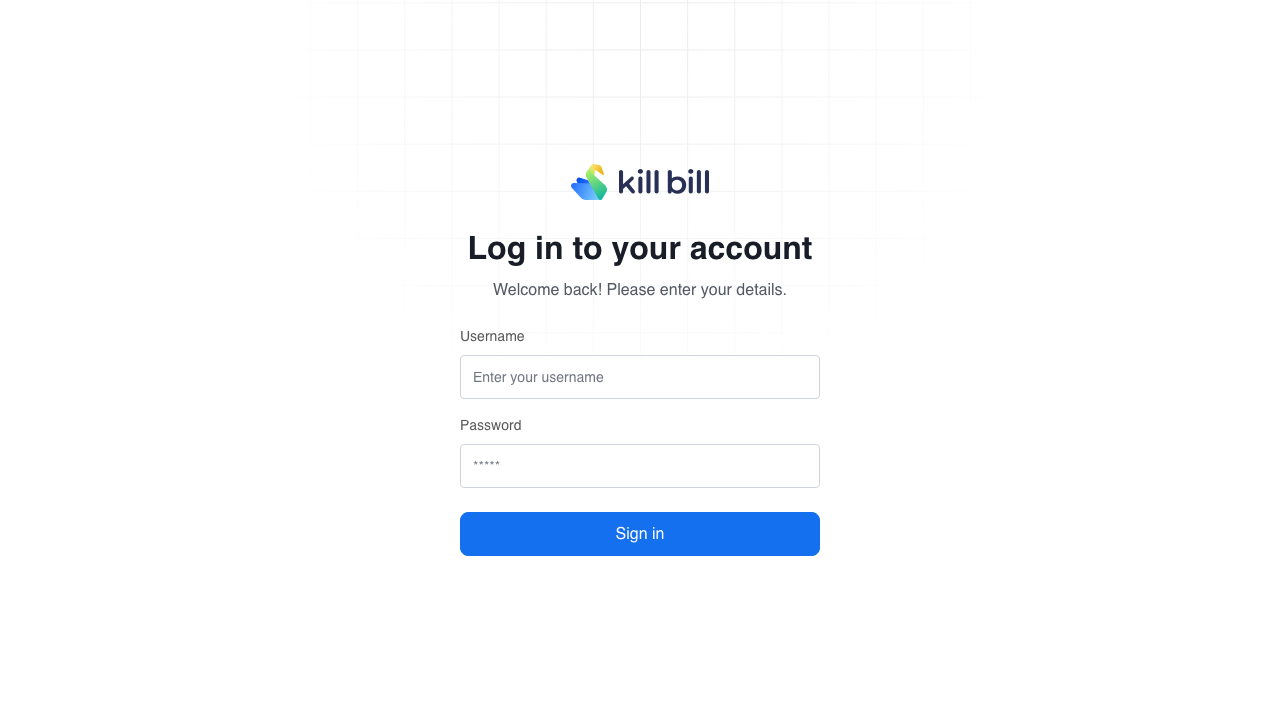
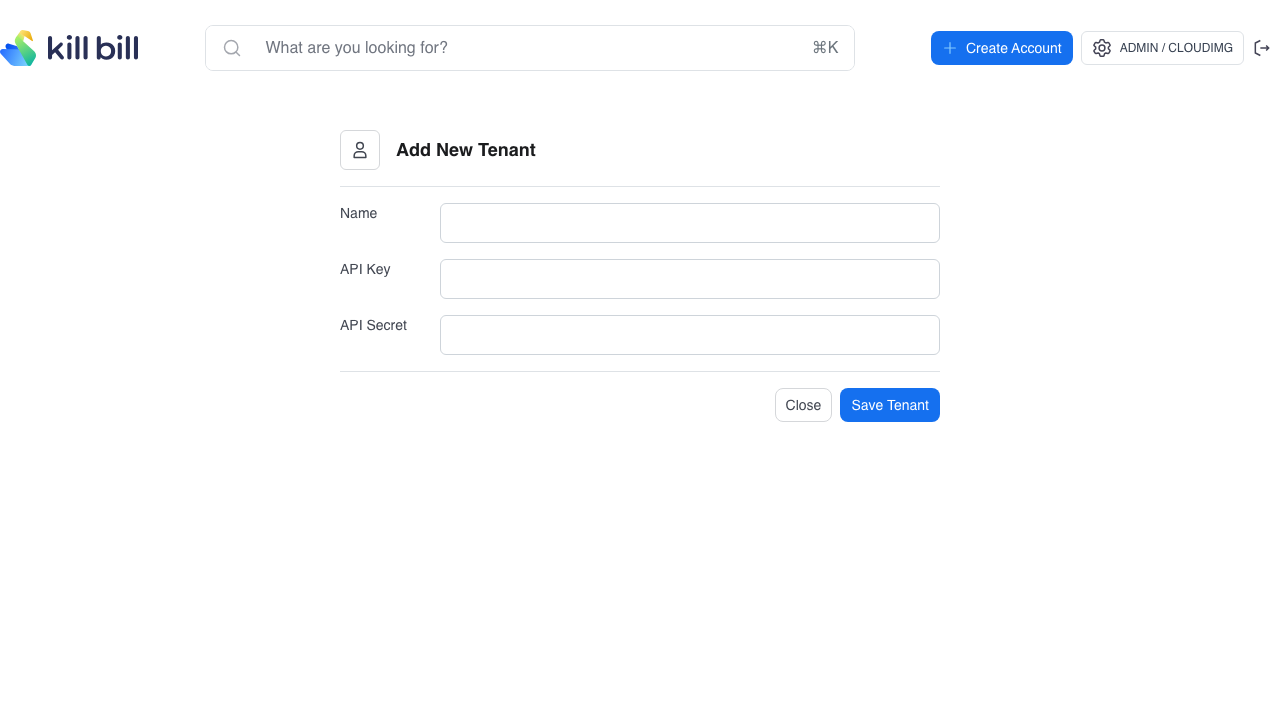
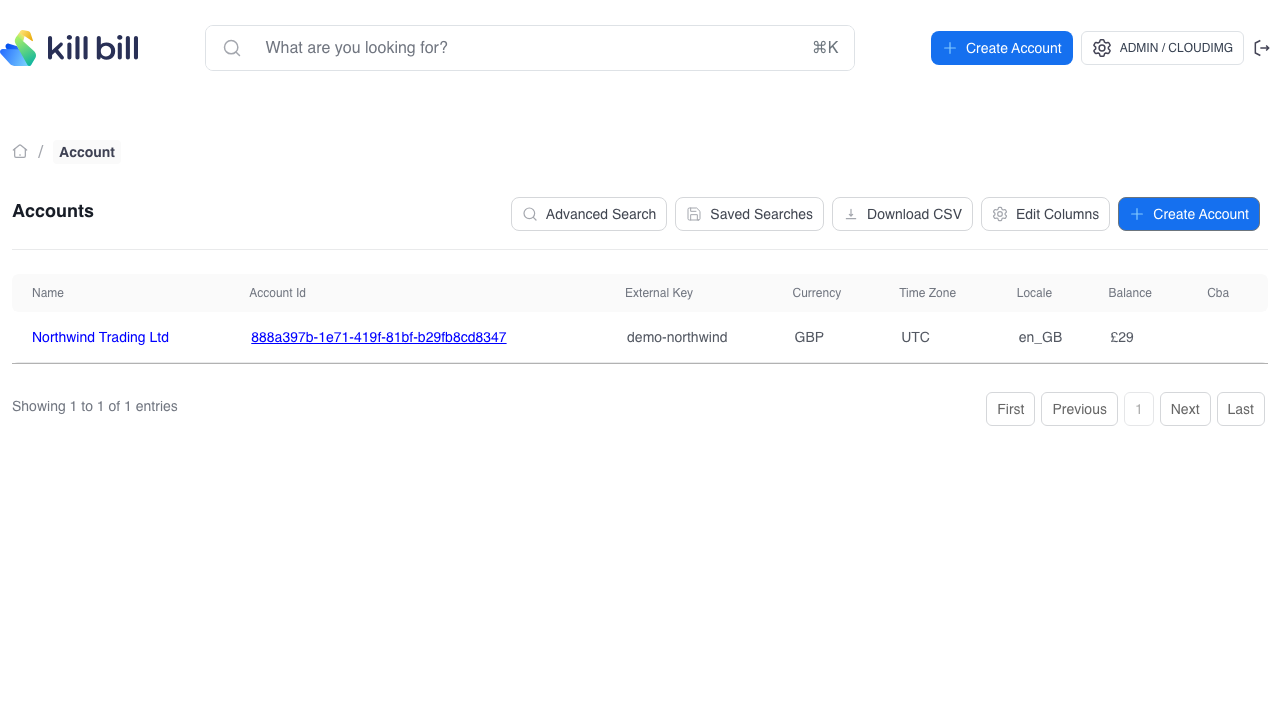
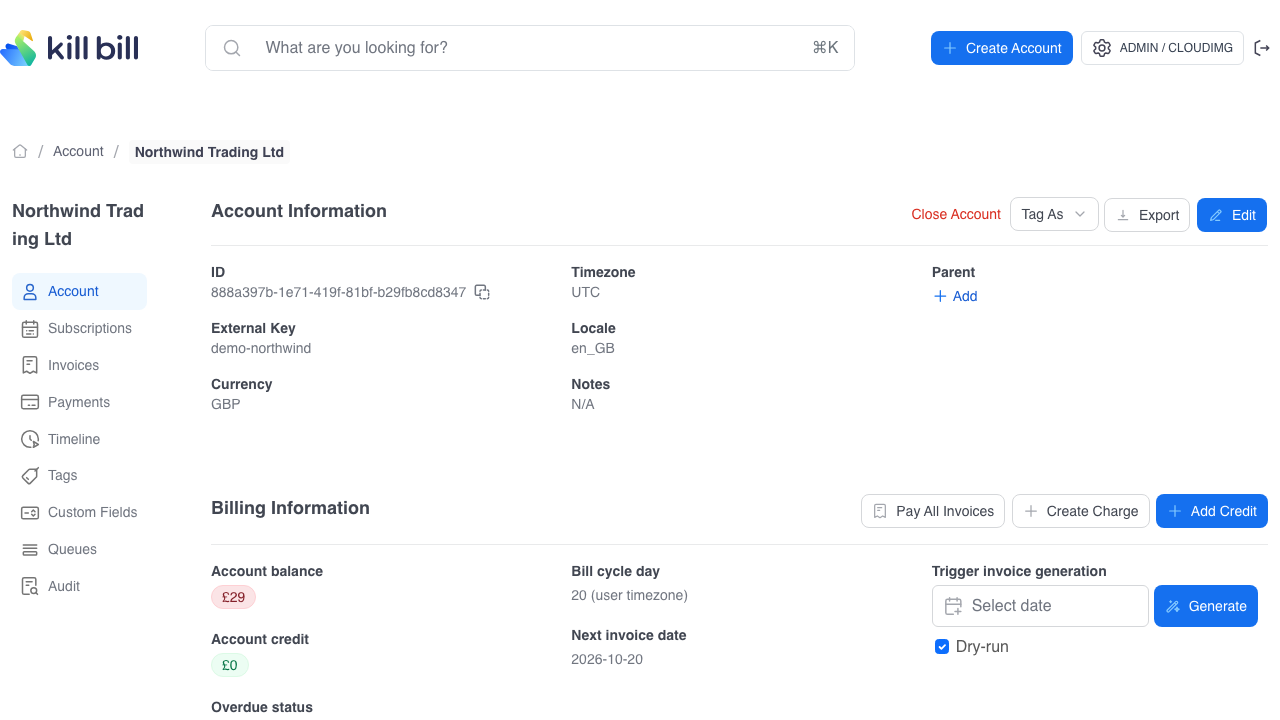
Real screenshots taken while testing this image against its deployment guide.

Actual Budget is a free, open source, local first personal finance application built around the proven envelope budgetin...

Admidio is the open source membership management platform for clubs, associations and non profit organisations.

AdventureLog is a self-hosted travel companion. It lets you log the countries and regions you have visited, plan future ...
Aim is an open-source ML experiment tracker: your training code logs metrics, hyperparameters and other artifacts as it ...

The cloudimg image ships the free and open source, GPL-3.0 licensed AirTrail application, run the officially supported w...
Akkoma is a lightweight, highly customisable open-source server for the fediverse: a self-hosted, federated microbloggin...