Base
Hardened build
minimal ports, security patches applied at build time
Open source test case management for QA and engineering teams
Kiwi TCMS is an open source test case management system for planning, organising and tracking manual and automated testing. Teams manage products, test plans, test cases and test runs, record executions, track requirements, and integrate with their bug tracker, all through a web console and a full REST and JSON-RPC API.
cloudimg ships Kiwi TCMS as a ready to run appliance: the official container stack behind an nginx TLS front door, the database and uploads on a dedicated resizable data volume, every application secret and a strong administrator account generated uniquely on first boot, public self registration disabled, and 24/7 support.
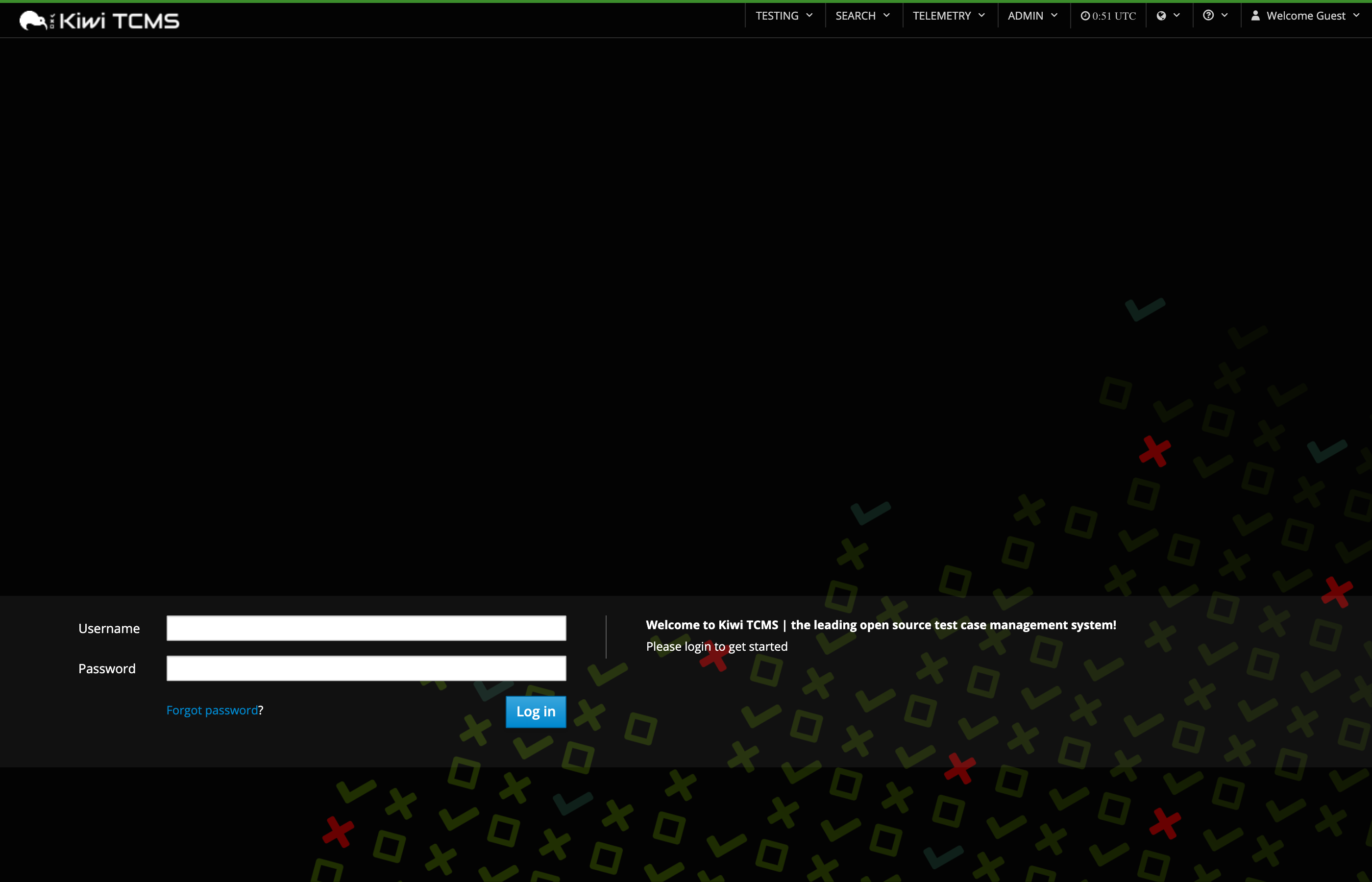
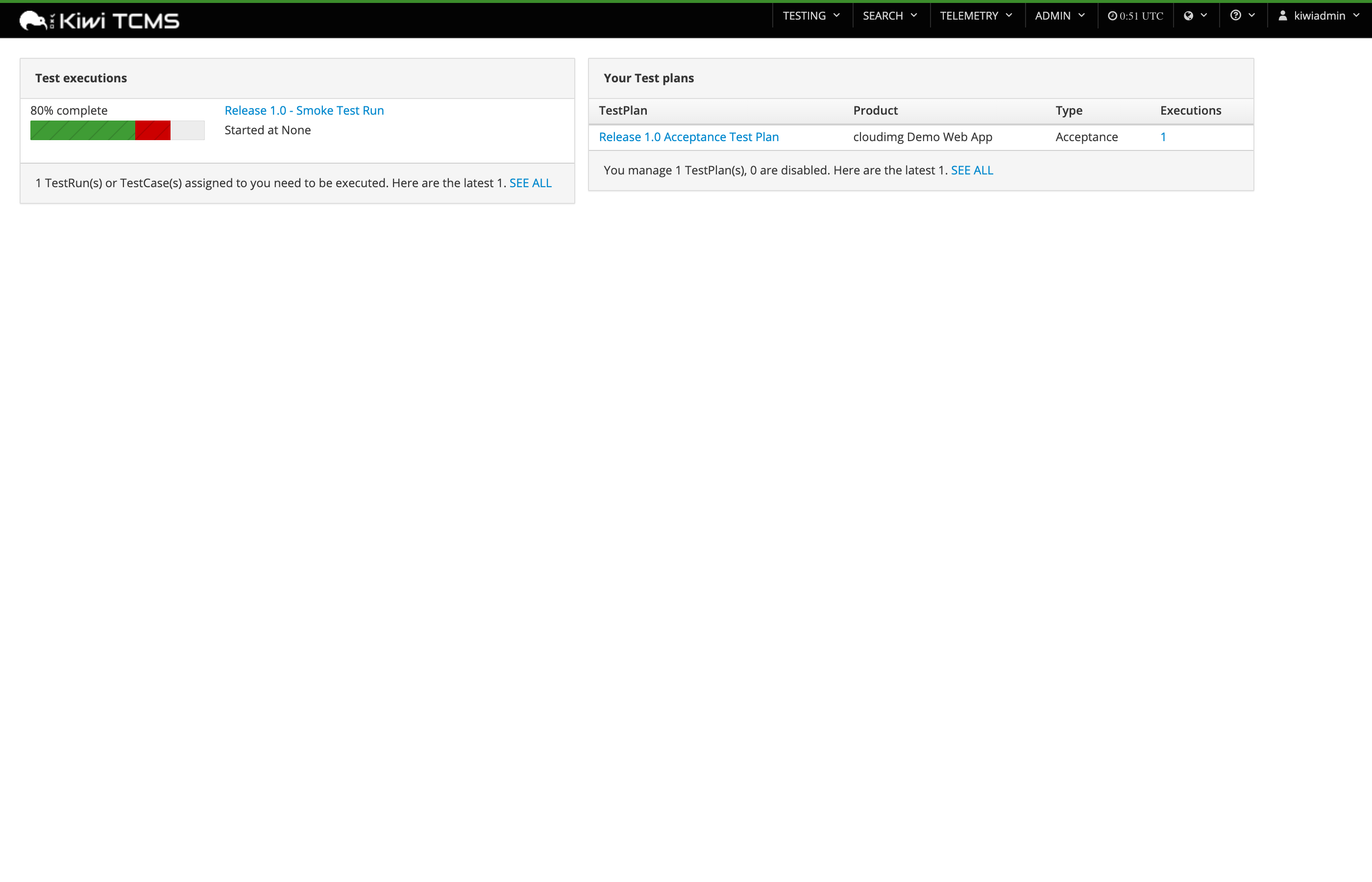
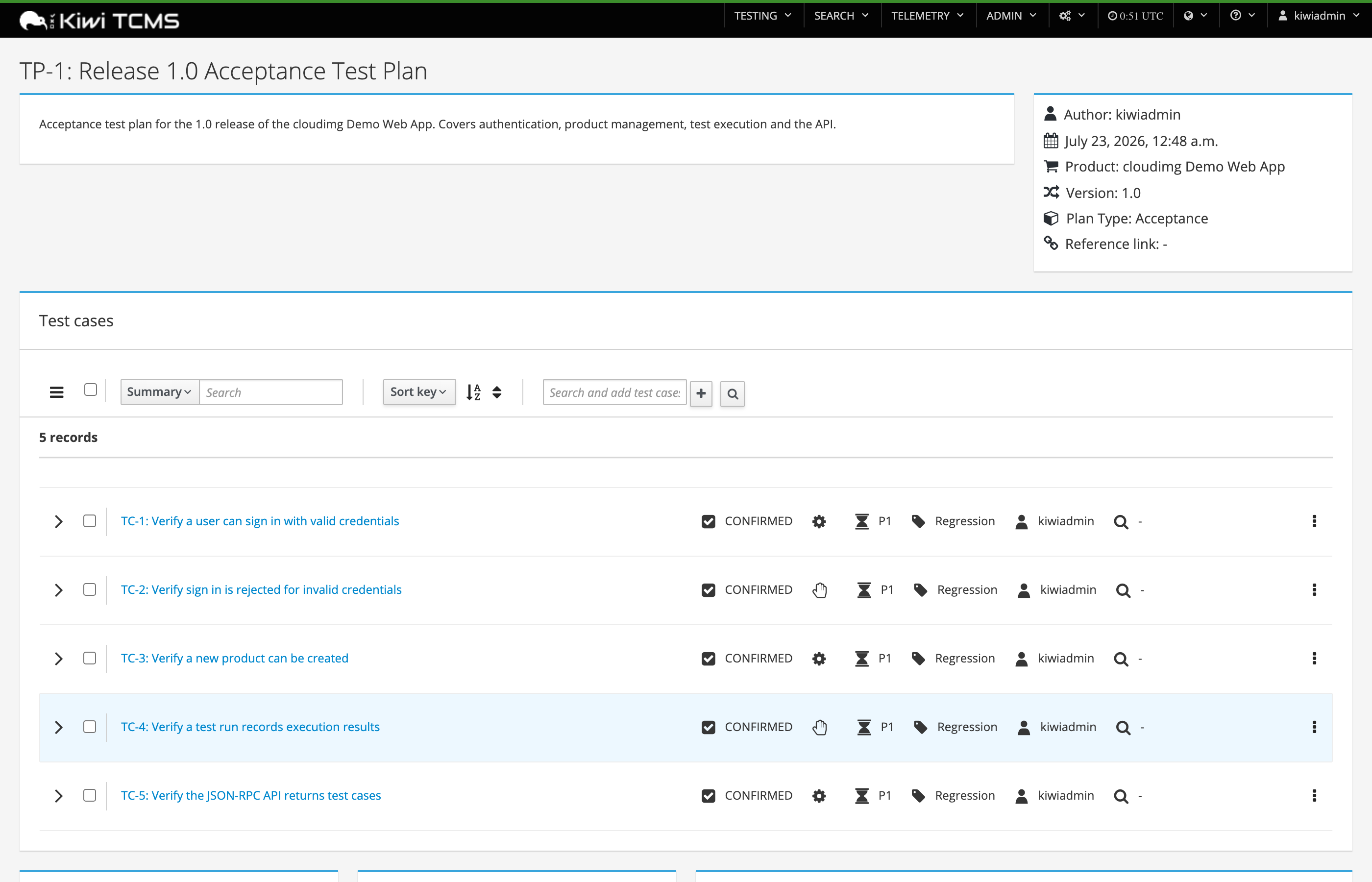
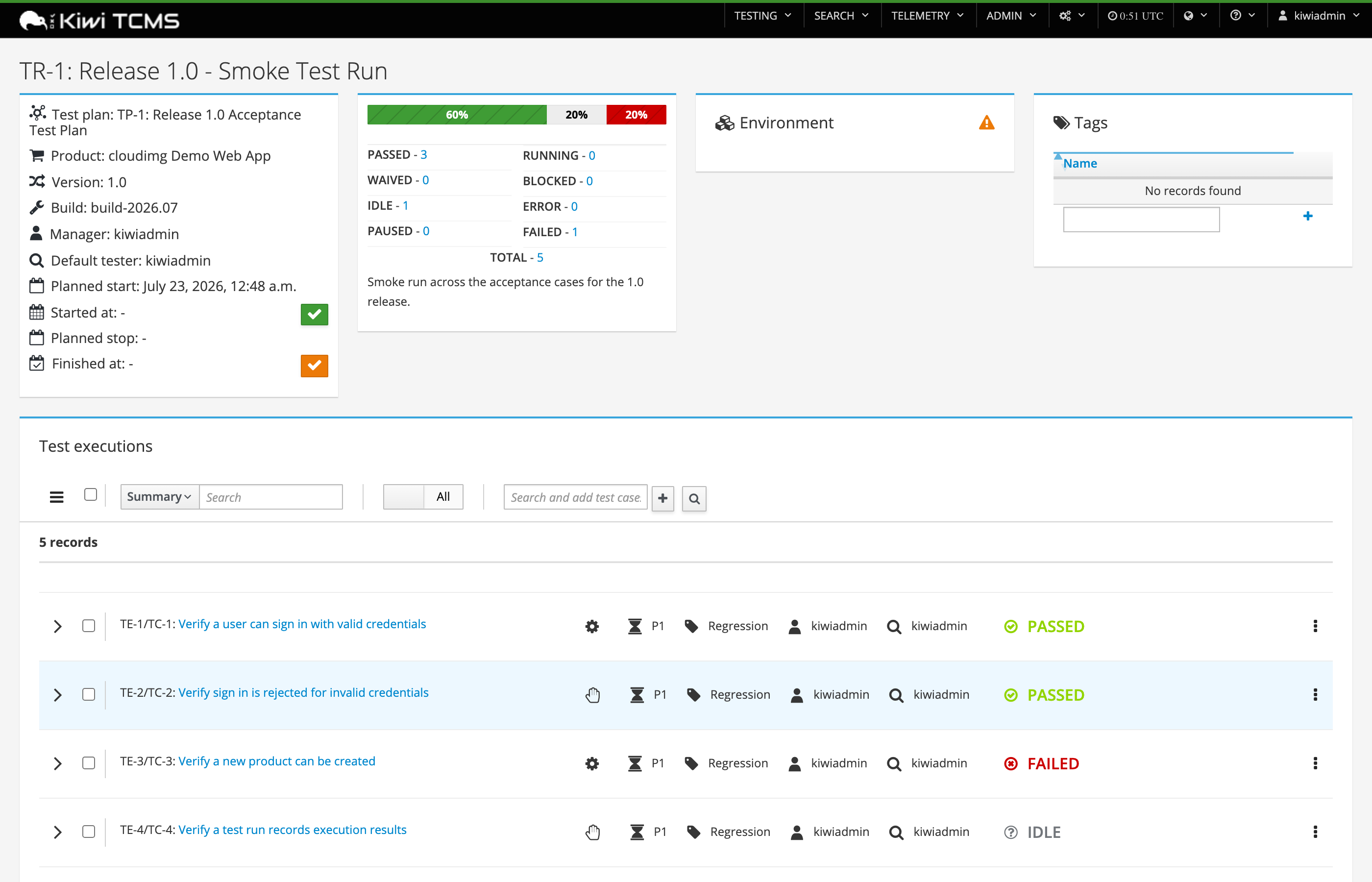
Real screenshots taken while testing this image against its deployment guide.
This is a repackaged open source software product wherein additional charges apply for cloudimg support services.
Overview
Kiwi TCMS is a mature, open source test case management system used by QA and engineering teams to plan, organise and track manual and automated testing. This image delivers Kiwi TCMS fully installed and running as the official Docker Compose topology, so a working test management console is serving over HTTPS within minutes of launch.
Why This Image Instead of Self-Deployment
Deploying Kiwi TCMS from the upstream repository requires wiring the Compose stack, generating a Django secret key, configuring the database, provisioning TLS, disabling open self-registration and integrating everything with systemd. This image removes that operational burden: every component is pre-configured and tested, all secrets and a strong administrator password are generated automatically on first boot, stateful data lives on a dedicated resizable disk, and the full stack starts on boot via systemd behind an nginx TLS front door.
Application Stack
The appliance runs the official Kiwi TCMS Compose topology: the Kiwi web application (a Django app served by Apache and mod_wsgi) and a MariaDB database. The database is kept on the internal container network with no externally reachable port. Host nginx terminates TLS on port 443 with a per-instance self-signed certificate and reverse-proxies to the application; plain HTTP on port 80 redirects to HTTPS. The database volume and the uploads volume are relocated onto a dedicated, independently resizable data disk kept separate from the operating system disk.
Plan, Execute and Track Testing
Kiwi TCMS organises testing into products, test plans and test cases, and records execution results across test runs. Track requirements, link findings to your bug tracker, capture history and comments on every case, and use the built-in reporting and telemetry to communicate testing progress and coverage to your team. A full API is available for automation and CI/CD integration.
Secure First Boot
No shared or default password ships in the image, and there is no built-in default administrator account. On the first boot of your instance a one-shot service generates a fresh Django secret key, a fresh database password and a strong, unique administrator username and password, provisions a per-instance TLS certificate, initialises an empty database, disables public self-registration, and records the administrator credentials in a file that only the root user can read. Every instance is independent.
Ready To Use
Retrieve the generated administrator credentials over SSH, open the console in your browser over HTTPS, and sign in to create your first product and test plan. The REST and JSON-RPC API is available for automating test result submission from your pipeline.
Use Cases
QA teams centralise manual test plans, cases and execution runs in a single system of record with history, requirements traceability and reporting. Engineering teams submit automated test results from CI/CD pipelines through the Kiwi TCMS API and correlate them with manual testing coverage. Compliance-driven teams keep an auditable record of what was tested, by whom and with what outcome across releases.
cloudimg Support
24/7 technical support by email and chat. Our engineers help with deployment, TLS and custom domain configuration, bug-tracker and API integration, backup and storage planning, and scaling the stack.
All product and company names are trademarks or registered trademarks of their respective holders. Use of them does not imply any affiliation with or endorsement by them.

Accent is an open source, developer-oriented translation and localization management platform.
This image runs Apache Archiva, the open source build-artifact repository manager - a central, governed store for the bi...

This image runs Apache Camel Karavan, an open source visual integration designer and toolkit for Apache Camel.

Launch a production-ready Apache DolphinScheduler workflow scheduler in minutes with zero setup. All-in-one standalone d...

Apache JMeter is the de-facto open-source tool for load and performance testing of web applications, APIs, databases and...

This image runs Apache Subversion (SVN) 1.14, the Apache Software Foundation's enterprise centralised version-control sy...