Base
Hardened build
minimal ports, security patches applied at build time
an open source double entry accounting and ERP system that runs the whole order to cash and procure to pay cycle in one ledger.
LedgerSMB is a double entry accounting and ERP system for small and medium businesses, maintained continuously since it forked from SQL-Ledger in 2006. Everything it records lands in a single general ledger, so the sales side and the purchase side reconcile against the same accounts rather than against each other.
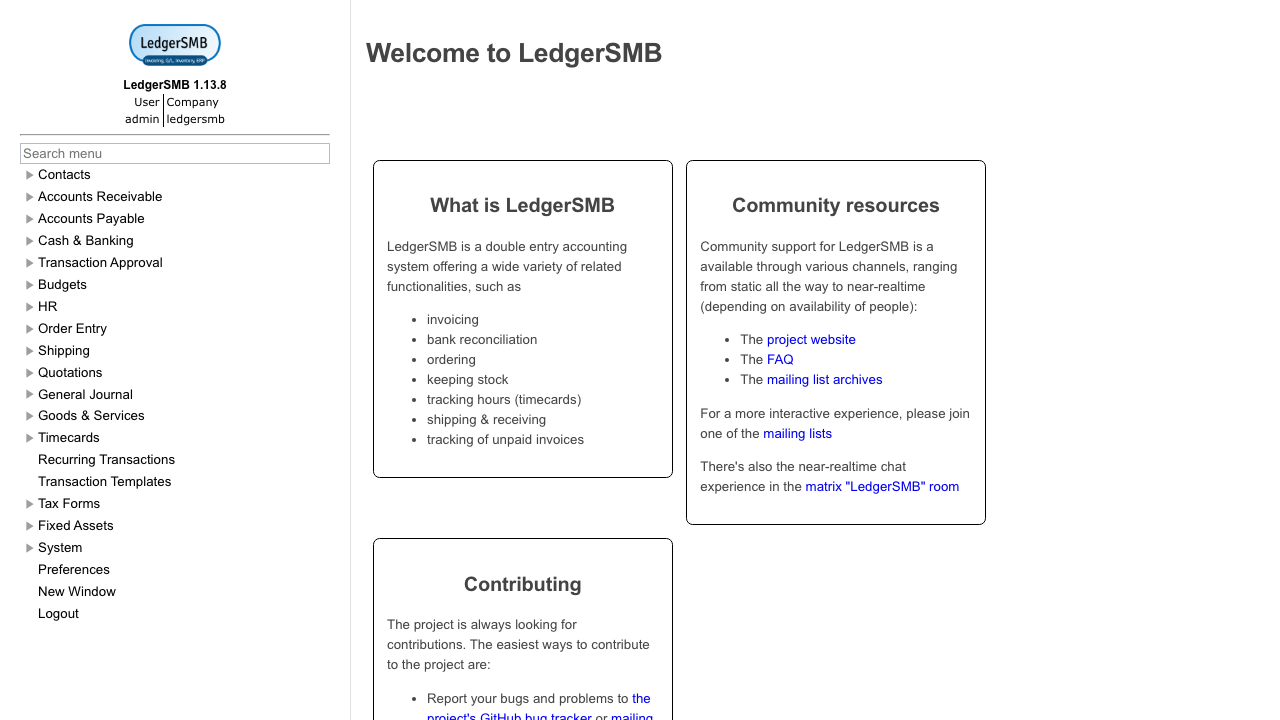
On the sales side it carries quotations, sales orders, invoices, receipts and customer statements. On the purchase side, requests for quotation, purchase orders, vendor invoices and payments. Around those sit parts and inventory, projects and timecards, fixed assets with depreciation, budgeting and bank reconciliation, and the reporting that makes the ledger useful: trial balance, income statement, balance sheet and aged receivables.
Customer facing documents are template driven rather than hard coded, so invoices, orders and statements can be shaped to a business's own stationery and produced as PDF, HTML, CSV or ODF. A REST interface exposes the ledger for integration, and the permission model is built on database roles, so what a user can see and do is enforced by the database itself rather than only by the interface.
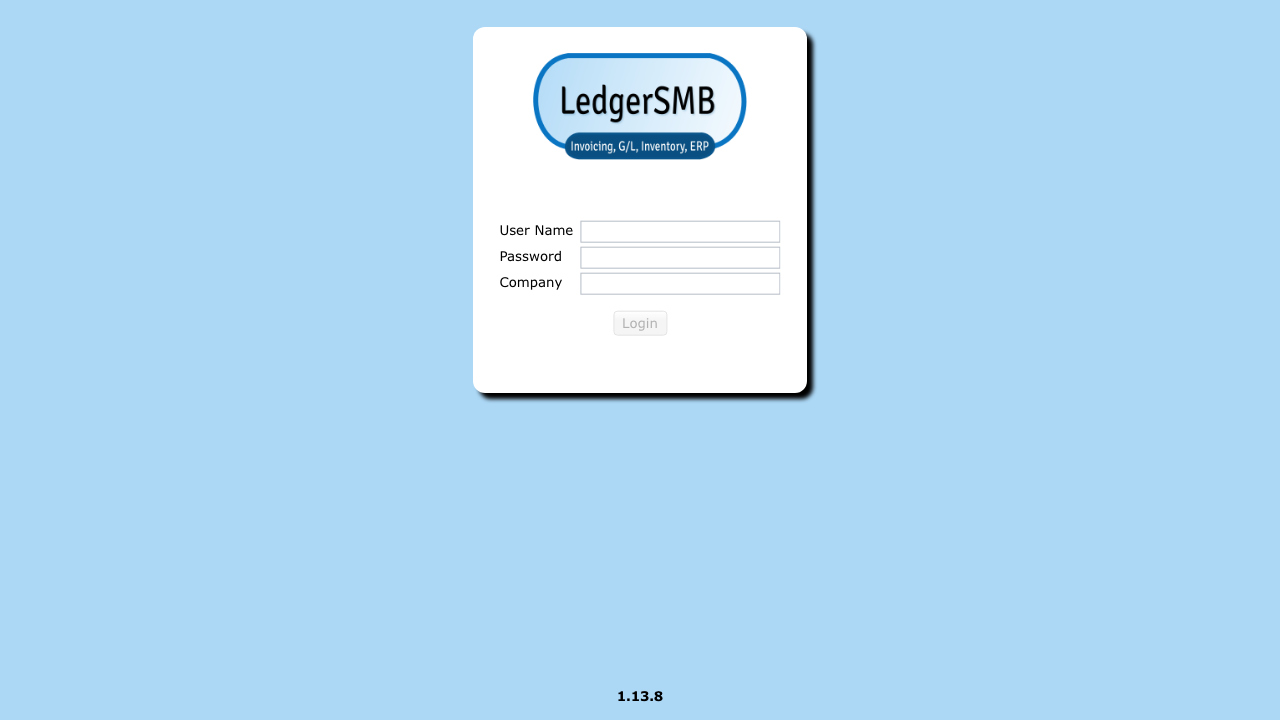
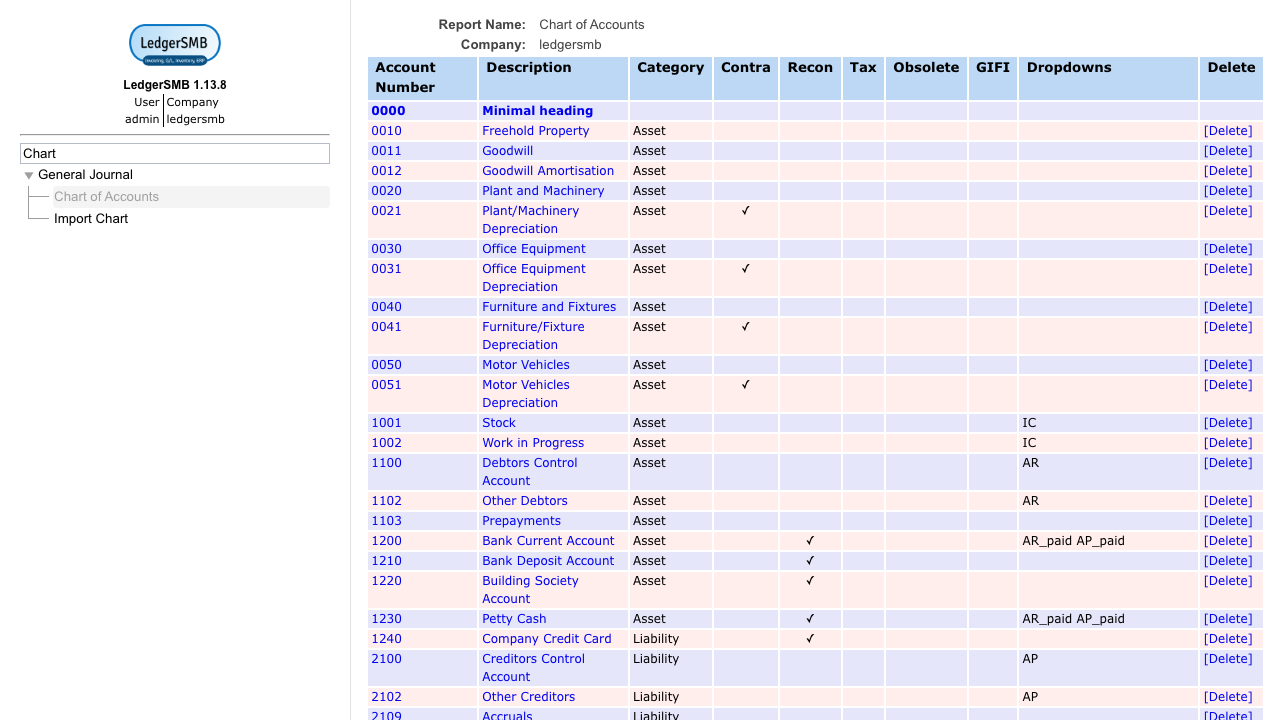
A company database and a general chart of accounts are already created, so the ledger is usable on first sign in rather than presenting a setup wizard and an empty database. Particular care goes into the administration console: LedgerSMB's setup.pl can create, upgrade and destroy company databases and authenticates as a database superuser, so on this image it sits behind two checks that fail independently, one at the web server and one at the database. No administrator password, no database password and no TLS private key exist inside the image at all; each instance generates its own on first boot and writes them to a root only file, and the web interface does not answer until that has finished. The application server and the database are both bound to the loopback interface behind an HTTPS front end that overwrites the client supplied forwarding headers. Every image is paired with a step by step deploy guide and 24/7 cloudimg support.
Real screenshots taken while testing this image against its deployment guide.

Actual Budget is a free, open source, local first personal finance application built around the proven envelope budgetin...

Admidio is the open source membership management platform for clubs, associations and non profit organisations.

AdventureLog is a self-hosted travel companion. It lets you log the countries and regions you have visited, plan future ...
Aim is an open-source ML experiment tracker: your training code logs metrics, hyperparameters and other artifacts as it ...

The cloudimg image ships the free and open source, GPL-3.0 licensed AirTrail application, run the officially supported w...
Akkoma is a lightweight, highly customisable open-source server for the fediverse: a self-hosted, federated microbloggin...