Base
Hardened build
minimal ports, security patches applied at build time
Nextcloud file cloud with ONLYOFFICE document editing on the same server: store, share and edit documents, spreadsheets and presentations in the browser from the moment it boots.
Nextcloud is the open source content collaboration platform organisations run to keep file sync and share, calendars, contacts and team workflows on infrastructure they control. On its own it stores and shares documents; to edit them in the browser it needs a separate document server, which is the piece most people end up assembling by hand.
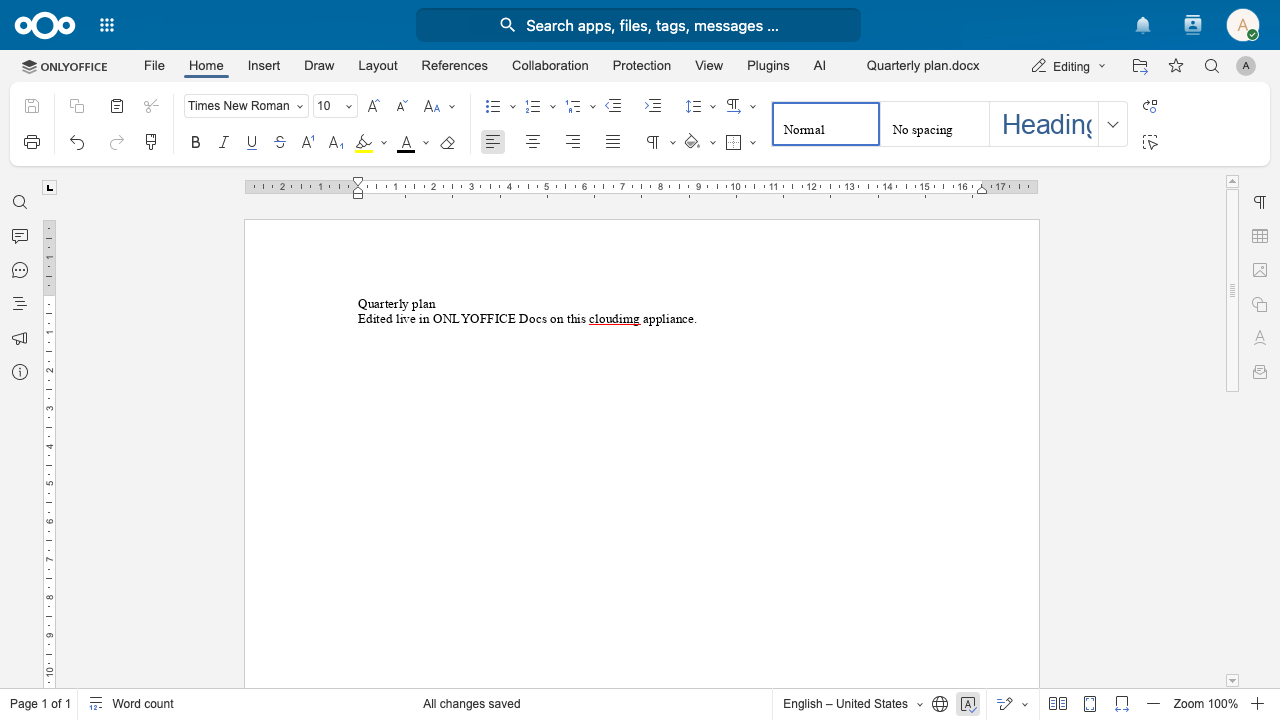
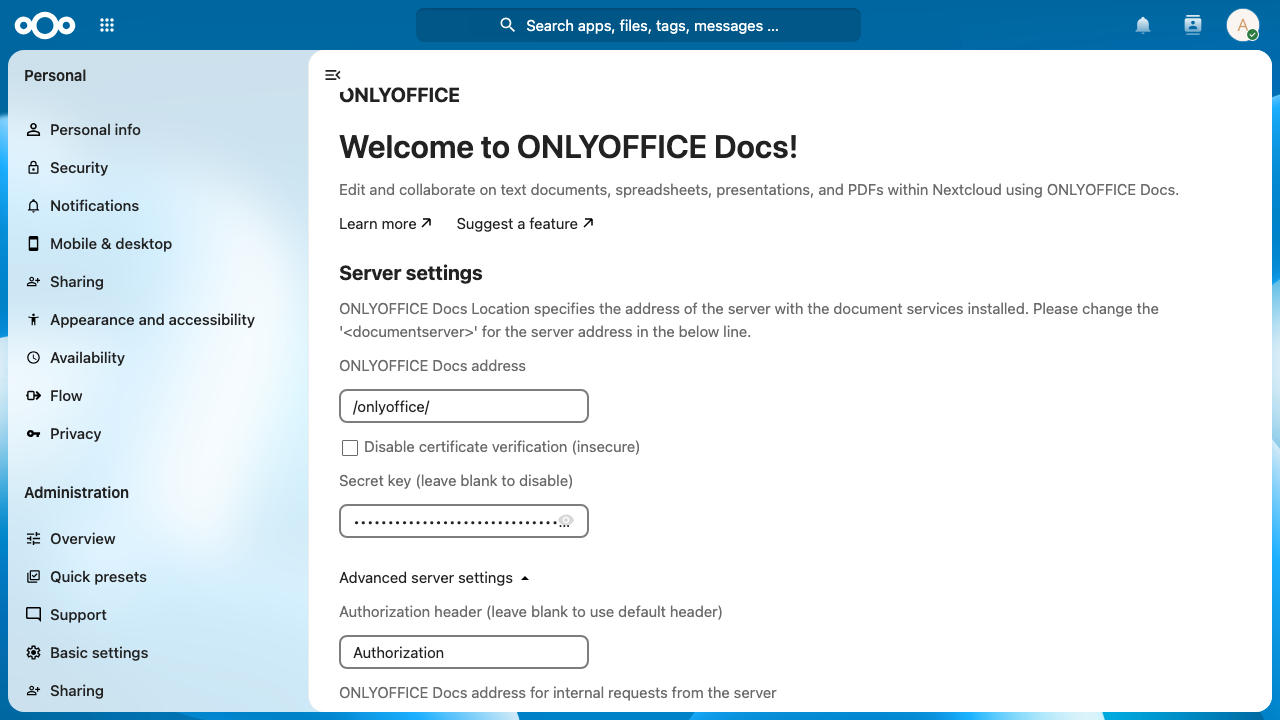
This image ships that assembly finished. Nextcloud Server comes pre installed and unmodified with the official ONLYOFFICE connector enabled, and an ONLYOFFICE Docs Community server runs on the same machine, so DOCX, XLSX and PPTX files open for real time collaborative editing in the browser with no external service and no container layer. Both halves are wired over the loopback interface: Nextcloud talks to the document server locally, the document server fetches and saves documents through a local callback, and the browser reaches both through one TLS front door on the same origin.
ONLYOFFICE Docs Community is the free self hosted edition of the ONLYOFFICE editors. Earlier releases capped it at twenty simultaneously opened documents; the version in this image removed that limitation, so what the Community edition lacks relative to the paid edition is the vendor's own support contract and a few enterprise integrations, not capacity.
A Nextcloud and document server pairing is easy to get wrong: the document server is often left listening on every interface, its administrative endpoints end up trusting the reverse proxy, and a build time database password ships inside the image. cloudimg closes each of those before the instance is ever reachable. The document server binds to the loopback interface and is served through nginx under the same origin as Nextcloud, its internal interfaces are blocked at the front door, a default deny host firewall covers the one listener upstream offers no way to pin, and nothing but SSH, HTTP and HTTPS is exposed. There is no known credential anywhere in the image: on the first boot of every instance a unique administrator password, database password, cache password, document server signing secret and TLS certificate are generated and written to a file only root can read, so two instances from this image share nothing. The browser facing editor address is a relative path rather than a baked in IP, so moving the instance behind your own domain needs no reconfiguration. User data and the database live on a dedicated data disk you can resize and snapshot independently of the operating system disk, the Ubuntu base is fully patched with unattended security updates enabled, and every image is paired with a step by step deploy guide verified against this exact build and backed by 24/7 cloudimg support.
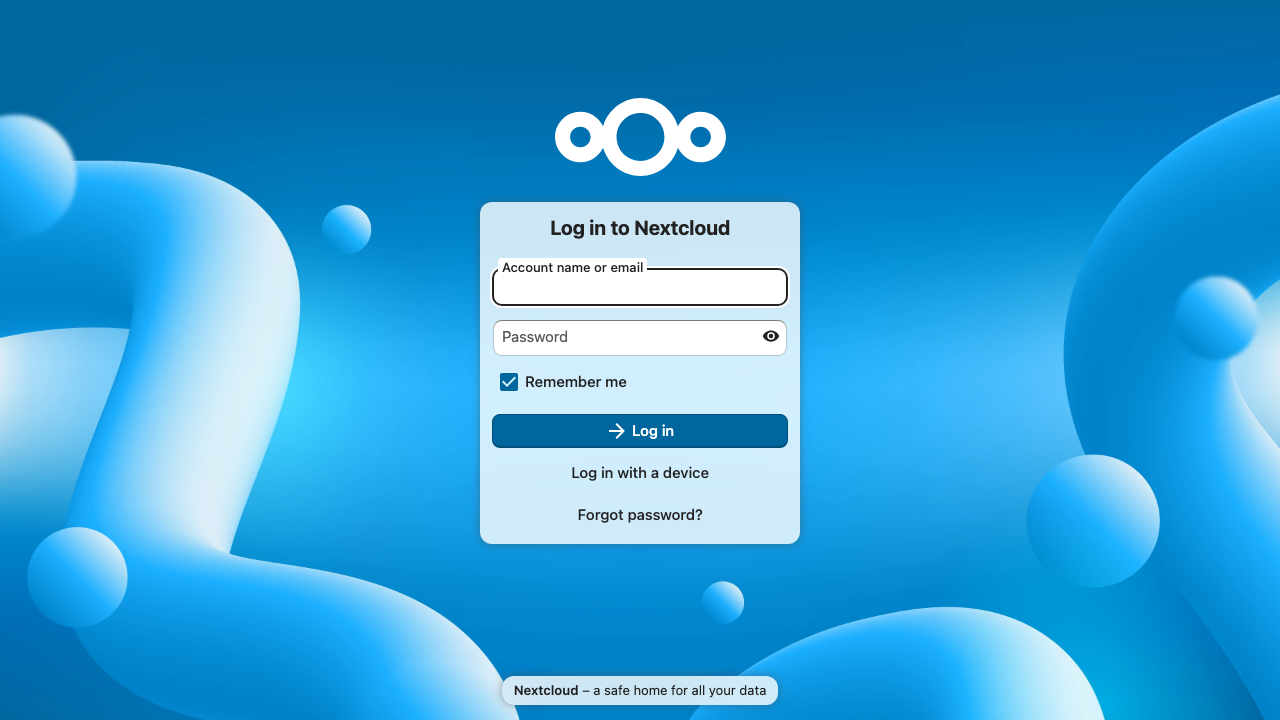
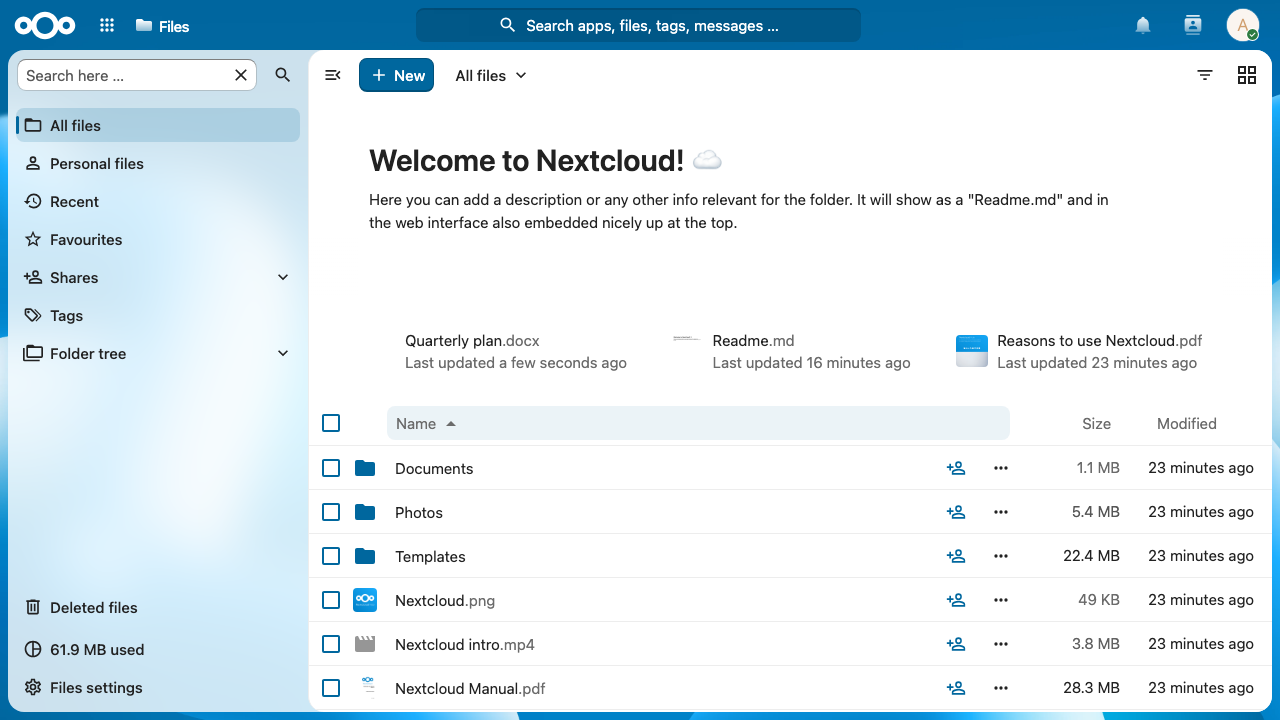
Real screenshots taken while testing this image against its deployment guide.

Actual Budget is a free, open source, local first personal finance application built around the proven envelope budgetin...

Admidio is the open source membership management platform for clubs, associations and non profit organisations.

AdventureLog is a self-hosted travel companion. It lets you log the countries and regions you have visited, plan future ...
Aim is an open-source ML experiment tracker: your training code logs metrics, hyperparameters and other artifacts as it ...

The cloudimg image ships the free and open source, GPL-3.0 licensed AirTrail application, run the officially supported w...
Akkoma is a lightweight, highly customisable open-source server for the fediverse: a self-hosted, federated microbloggin...