Base
Hardened build
minimal ports, security patches applied at build time

Packeton, the open source private Composer package repository, hosting your PHP packages the moment it boots.
Packeton is a free, open source, self hosted private Composer package repository for PHP, your own private Packagist. It hosts private Composer packages, proxies and mirrors packages from public sources, integrates version control repositories over git, subversion and mercurial, and serves package metadata and zipball archives to composer clients, with per user API tokens and fine grained permissions controlling who can read and publish.
It suits development teams that want to distribute private PHP libraries internally, keep their package artifacts on infrastructure they control, and authenticate their CI systems and developers against a private repository instead of a public SaaS.
cloudimg delivers Packeton fully installed and configured as a Symfony application on nginx and PHP, backed by a local PostgreSQL database and Redis, with a background worker and cron already running, so the repository is serving the moment the instance boots. A unique administrator password, a fresh application secret and a rotated database password are generated on first boot, so no default or shared credentials ship in the image, and the database and cache are bound to localhost. The database tier and the application tree with stored package archives each sit on their own dedicated, independently resizable disk, separate from the operating system disk. Every image is paired with a step by step deploy guide and backed by 24/7 support.
Real screenshots taken while testing this image against its deployment guide.
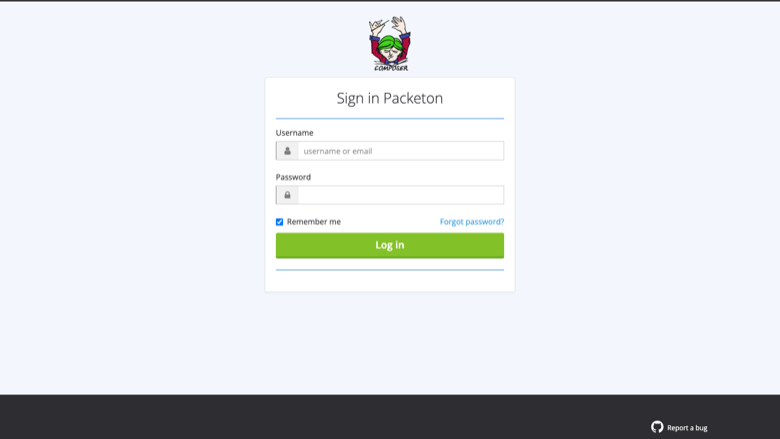
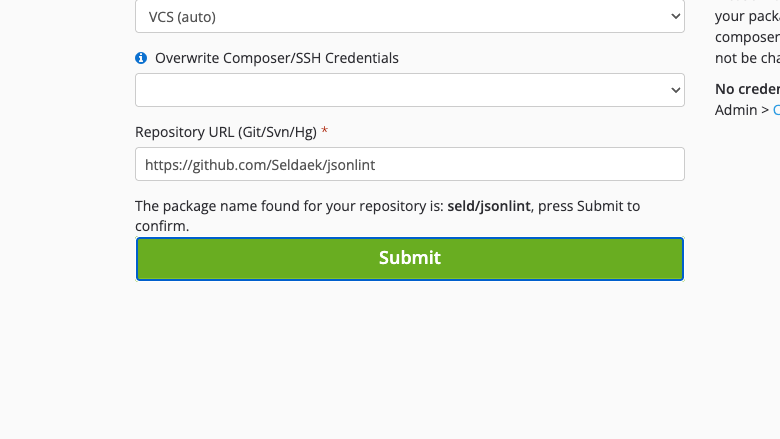
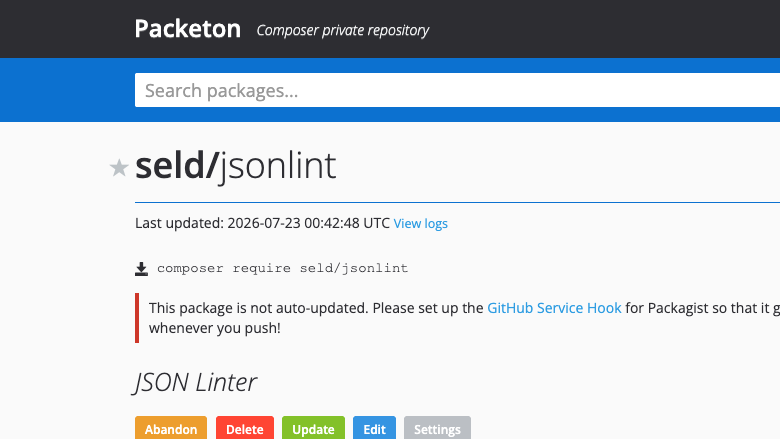
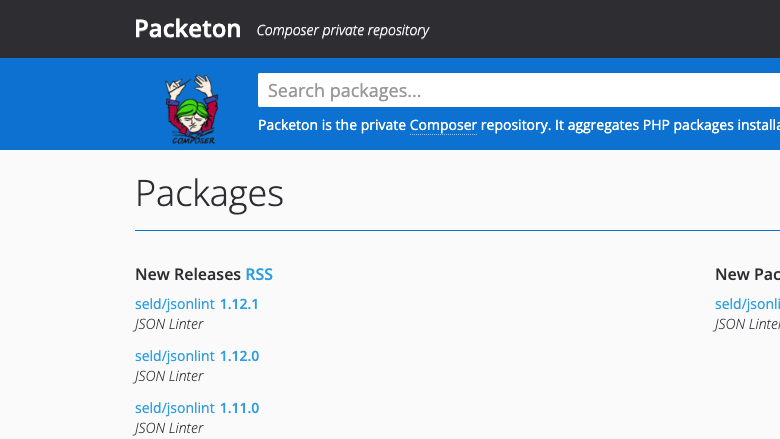
This is a repackaged open source software product wherein additional charges apply for cloudimg support services.
## Why Packeton on AWS?
PHP teams managing private libraries face a choice: pay recurring per-seat SaaS fees for hosted Packagist, wrestle with the limited feature set of static generators like Satis, or spend hours assembling a self-hosted stack from scratch. Packeton eliminates that trade-off. This AMI delivers a fully configured private Composer package repository - your own private Packagist - serving packages within minutes of launch, with no per-seat pricing and complete data sovereignty.
Example scenario: A 20-developer PHP agency managing 40+ internal libraries across client projects launches this AMI on a single EC2 instance. Within minutes, the team has a private repository serving Composer v1 and v2 metadata, webhook-driven updates from their GitLab server, and per-developer API tokens - all without a single dependency leaving their VPC.
## What You Get
## How It Compares
## Production-Hardened Architecture
A one-shot first-boot service generates a fresh application secret, rotates the PostgreSQL password, builds the database schema, and sets a unique administrator password - written to a root-only file. Systemd manages every component, starting services on boot and restarting on failure. The PostgreSQL datadir and application tree with stored package archives each sit on dedicated, independently resizable EBS volumes separate from the OS disk.
A background worker (packagist:run-workers) and a one-minute cron keep repository metadata, package updates, and mirror synchronisation current.
## Getting Started
1. Launch the AMI on your chosen EC2 instance type.
2. SSH in and retrieve the generated administrator credentials from the root-only file.
3. Browse to the instance address, sign in, add your first VCS repository or upload a package.
4. Point your composer.json at your new private repository and run composer require.
For a guided walkthrough of your first deployment, contact cloudimg support via live chat or email.
## About This Listing
All product and company names are trademarks or registered trademarks of their respective holders. Use of them does not imply any affiliation with or endorsement by them.

Accent is an open source, developer-oriented translation and localization management platform.
This image runs Apache Archiva, the open source build-artifact repository manager - a central, governed store for the bi...

This image runs Apache Camel Karavan, an open source visual integration designer and toolkit for Apache Camel.

Launch a production-ready Apache DolphinScheduler workflow scheduler in minutes with zero setup. All-in-one standalone d...

Apache JMeter is the de-facto open-source tool for load and performance testing of web applications, APIs, databases and...

This image runs Apache Subversion (SVN) 1.14, the Apache Software Foundation's enterprise centralised version-control sy...