Base
Hardened build
minimal ports, security patches applied at build time
the DCIM and asset management system Allegro built to run its own data centre estate, ready to model your sites, racks and hardware the moment it boots.
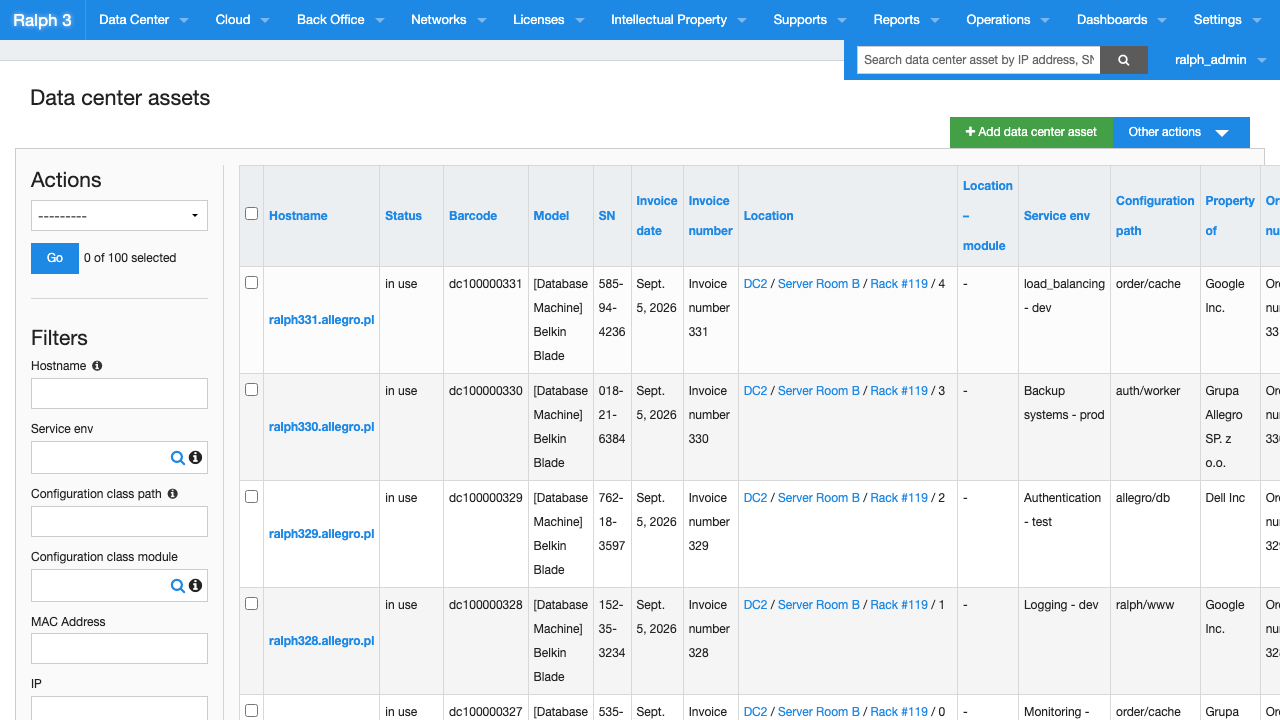
Ralph is an open source DCIM, data centre infrastructure management, and asset management system. It models a physical estate the way an operations team actually thinks about one: data centres contain server rooms, server rooms contain racks, and racks contain hardware at specific rack unit positions. Every machine carries its model, serial number, barcode, status, purchase and invoice details, and the service it belongs to, so the question of what is in that rack and who owns it has one answer rather than several spreadsheets.
Around that core it tracks back office equipment such as laptops and phones through the same lifecycle, and attaches licences, support contracts, domains and networks to the assets they cover. Everything in the model is also available through a REST API, which is how most teams load an existing inventory in bulk and keep it synchronised with the systems that discover hardware automatically. Ralph is built and released by Allegro, the largest e-commerce platform in Poland, which runs its own data centres on it, so the feature set reflects the problems of an estate large enough to need the discipline.
Ralph's own packaging seeds an administrator called ralph with the password ralph, and its shipped settings leave the Django secret key at a literal placeholder and accept requests for any host name, so a quick deployment is reachable with a credential the whole internet already knows. cloudimg never creates that account at all. The single administrator is generated on the first boot of your instance with a password unique to it, alongside the database passwords, the secret key and the TLS certificate, all written to a file only root can read, and first boot refuses to open the front door if the published default account is present. The web interface, the background worker and the web server are each held shut behind a boot gate, so nothing serves a request until those secrets exist. Only SSH and the two web ports are reachable; the database, the cache and the application server are bound to the loopback interface, and the metrics endpoint the framework exposes without authentication is refused at the web server. The application itself is the official upstream release pinned by immutable digest rather than a moving tag, so every instance runs byte identical code, while the web server, database, cache and container runtime all come from the Ubuntu archive and keep receiving unattended security updates for the life of the image. Every instance ships a self test that signs in through the web server exactly as a browser does and proves a wrong password and an anonymous request are both refused, and the image is paired with a step by step deploy guide tested against this exact build and backed by 24/7 cloudimg support.
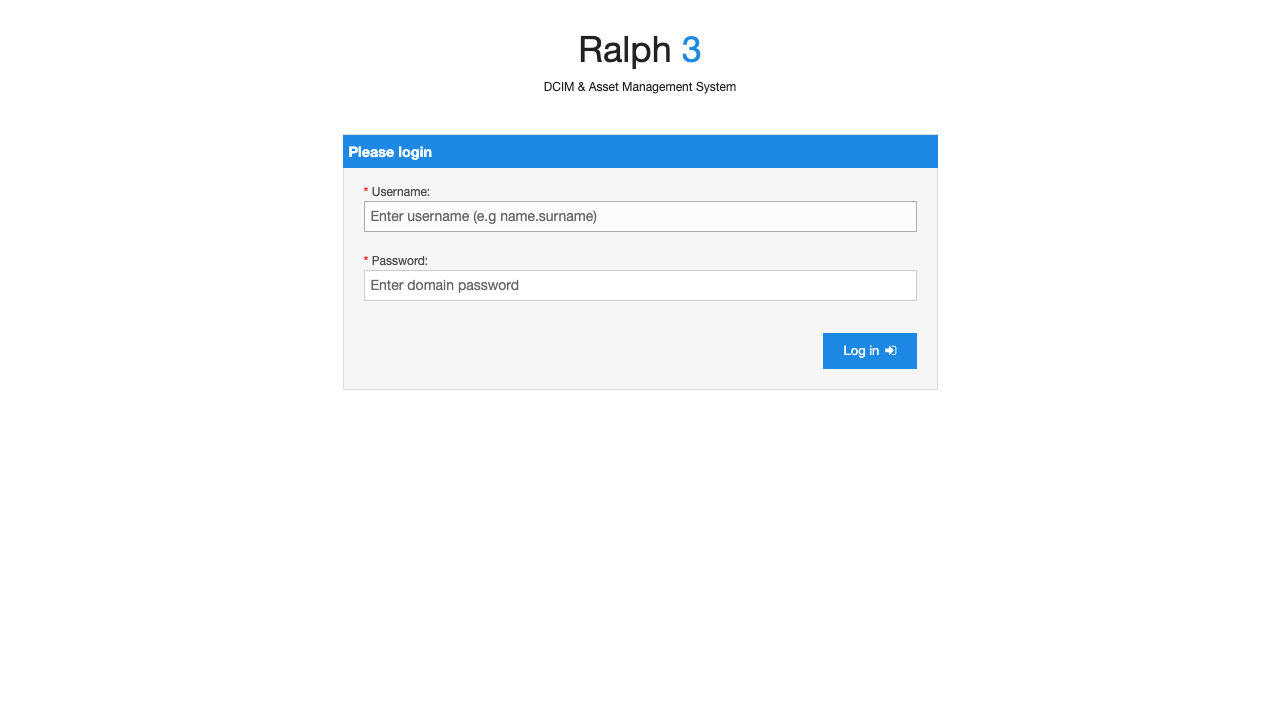
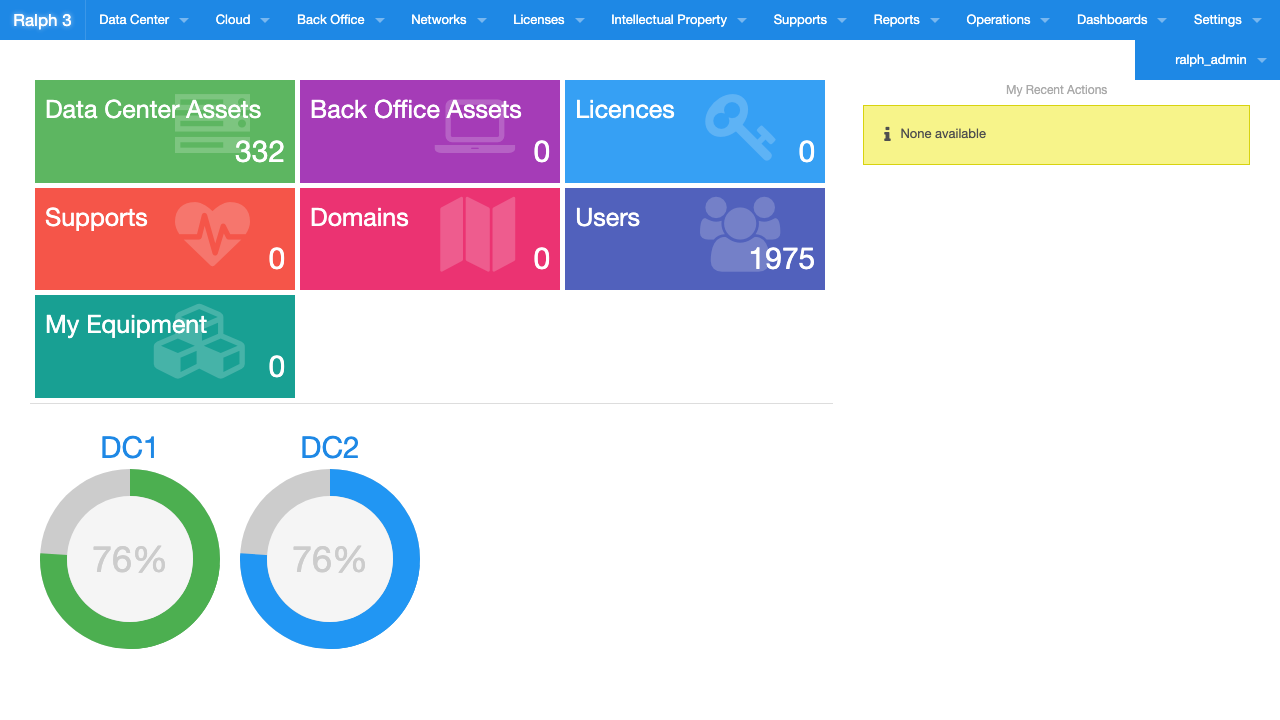
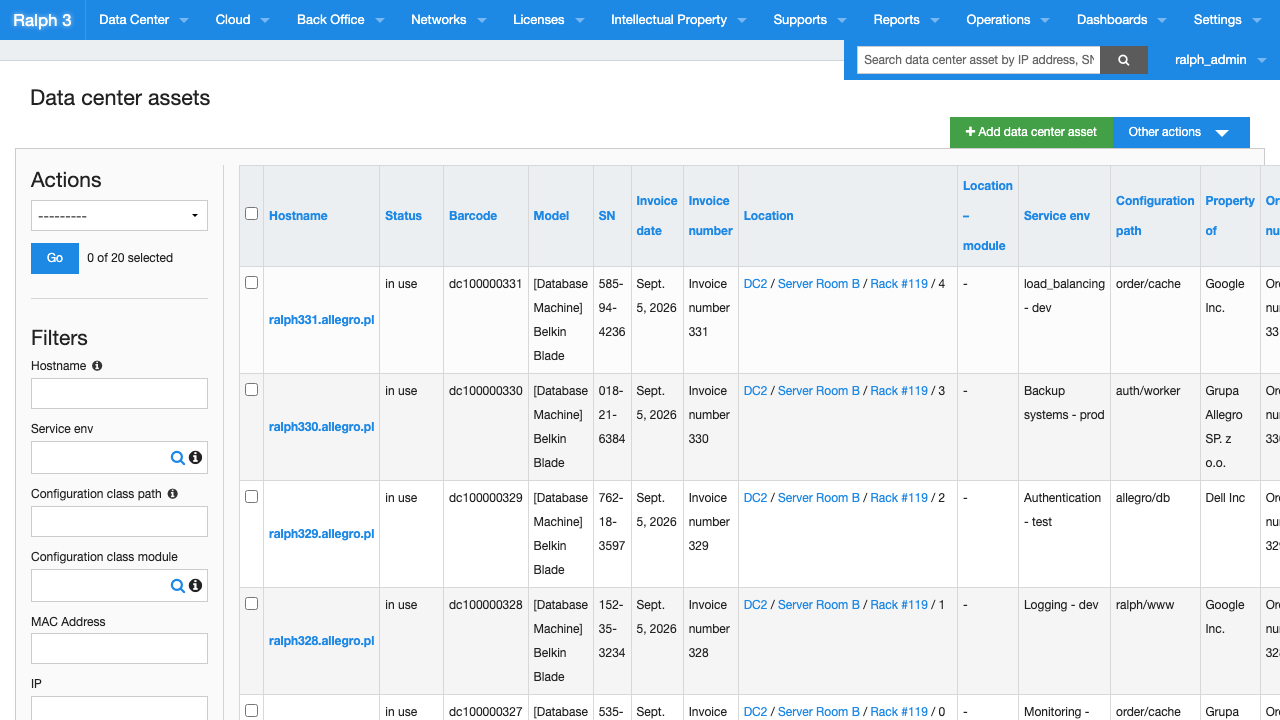
Real screenshots taken while testing this image against its deployment guide.

Actual Budget is a free, open source, local first personal finance application built around the proven envelope budgetin...

Admidio is the open source membership management platform for clubs, associations and non profit organisations.

AdventureLog is a self-hosted travel companion. It lets you log the countries and regions you have visited, plan future ...
Aim is an open-source ML experiment tracker: your training code logs metrics, hyperparameters and other artifacts as it ...

The cloudimg image ships the free and open source, GPL-3.0 licensed AirTrail application, run the officially supported w...
Akkoma is a lightweight, highly customisable open-source server for the fediverse: a self-hosted, federated microbloggin...