Base
Hardened build
minimal ports, security patches applied at build time
RSpace, an open source electronic lab notebook and research data manager that keeps experiments, samples and the files behind them in one auditable record.
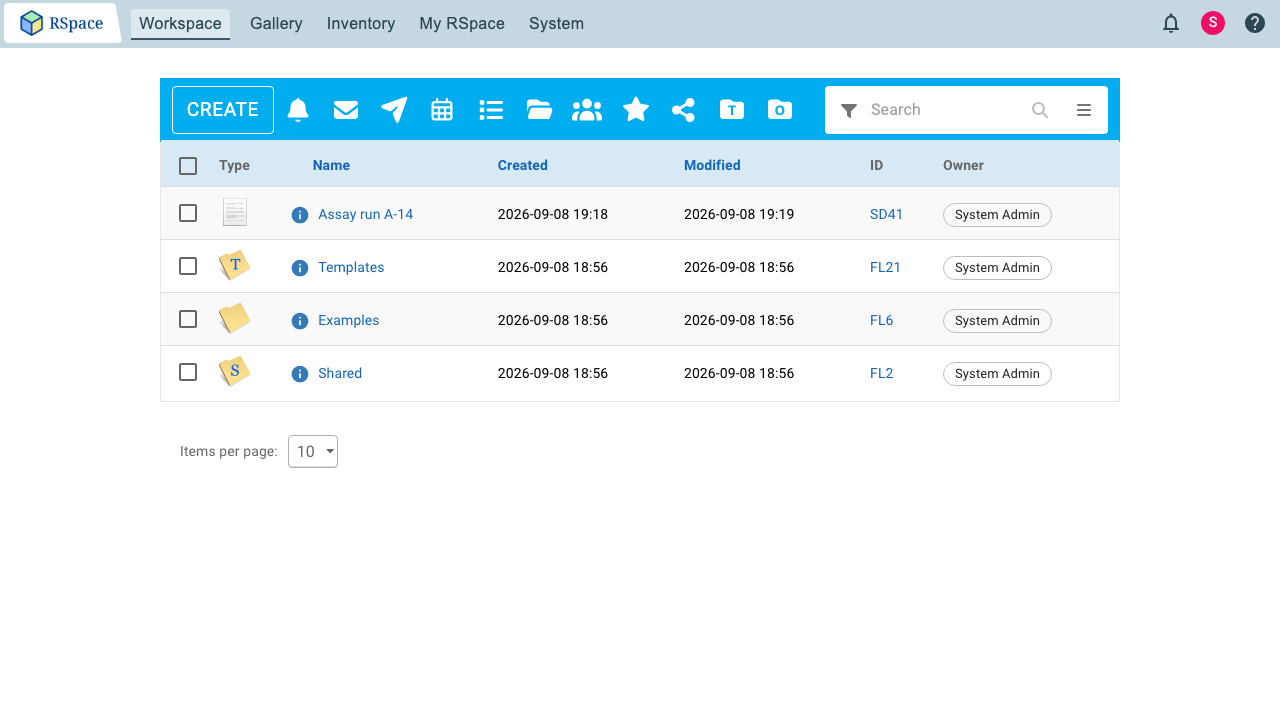
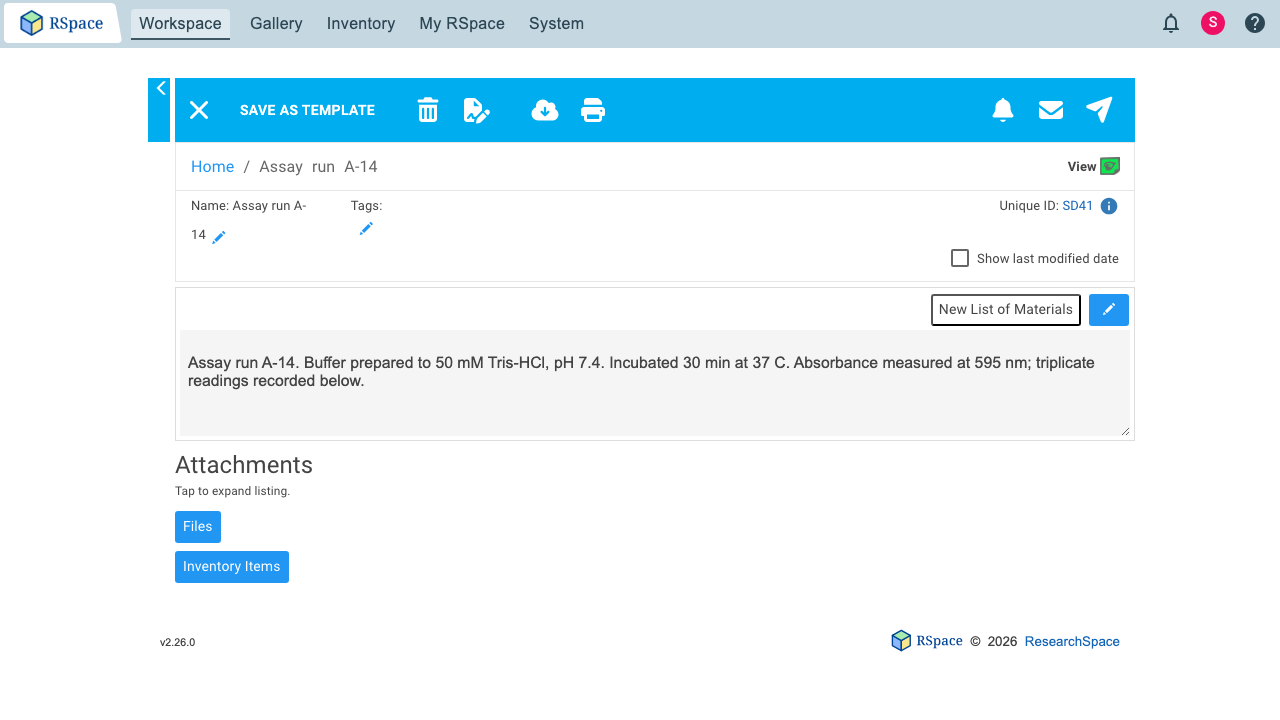
RSpace is an open source research data management platform from Research Space, built around an electronic lab notebook. Researchers write experiments up as structured documents rather than free form files: every entry is versioned, timestamped and attributable, can be signed and witnessed by a colleague, and keeps its attachments, images and instrument output attached to the work they belong to. The result is a lab record that stays intact and searchable long after the people who made it have moved on.
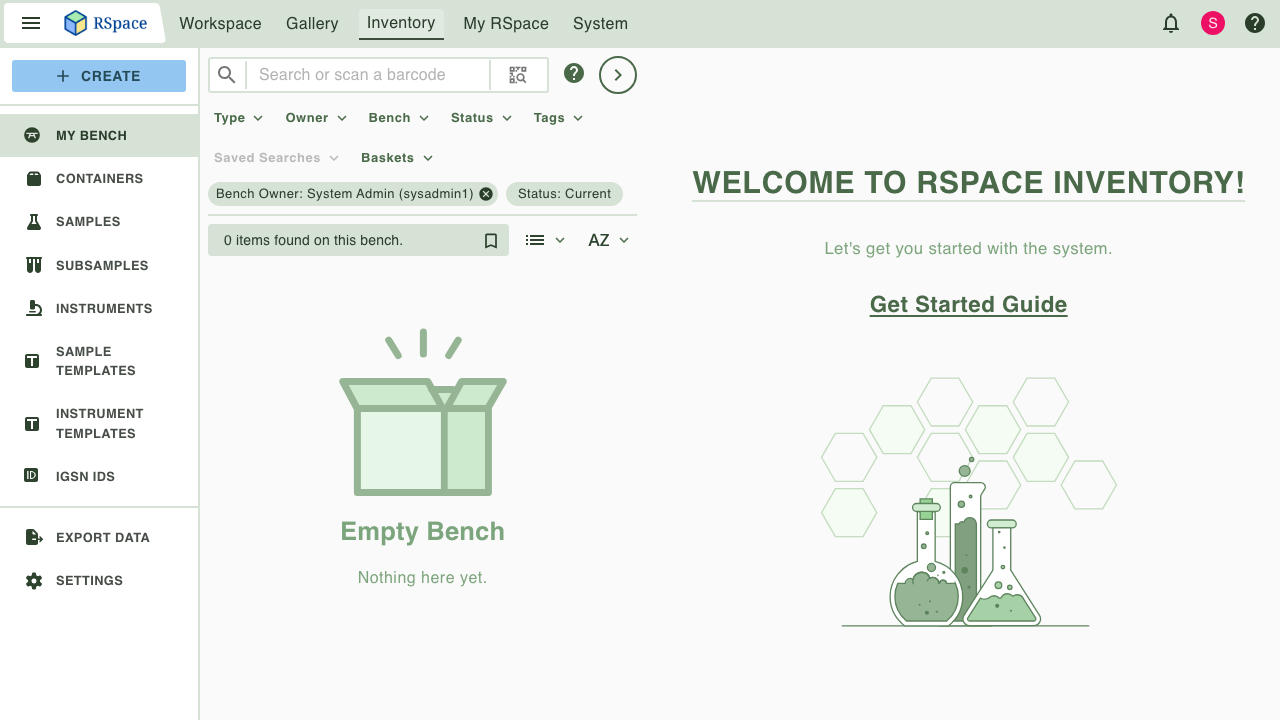
A linked Inventory module covers the physical half of the same work. Containers, samples, subsamples and instruments each get their own record, with barcodes, locations and custom metadata, and a notebook entry can reference the exact subsample it consumed. Because the two halves share one system, you can follow a result back to the material and the instrument that produced it.
RSpace is built to hand data on rather than trap it. Entries and whole notebooks export in open formats, documents can be published with persistent identifiers, and the platform is designed to feed institutional repositories and FAIR data workflows instead of being the last place the data is seen.
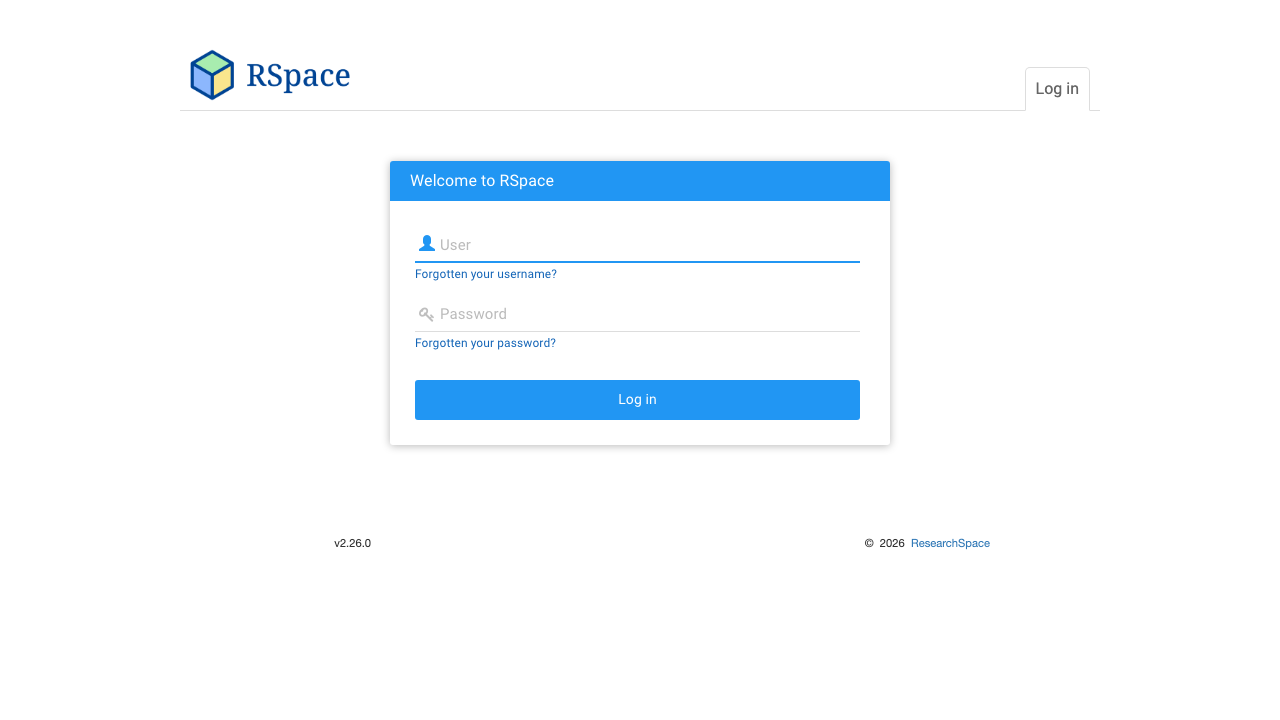
RSpace seeds its own administrator and secondary admin accounts with passwords that are published in the project's public documentation, allows anyone to self register out of the box, and leaves its monitoring console outside the application login. Running the upstream package as shipped therefore puts a server on the network with credentials anybody can look up. cloudimg closes every one of those gaps before the machine is ever reachable. A unique administrator password, database password, monitoring password and TLS certificate are generated on the first boot of every machine, the published default logins are rotated away before the image is captured, and the web interface is held behind a holding page until that provisioning finishes, so there is no window in which a known credential is live and no two deployments share a secret or a private key. Self registration is switched off, the monitoring console is restricted to the machine itself, and the database and application server are bound to the loopback interface so only SSH, HTTP and HTTPS answer from outside. Traffic is served over TLS by default rather than in clear text. Because RSpace validates the origin of every save against the address it is configured with, a name change that would otherwise leave the interface loading but silently failing to save is handled by a single supplied command. The base is fully patched with unattended security updates left enabled, and every deployment is paired with a step by step deploy guide verified against this exact build and backed by 24/7 cloudimg support.
Real screenshots taken while testing this image against its deployment guide.

Actual Budget is a free, open source, local first personal finance application built around the proven envelope budgetin...

Admidio is the open source membership management platform for clubs, associations and non profit organisations.

AdventureLog is a self-hosted travel companion. It lets you log the countries and regions you have visited, plan future ...
Aim is an open-source ML experiment tracker: your training code logs metrics, hyperparameters and other artifacts as it ...

The cloudimg image ships the free and open source, GPL-3.0 licensed AirTrail application, run the officially supported w...
Akkoma is a lightweight, highly customisable open-source server for the fediverse: a self-hosted, federated microbloggin...