Base
Hardened build
minimal ports, security patches applied at build time

a pure Java message broker that speaks AMQP 1.0 alongside the older AMQP versions on one server, with a web management console and REST API
Apache Qpid Broker-J is a message broker from the Apache Qpid project, written entirely in Java. It is unusual in speaking the full range of AMQP protocol versions, 1.0 alongside 0-8, 0-9, 0-9-1 and 0-10, on a single server, so applications written against older AMQP clients and services written against modern AMQP 1.0 can share one broker instead of forcing you to run two. It provides durable queues and exchanges, message persistence, flow control, users and access control, and a full HTTP management console backed by a REST API that exposes everything the console itself can do, so queue provisioning and monitoring can be automated from your own tooling.
A stock Qpid Broker-J ships a well known guest account that is accepted on both the messaging listeners and the management console. The cloudimg image ships no rendered broker configuration at all, so the broker cannot start until first boot generates a unique administrator password for that instance and renders a hardened configuration around it. There is no guest account and no anonymous access: every listener, plaintext messaging, encrypted messaging and the management console, requires authentication. The console is bound to the loopback interface and published only through a TLS reverse proxy whose certificate is regenerated per instance, a separate per instance keystore secures the encrypted messaging listener, and the generated credentials are written to a file only root can read. The image comes with a paired step by step deployment guide and 24/7 cloudimg support.
Real screenshots taken while testing this image against its deployment guide.
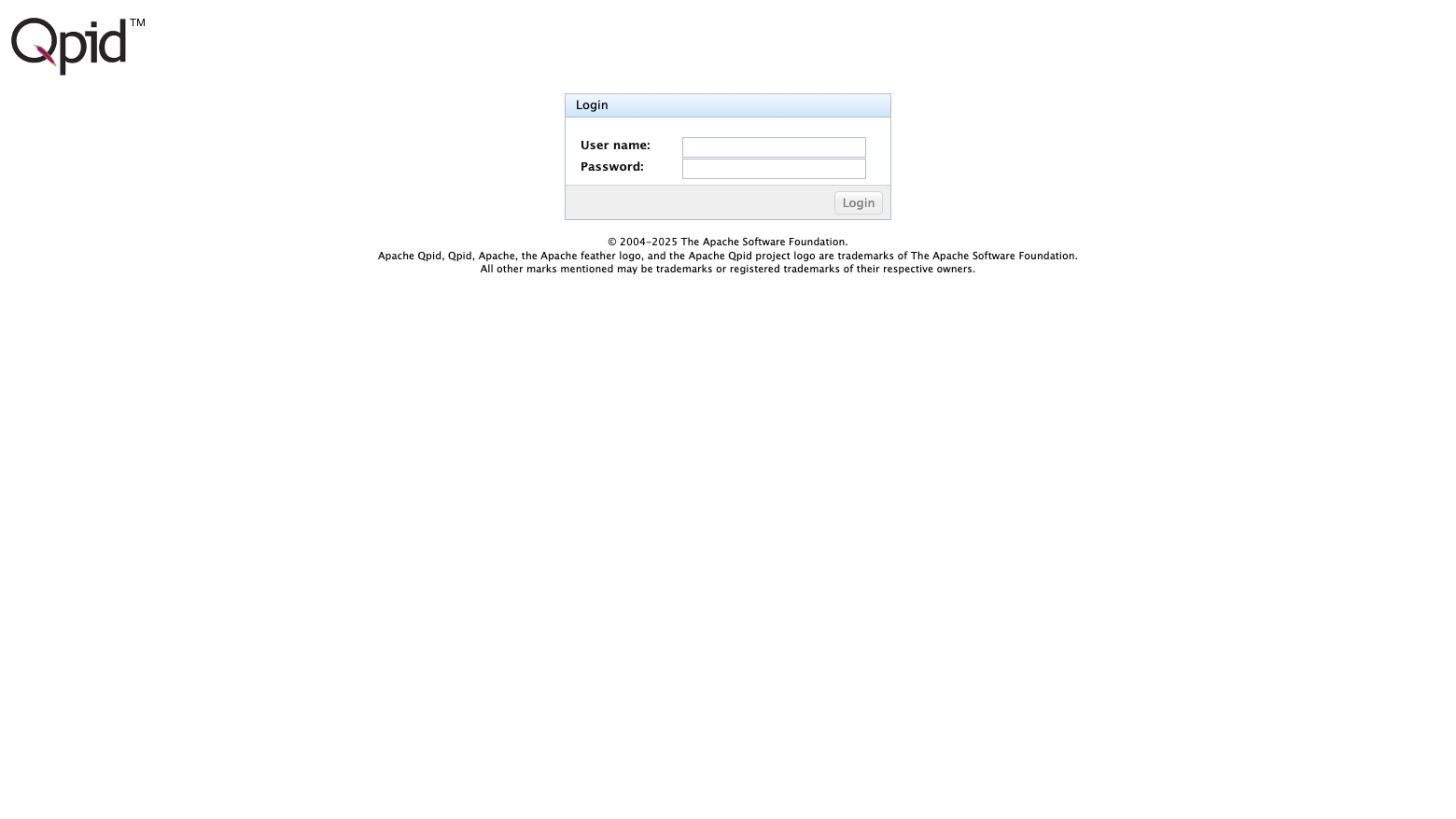
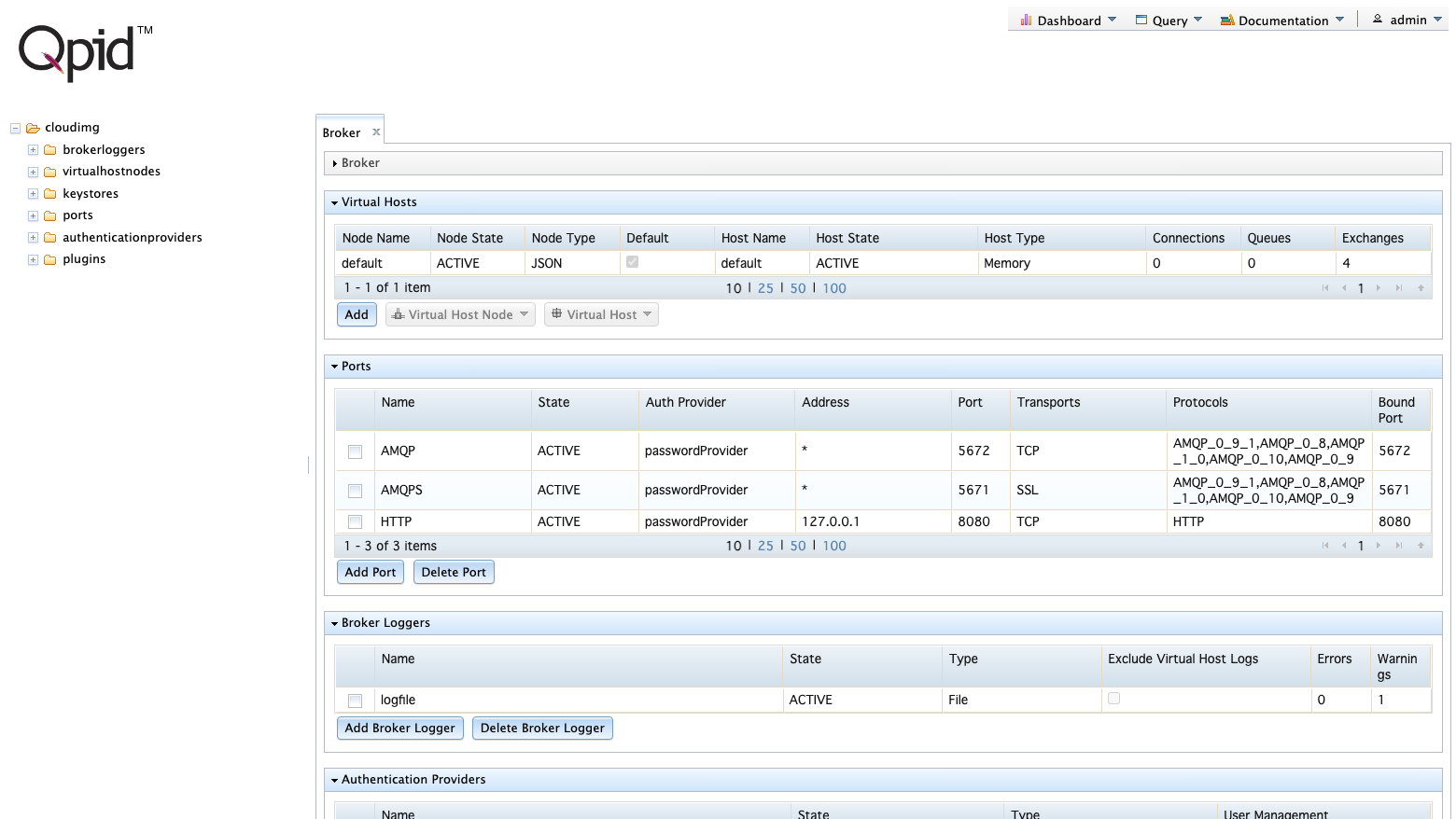
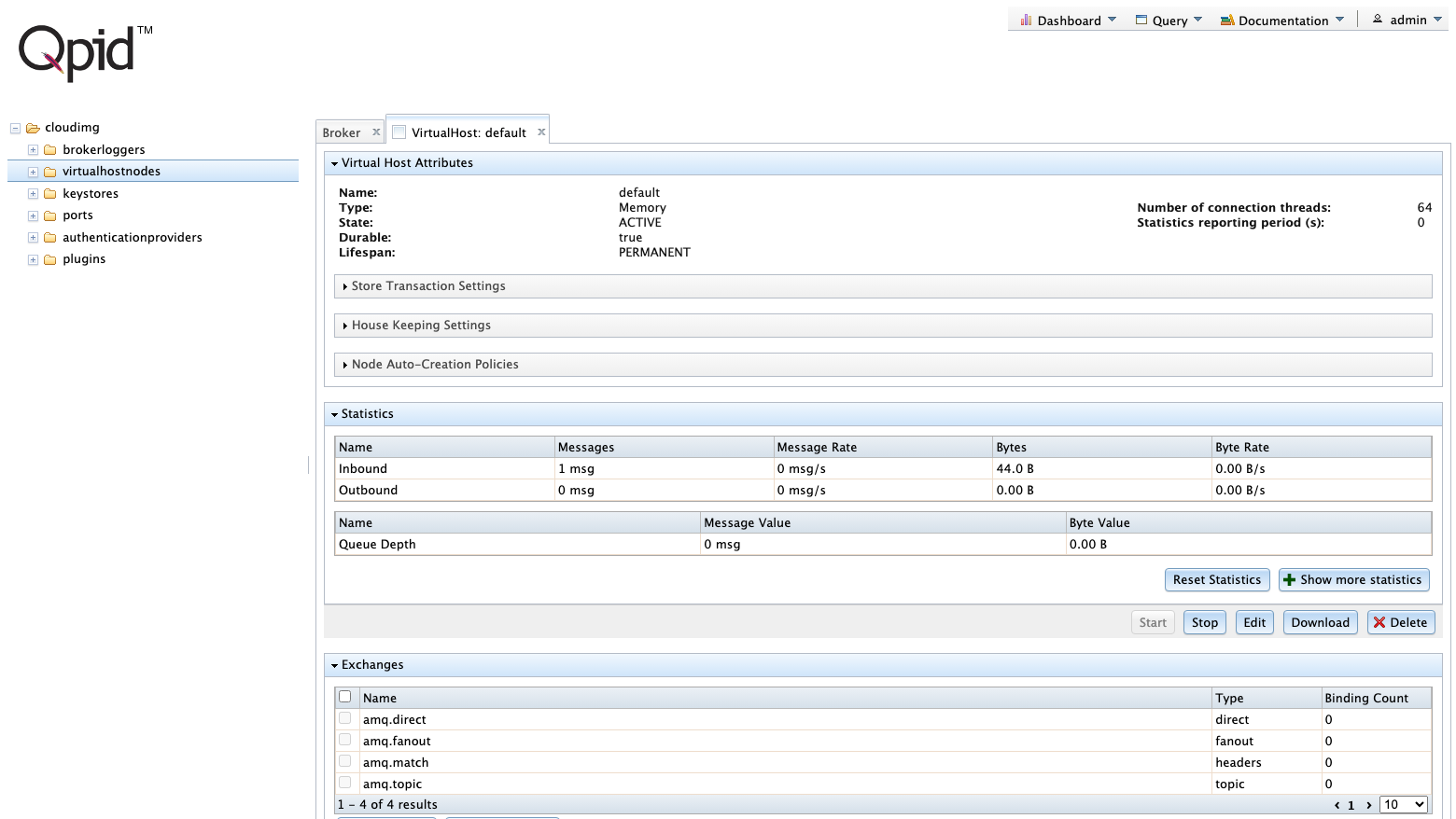
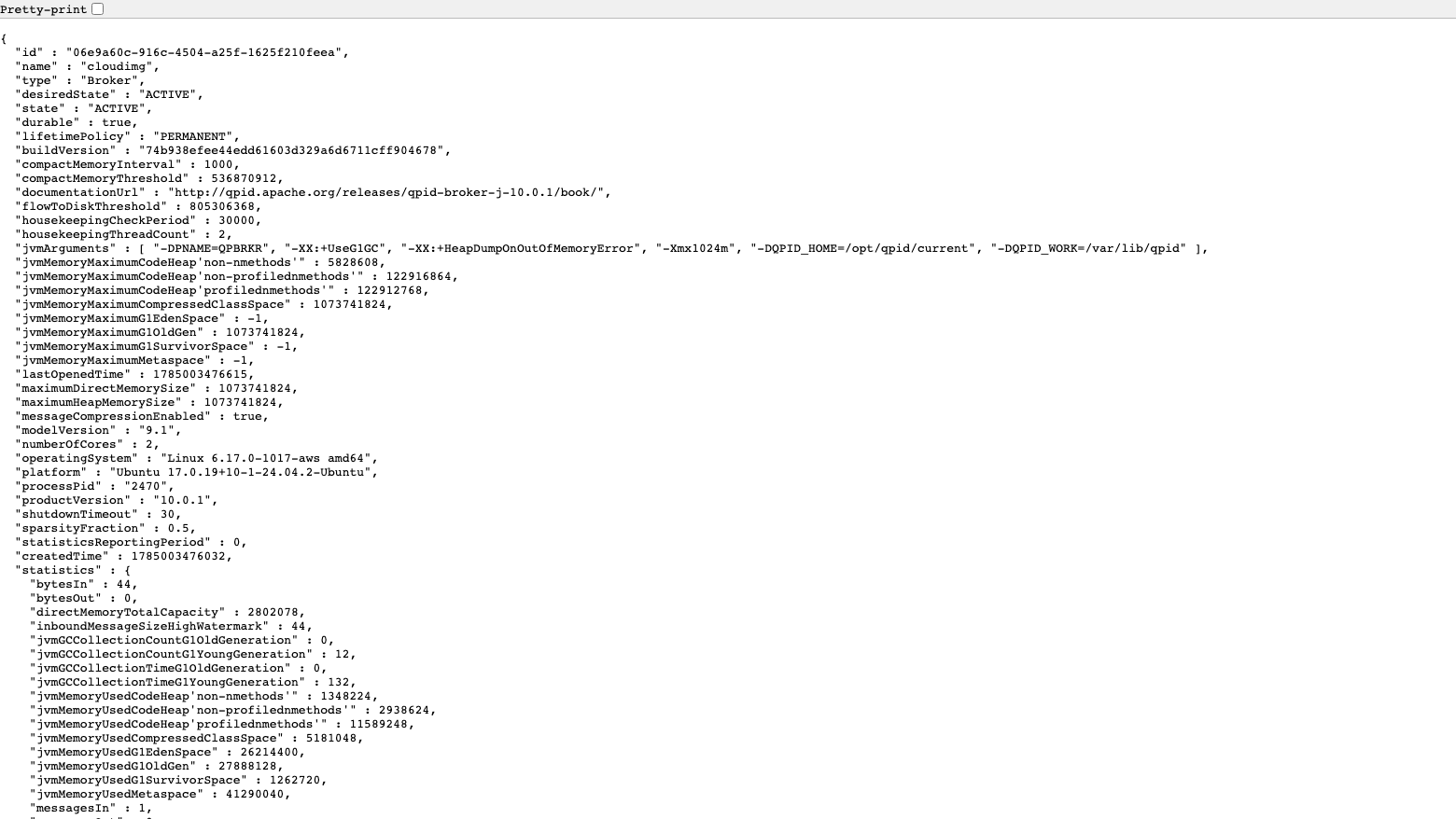
This is a repackaged open source software product wherein additional charges apply for cloudimg support services.
## Bridge Legacy and Modern AMQP on a Single Broker
Running separate brokers for legacy AMQP 0-9-1 or 0-10 clients and newer AMQP 1.0 services adds operational overhead and failure points. Apache Qpid Broker-J eliminates that complexity by speaking the full range of AMQP versions - 1.0, 0-8, 0-9, 0-9-1, and 0-10 - on one server. This cloudimg image delivers the broker preinstalled, hardened, and answering connections within minutes of launch on any standard EC2 instance.
## Secure by Default - No Known Credentials
Unlike a stock Qpid Broker-J installation that ships a well-known guest account, this image contains no rendered broker configuration at all. The broker cannot start until first boot generates a unique administrator password for your instance and renders a hardened configuration around it. Every listener - plaintext AMQP, secure AMQP, and the management console - requires authentication. There is no guest account and no anonymous access.
Additional security measures include:
## Ready to Use on AWS
This image runs on standard EC2 instances under systemd on a headless Java runtime. There is no manual unpacking, no configuration authoring, and no proxy wiring required. Open port 22 for SSH, 443 for the management console, and 5672/5671 for messaging in your security group, and you are operational. An m5.large is a comfortable default; size up for higher throughput or deeper queues.
## Web Management Console and REST API
The built-in web management console lets you:
Everything the console does is also available through its REST API, so queue provisioning and monitoring can be automated from your own tooling or integrated into CI/CD pipelines.
## Key Use Cases
## Evaluate Before You Commit
A 7-day free trial is available on this listing. Launch on a smaller instance type such as a t3.medium for low-cost evaluation. Retrieve the generated administrator password over SSH, sign in to the management console, create your first queue, and connect a client - all within minutes. When you are ready for production, scale to an m5.large or larger.
## 24/7 cloudimg Support
Our team provides 24/7 technical support by email and live chat covering deployment, TLS certificate replacement, queue and exchange design, client connectivity across AMQP versions, access control, and sizing guidance.
Apache Qpid and Qpid Broker-J are distributed under the Apache License 2.0. All product and company names are trademarks or registered trademarks of their respective holders. Use of them does not imply any affiliation with or endorsement by them.

Launch a ready-to-use AKHQ Kafka GUI with a pre-configured broker in minutes. Secured by default with unique credentials...

This image runs Apache ActiveMQ Artemis, the high performance, non blocking message broker from the Apache ActiveMQ proj...
This image runs Apache ActiveMQ Classic, the long established open source message broker from the Apache Software Founda...

This image runs Apache Iggy, a persistent, high-throughput message streaming platform written in Rust.

This image runs Apache Storm, a distributed, fault-tolerant, real-time computation system.

Arroyo is a distributed stream processing engine that lets you run SQL over real-time data streams.