Base
Hardened build
minimal ports, security patches applied at build time

the open source distributed configuration center: typed, versioned application configuration with real time push, secured from first boot by cloudimg.
Apollo is a distributed configuration management center for applications. Services fetch typed, versioned configuration at runtime and receive updates without a redeploy, while operators get per environment and per cluster namespaces, release and rollback history, grey scale (canary) releases and a complete audit trail. A single instance runs the config service, the admin service and the web portal together, backed by MySQL, so configuration for many applications and environments is managed from one console with changes pushed to running clients in real time.
cloudimg ships Apollo hardened and secure by default: the well known apollo/admin portal login is destroyed in the image and a fresh portal password, database credentials and root password are generated on the first boot of every instance, with no default login surviving into the image. Only the portal is reachable, fronted by a TLS reverse proxy, while the configuration service, admin service and database bind to localhost; the database lives on its own dedicated volume. Every deployment is paired with a step by step guide and backed by 24/7 cloudimg support.
Real screenshots taken while testing this image against its deployment guide.
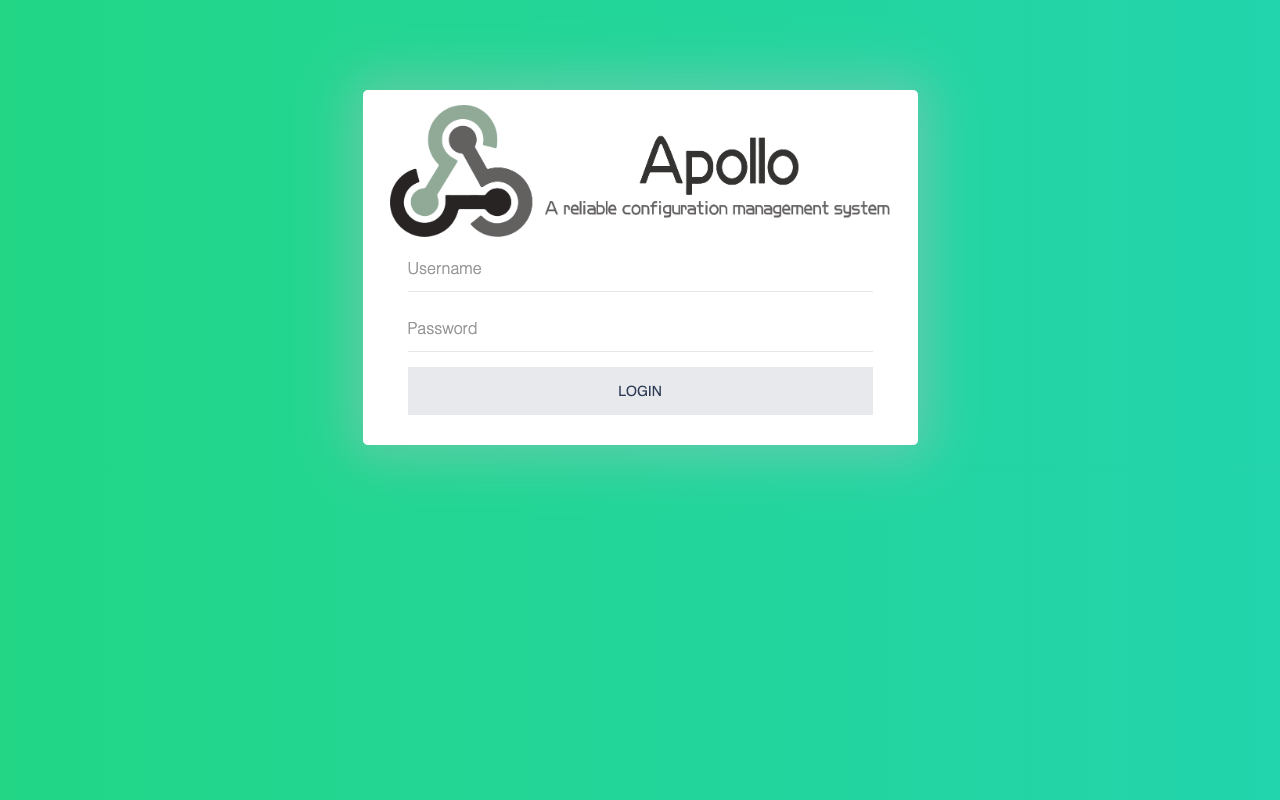
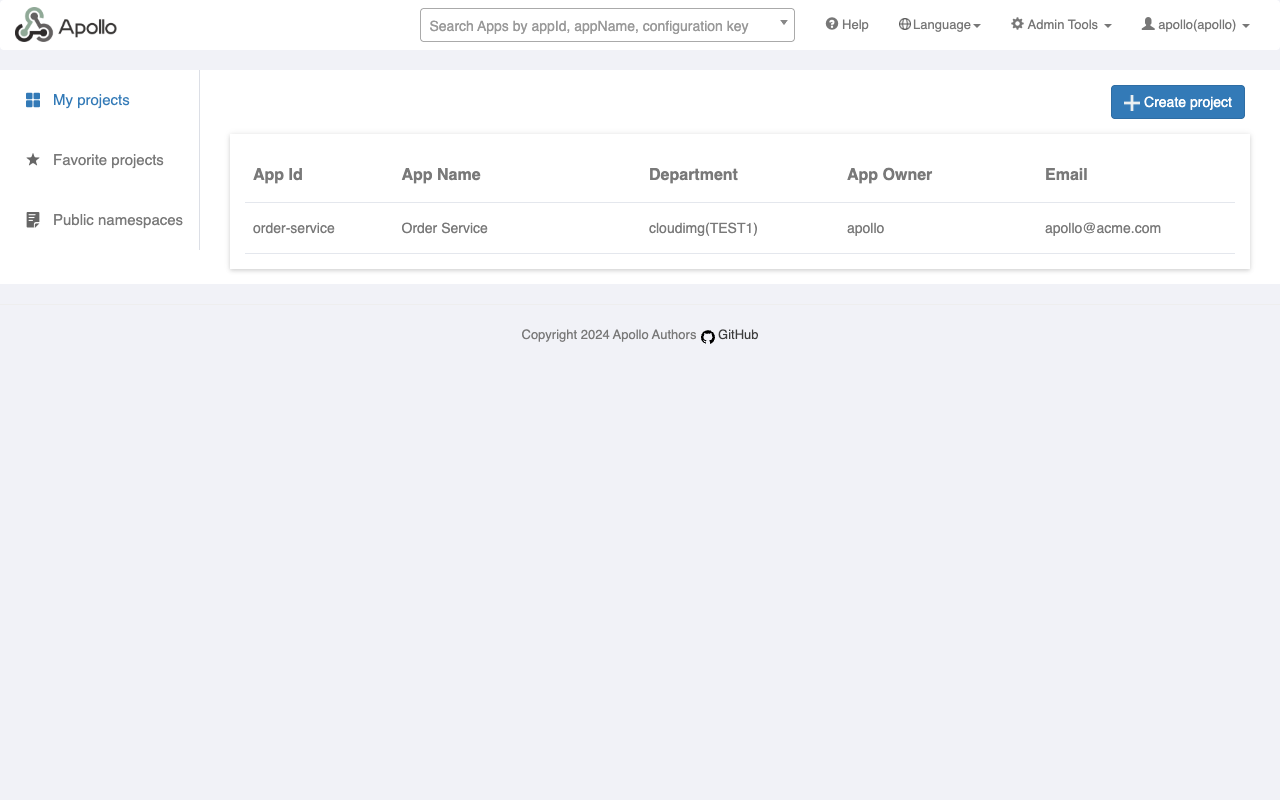
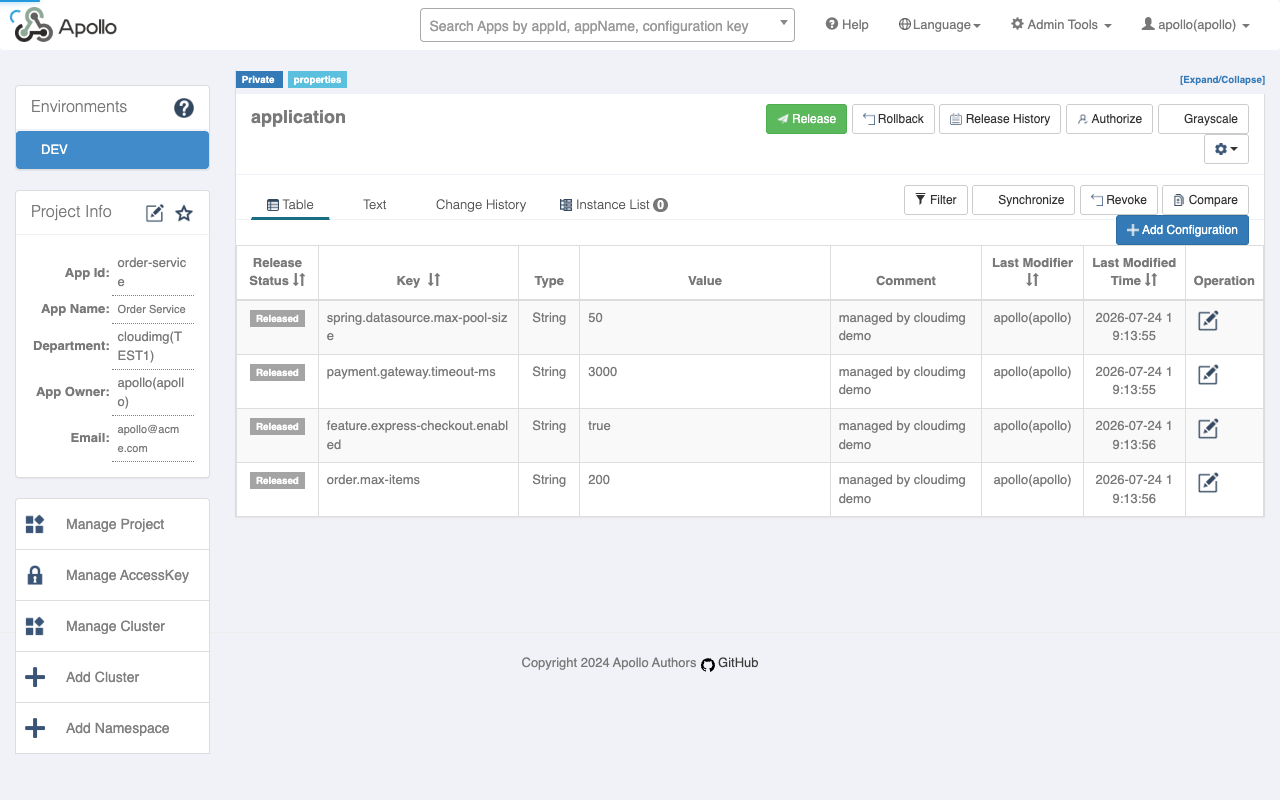
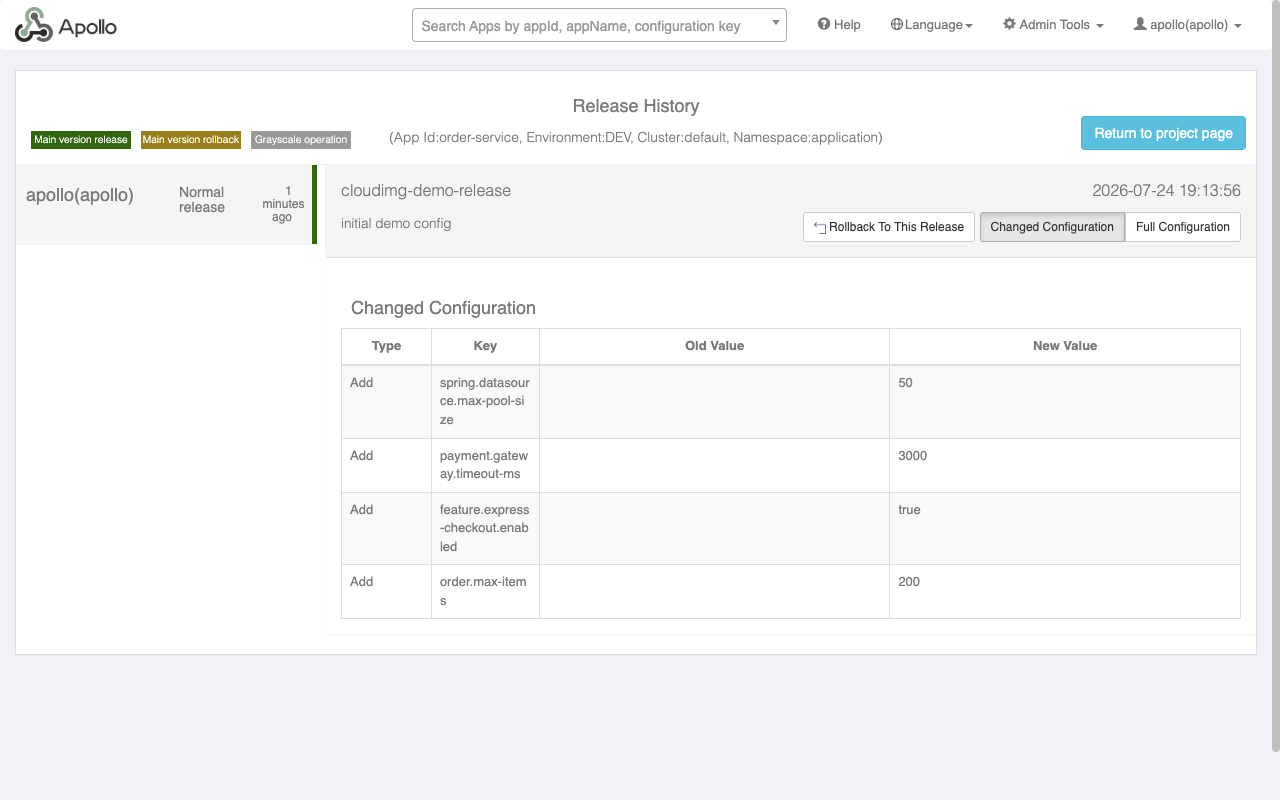
This is a repackaged open source software product wherein additional charges apply for cloudimg support services.
## Apollo Config - Distributed Configuration Center on AWS
Launch a fully configured Apollo configuration management center on AWS in minutes - no manual installation, no shared credentials, and no complex assembly of services. This AMI eliminates the hours of provisioning normally required to stand up Apollo's multi-service stack and its database, so your team can centralize application configuration rather than wiring infrastructure.
Apollo is an open source distributed configuration management center used to centralize application configuration across environments, clusters, and services. Applications fetch typed, versioned configuration at runtime and receive updates without a redeploy, while operators get per-environment and per-cluster namespaces, release and rollback history, grey-scale (canary) releases, and a complete audit trail. This image ships Apollo 2.5.2 fully installed and running, with its MySQL database, both schemas, and all three Apollo services already wired together, so your configuration portal is usable within minutes of launch.
## About cloudimg
cloudimg specializes in pre-configured, production-hardened AMIs for open source platforms on AWS. Our engineering team maintains and supports every image we publish, providing hands-on platform expertise rather than generic hosting assistance.
## Why This AMI Over Alternatives
Unlike a bare deployment, this image is secure by default. Apollo's published sample data ships a well-known portal login, and this image destroys it: the shipped image contains no usable portal password at all, and on first boot your instance generates its own random portal administrator password, its own database credentials, and its own database root password, writing them to a root-only file. No credential is ever reused across deployments.
## Hardened Network Posture
All three Apollo services and MySQL bind to the loopback interface. An nginx reverse proxy terminates TLS and serves the portal on port 443, so the only network-reachable ports are SSH (22) and HTTPS (443) - the configuration service, administration service, and database are never exposed to the network. The self-signed certificate is regenerated per instance on first boot. The deployment guide explains restricting the HTTPS port to your own network and how to open the configuration service to your application subnet, after enabling access keys, when you are ready to onboard client applications.
## Application Stack
## Secure First Boot
On first launch, a one-shot systemd service generates unique credentials, rotates the database root, application, and maintenance passwords, mints a per-instance portal administrator password, regenerates the TLS certificate, and writes the credentials to a file readable only by root. No default credentials exist in the image at any point, closing the security gap present in images that rely on buyers to change shared passwords after deployment.
## Security and Hardening
The portal is served only over TLS. Buyers should attach a trusted certificate (via AWS Certificate Manager and a load balancer) for production use, restrict the security group to trusted IP ranges, and enable EBS encryption for data at rest. The database and internal services are bound to localhost and are not exposed externally. The local MySQL can be migrated to Amazon RDS for automated backups and Multi-AZ failover.
## Use Cases
## 24/7 cloudimg Support
Every subscription includes around-the-clock technical support from cloudimg engineers via email and live chat. Our team assists with deployment, upgrades, performance tuning, database administration, and integrating Apollo with your applications. The user guide walks through launch, credential retrieval, signing in, and creating your first configuration.
Apollo is a trademark of its respective owners. All product and company names are trademarks or registered trademarks of their respective holders. Use of them does not imply any affiliation with or endorsement by them.

Accent is an open source, developer-oriented translation and localization management platform.

Altair GraphQL Client is an open-source, self-hosted GraphQL IDE for building, sending and inspecting GraphQL requests.
This image runs Apache Archiva, the open source build-artifact repository manager - a central, governed store for the bi...

This image runs Apache Camel Karavan, an open source visual integration designer and toolkit for Apache Camel.

Launch a production-ready Apache DolphinScheduler workflow scheduler in minutes with zero setup. All-in-one standalone d...

Apache JMeter is the de-facto open-source tool for load and performance testing of web applications, APIs, databases and...