Base
Hardened build
minimal ports, security patches applied at build time

Unified security monitoring, threat detection and compliance from a single console
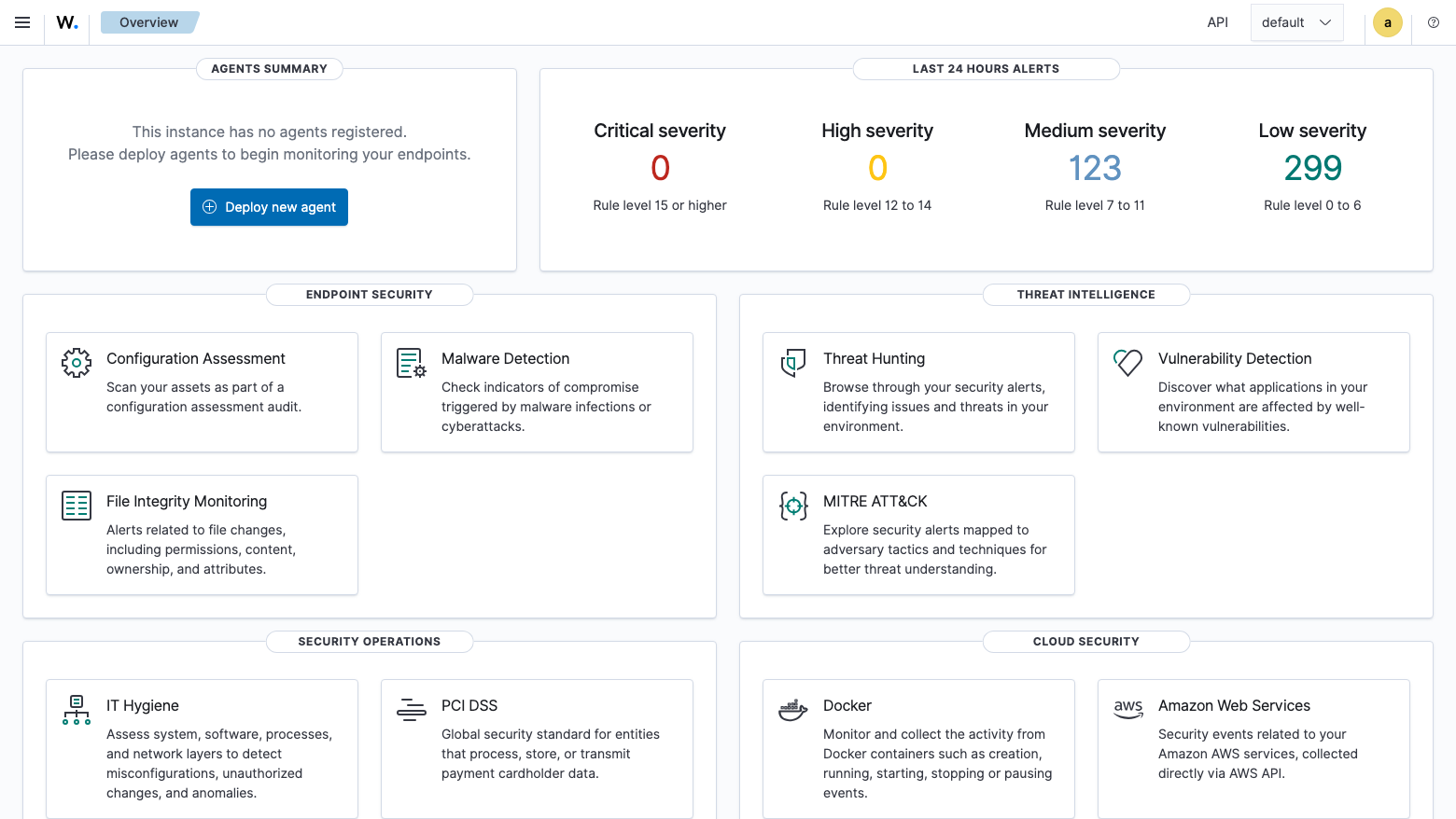
Wazuh is a free and open source security platform that unifies SIEM and XDR capabilities. Agents on Linux, Windows and macOS endpoints collect logs, file integrity events and software inventories, the Wazuh server correlates them against thousands of detection rules, and the Wazuh dashboard presents log data analysis, intrusion detection, file integrity monitoring, vulnerability detection, security configuration assessment, compliance reporting and MITRE ATT&CK mapping in one console. This image ships the complete platform: the Wazuh indexer, the Wazuh server and the Wazuh dashboard, installed with the project's own all-in-one deployment and managed by systemd.
Nothing shared ships in the image. Every documented Wazuh default login and every build time password is removed before capture, and on the first boot of each instance the appliance regenerates the whole TLS certificate chain, including a fresh root certificate authority, and rotates every indexer account and both server API accounts to random per instance passwords written to a root only file. Security event indices and the server's queue, alerts and archives each get their own independently resizable data volume, the management API is bound to loopback, an unauthenticated liveness endpoint is served for load balancer health checks, and a paired deploy guide walks through enrollment and sizing. 24/7 support is included.
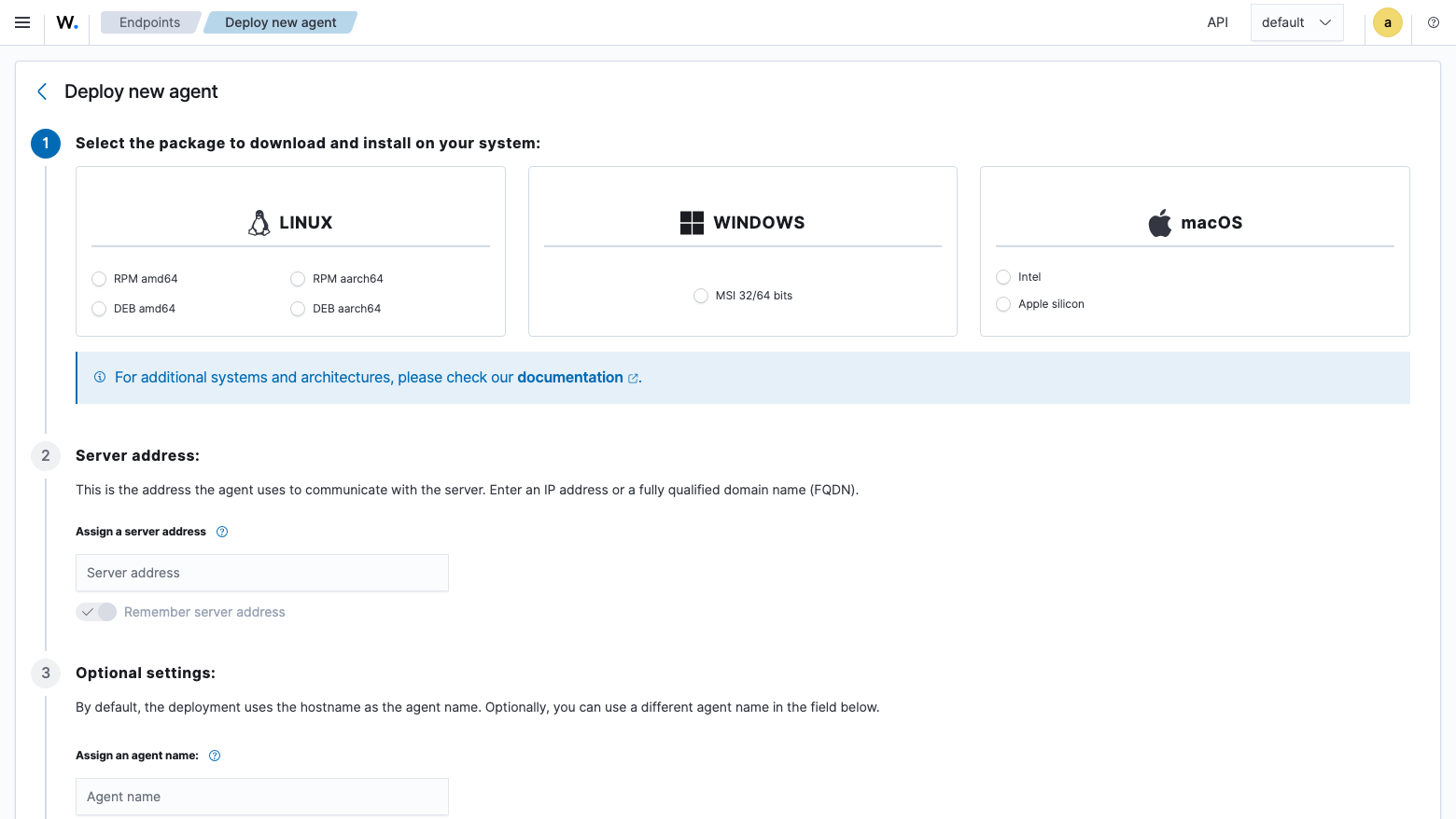
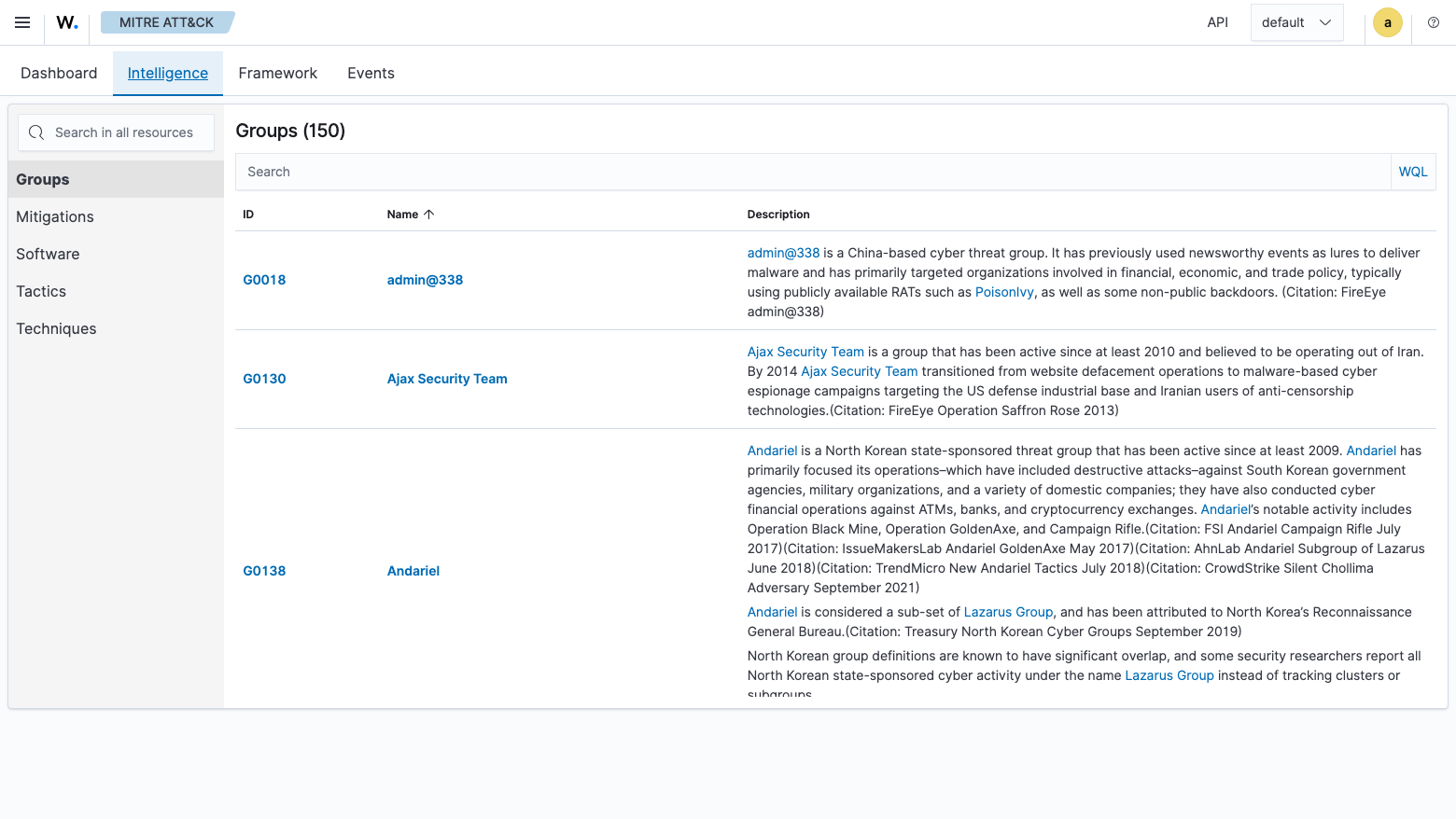
Real screenshots taken while testing this image against its deployment guide.
This is a repackaged open source software product wherein additional charges apply for cloudimg support services.
## Wazuh - Unified SIEM and XDR on AWS
This image delivers the complete Wazuh security platform as a single, ready-to-run appliance: the Wazuh indexer, the Wazuh server, and the Wazuh dashboard, installed with the project's official all-in-one deployment, fully patched, and managed by systemd. Point your agents at it and you have log analysis, file integrity monitoring, intrusion detection, vulnerability detection, configuration assessment, and MITRE ATT&CK mapping in one console.
## Why This Image Instead of a Manual Install
A manual Wazuh deployment means installing three interdependent components, generating and distributing a TLS certificate chain, wiring the dashboard to the indexer and the server API, and hardening every default credential. This image removes all of it:
## What You Can Do With It
## Example Deployment
A platform team consolidating security telemetry from a fleet of EC2 instances launches this image, opens the agent enrollment ports to their VPC, and enrolls agents from each host. Within minutes the dashboard shows live security events, agent inventory, file integrity changes, and vulnerability findings across the fleet, with no separate log pipeline to build or maintain.
## Quick Start
1. Launch the image with a security group allowing inbound TCP 443 from your administrators and TCP 1514 and 1515 from the hosts you will enroll.
2. Wait a few minutes for first boot to generate this instance's certificates and credentials.
3. Connect over SSH and read the per-instance dashboard password from the root-only credentials file.
4. Open the dashboard in your browser over HTTPS and sign in.
5. Use the dashboard's agent deployment wizard to enroll your first endpoint.
## 24/7 Support Included
cloudimg provides around-the-clock technical support covering deployment, upgrades, agent enrollment, rule and decoder tuning, storage sizing, and integration questions.
---
Wazuh is a trademark of Wazuh Inc. Wazuh is distributed under the GNU General Public License version 2. All product and company names are trademarks or registered trademarks of their respective holders. Use of them does not imply any affiliation with or endorsement by them.

The cloudimg image ships the free and open source, AGPL-3.0 licensed AliasVault, run the officially supported way as the...

This image runs Apache Directory Server (ApacheDS) 2.0, the Apache Software Foundation's extensible, embeddable director...

This image runs Apache SpamAssassin, the open source, Apache-2.0 licensed anti-spam platform.

Authentik is an open source identity provider: single sign-on, multi-factor authentication, user management and access c...

This image runs Authgear, the open source authentication server and identity provider.
This image runs Beelzebub, the open source low code honeypot and deception framework.