Base
Hardened build
minimal ports, security patches applied at build time

ChirpStack, the open source LoRaWAN Network Server for managing gateways, devices and integrations across an IoT network, ready the moment it boots.
ChirpStack is the leading open source LoRaWAN Network Server. It provides the complete LoRaWAN stack in a single server: the network server and application server, multi tenant device and gateway management, device profiles, adaptive data rate, downlink queueing, MQTT and HTTP integrations and firmware update over the air, all driven from a modern web console and a full gRPC API. It is the control plane that LoRa gateways and sensors connect to, giving teams one place to onboard devices, route their data and operate a private LoRaWAN network.
It suits IoT teams, network operators and integrators who want to run their own LoRaWAN network for smart metering, agriculture, asset tracking or industrial monitoring, fully owned and under their control.
cloudimg delivers ChirpStack fully installed and reverse proxied behind nginx over HTTPS, with PostgreSQL, Redis, the Mosquitto MQTT broker and the ChirpStack Gateway Bridge already configured and managed by systemd, so a complete LoRaWAN network server answers the moment the instance boots. The database runs on its own dedicated, independently resizable data volume, separate from the operating system disk. The image is secure by default: ChirpStack's well known default administrator login is never shipped. On the first boot of every instance a unique administrator password is generated, along with a fresh database password, API and JWT signing secret and TLS certificate, and written to a file only the root user can read, so no two deployments ever share a login. The image is hardened, fully patched and pinned to a known release, every deployment is paired with a step by step deploy guide and backed by 24/7 support.
Real screenshots taken while testing this image against its deployment guide.
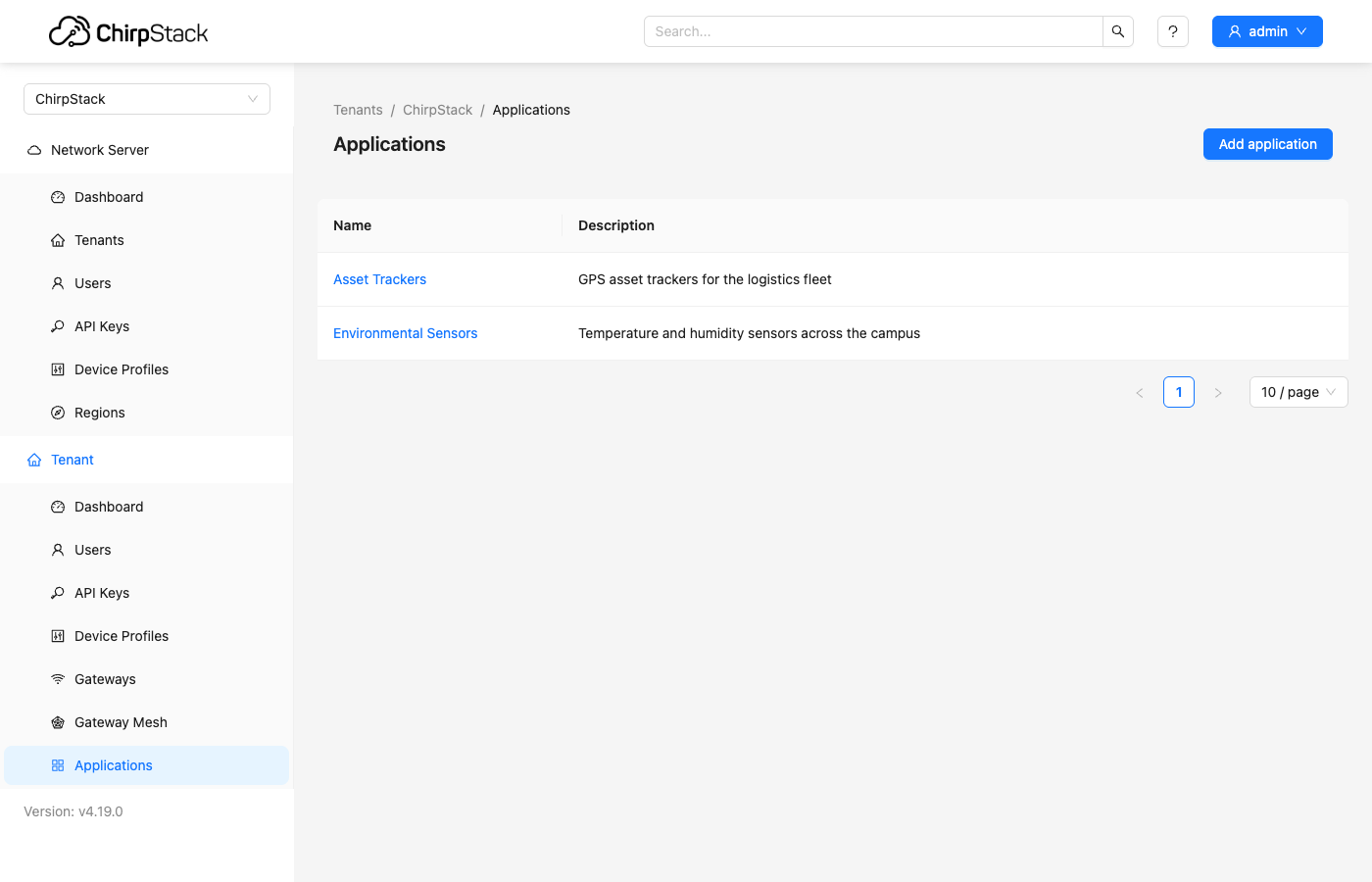
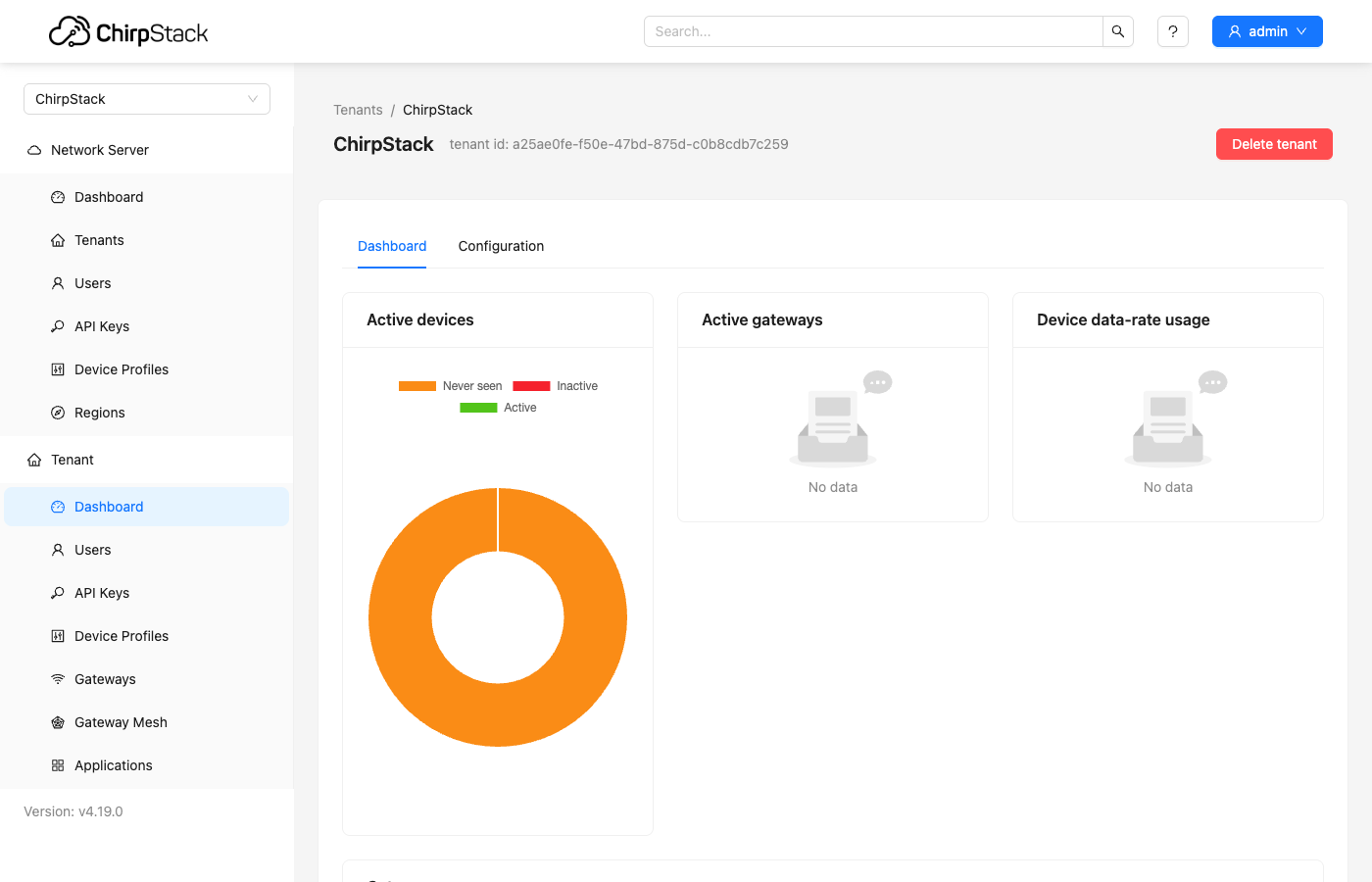
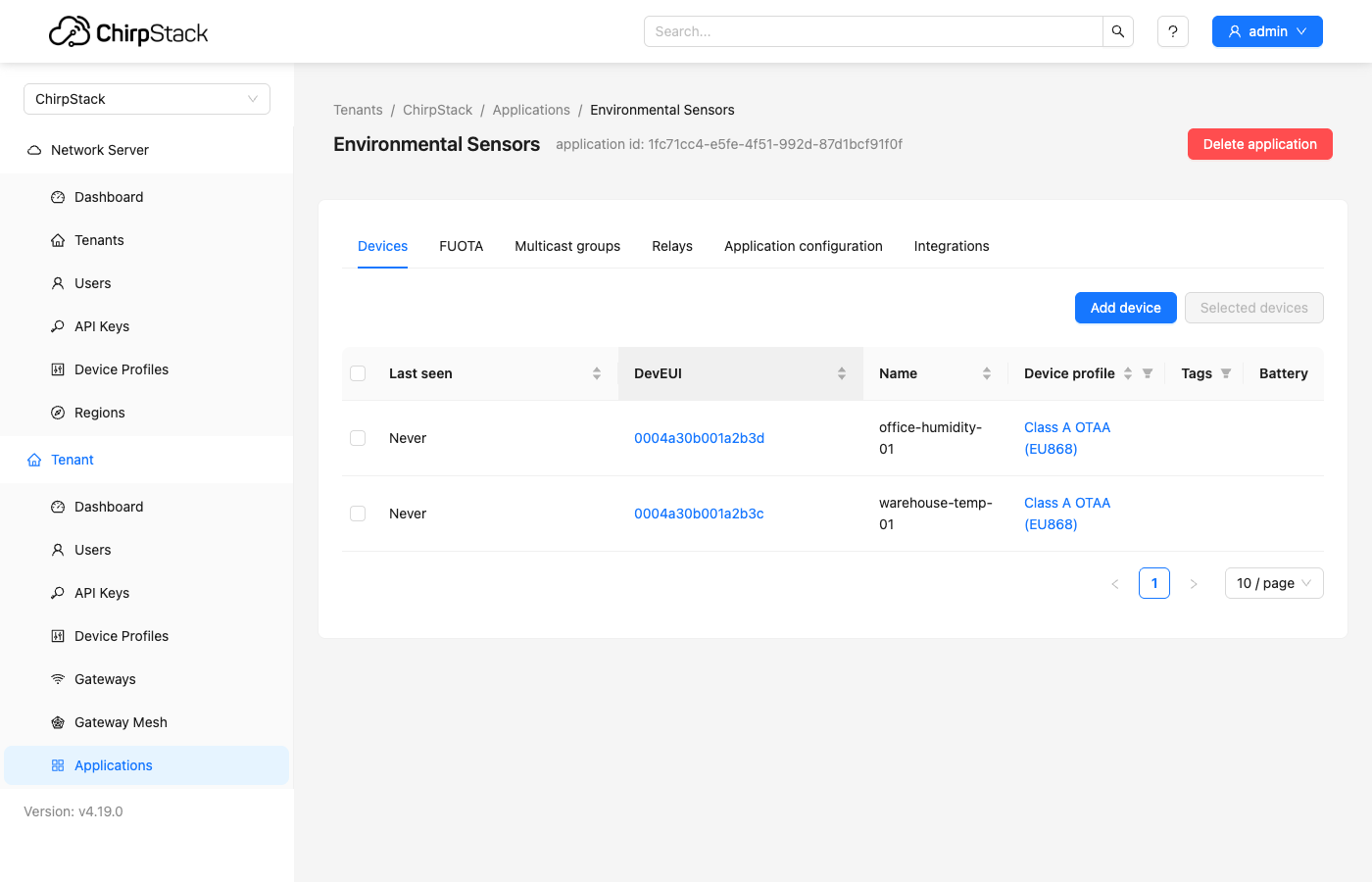
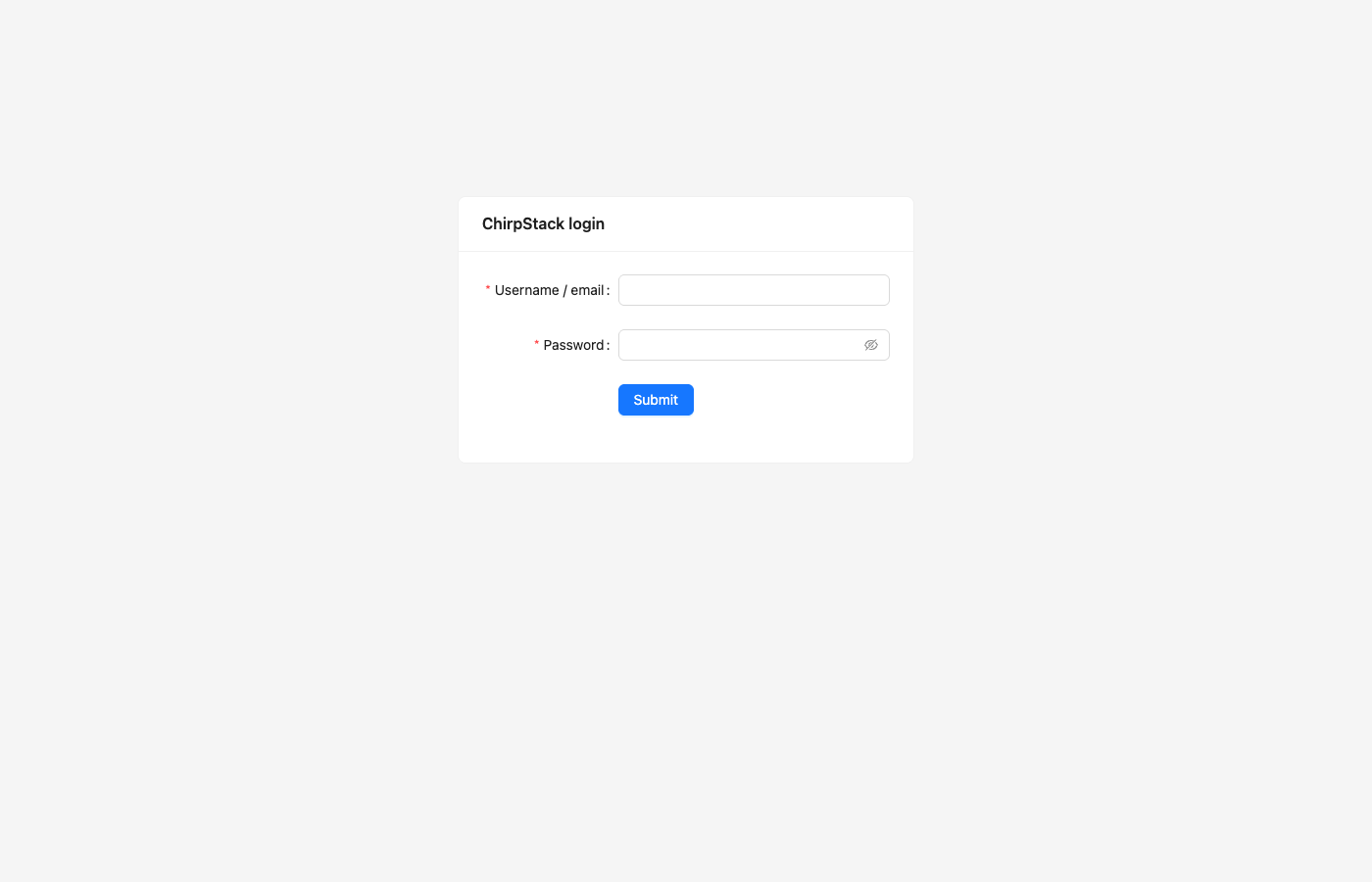
This is a repackaged open source software product wherein additional charges apply for cloudimg support services.
ChirpStack is the leading open source LoRaWAN Network Server. It provides the complete LoRaWAN stack in a single server: the network server and application server, multi-tenant device and gateway management, device profiles, adaptive data rate, downlink queueing, MQTT and HTTP integrations, firmware-update-over-the-air (FUOTA) and a full gRPC and gRPC-web API, all driven from a clean, modern web console. ChirpStack is the control plane your LoRa gateways and sensors connect to. The current release available is ChirpStack 4.19.
This image delivers ChirpStack fully installed and reverse-proxied behind nginx over HTTPS, so a complete LoRaWAN network server is operational within minutes of launch, with no manual PostgreSQL, Redis, MQTT, TLS or ChirpStack configuration. The ChirpStack server binds to loopback and is fronted by nginx TLS; PostgreSQL runs on a dedicated, independently resizable storage volume; Redis runs as a managed system service; the Mosquitto MQTT broker is bundled and bound to loopback; and a ChirpStack Gateway Bridge is included so real LoRa gateways using the Semtech UDP packet-forwarder or BasicStation can connect on UDP port 1700.
Secure by default: no administrator account and no shared password ship in the image. On first boot the instance address is configured automatically, a fresh database password, API and JWT signing secret and TLS certificate are generated, and a unique administrator password is created and written to a root-only file on the instance. This eliminates the well-known ChirpStack default admin login exposure common in manual installations, and no two deployments ever share a secret.
The image is the LoRaWAN network and application server, not the radio hardware: a working LoRaWAN deployment also needs your own LoRa gateways pointed at this server.
Our engineers provide 24/7 support for deployment, upgrades, TLS termination with your own domain and certificate, gateway onboarding, MQTT exposure and integration, LoRaWAN region configuration and scaling. All product and company names are trademarks or registered trademarks of their respective holders. Use of them does not imply any affiliation with or endorsement by them.

This image runs the Actual Budget 26.6 sync server, the open source local-first personal finance and envelope budgeting ...

This image runs Admidio, the open source, self hosted membership management platform used by clubs, associations and non...

This image runs Apache Answer, the open source question and answer platform for teams at any scale.

This image delivers Audiobookshelf 2.35, the popular open source self-hosted audiobook and podcast media server, fully i...

This image runs Baby Buddy 2.9.2, the open source self-hosted web application for tracking a baby's daily activities and...

Baikal is an open source self-hosted CalDAV and CardDAV server built on the proven Sabre/dav library.