Base
Hardened build
minimal ports, security patches applied at build time

Apache Hop, the Hop Orchestration Platform, for visually designing and running data pipelines and workflows, with per instance credentials and a dedicated data volume, backed by cloudimg support.
Apache Hop, the Hop Orchestration Platform, is an open source data engineering and data orchestration platform for visually designing and running data pipelines and workflows. It provides a browser based, drag and drop editor for building, running and monitoring data integration, transformation and orchestration logic, plus a headless execution server for scheduled and remote pipeline runs. This image ships Hop fully installed and configured so a complete data orchestration platform is ready within minutes of launch: the Hop Web visual editor behind an authenticated reverse proxy, and the Hop Server execution server, both supervised by the operating system.
cloudimg generates a fresh password on first boot for every instance and applies it to both the web editor and the execution server, replacing the well known stock defaults so no two instances ship the same credentials. Hop projects, pipelines, workflows and the execution server configuration live on a dedicated data volume that can be resized independently of the operating system disk. Every image is paired with a step by step deploy guide and is backed by 24/7 cloudimg support.
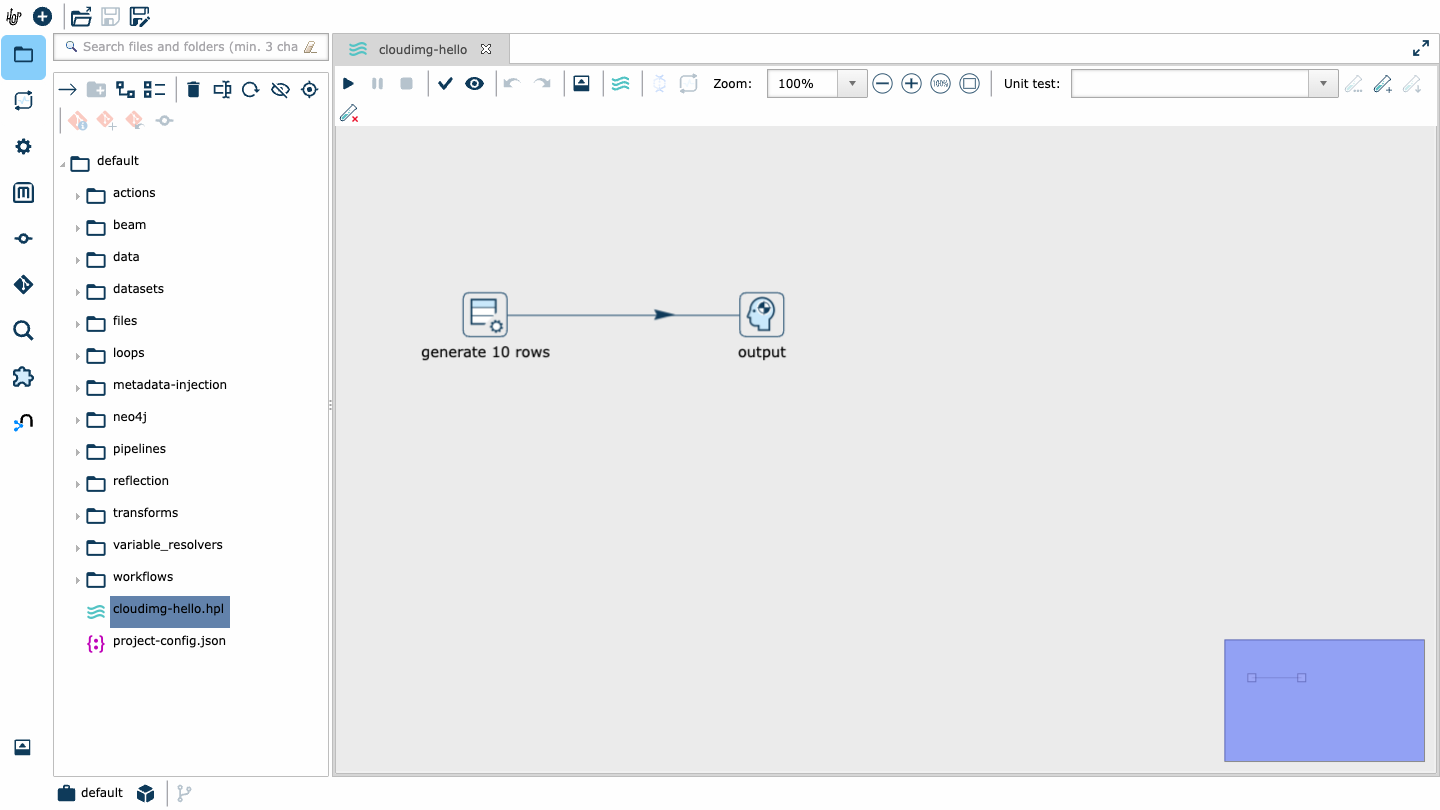
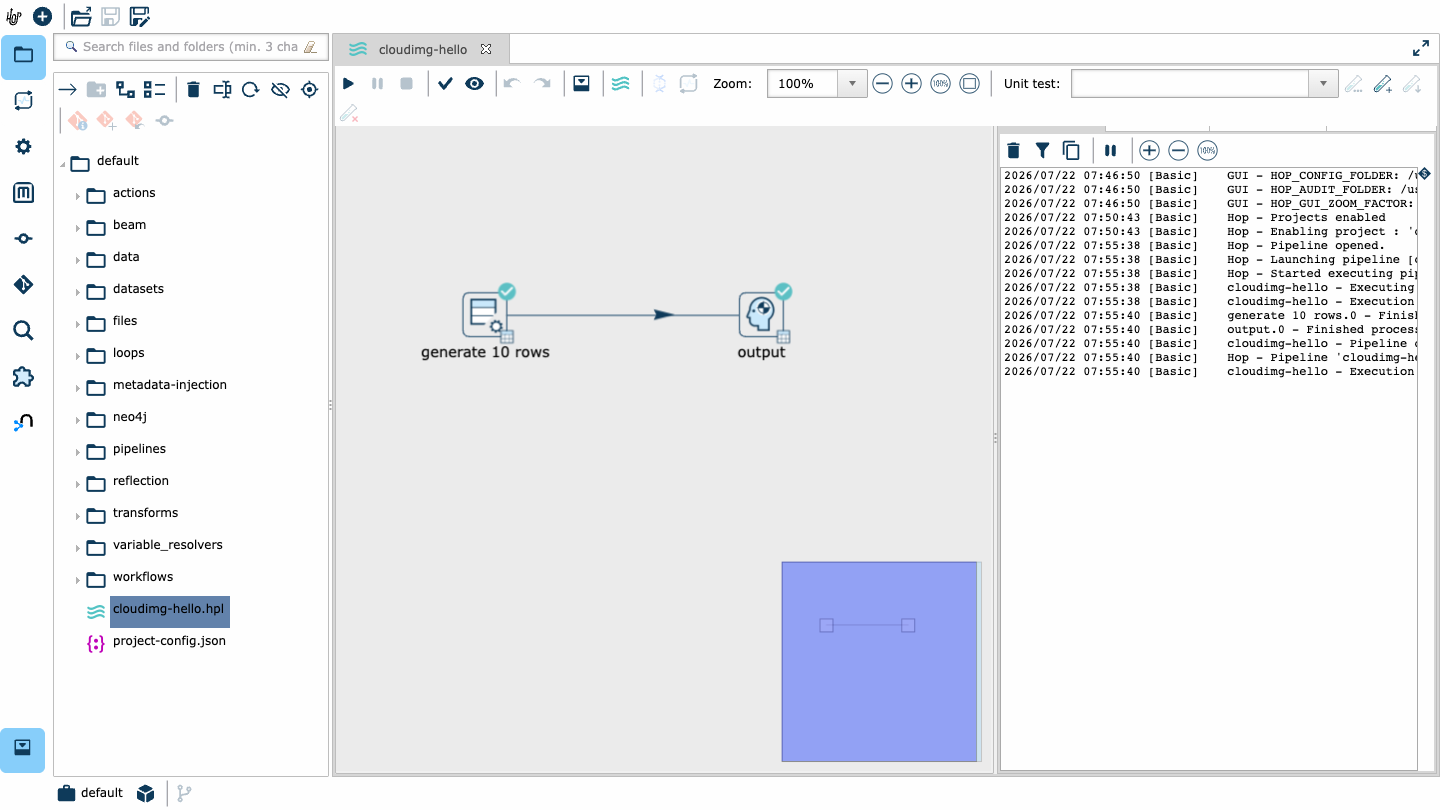
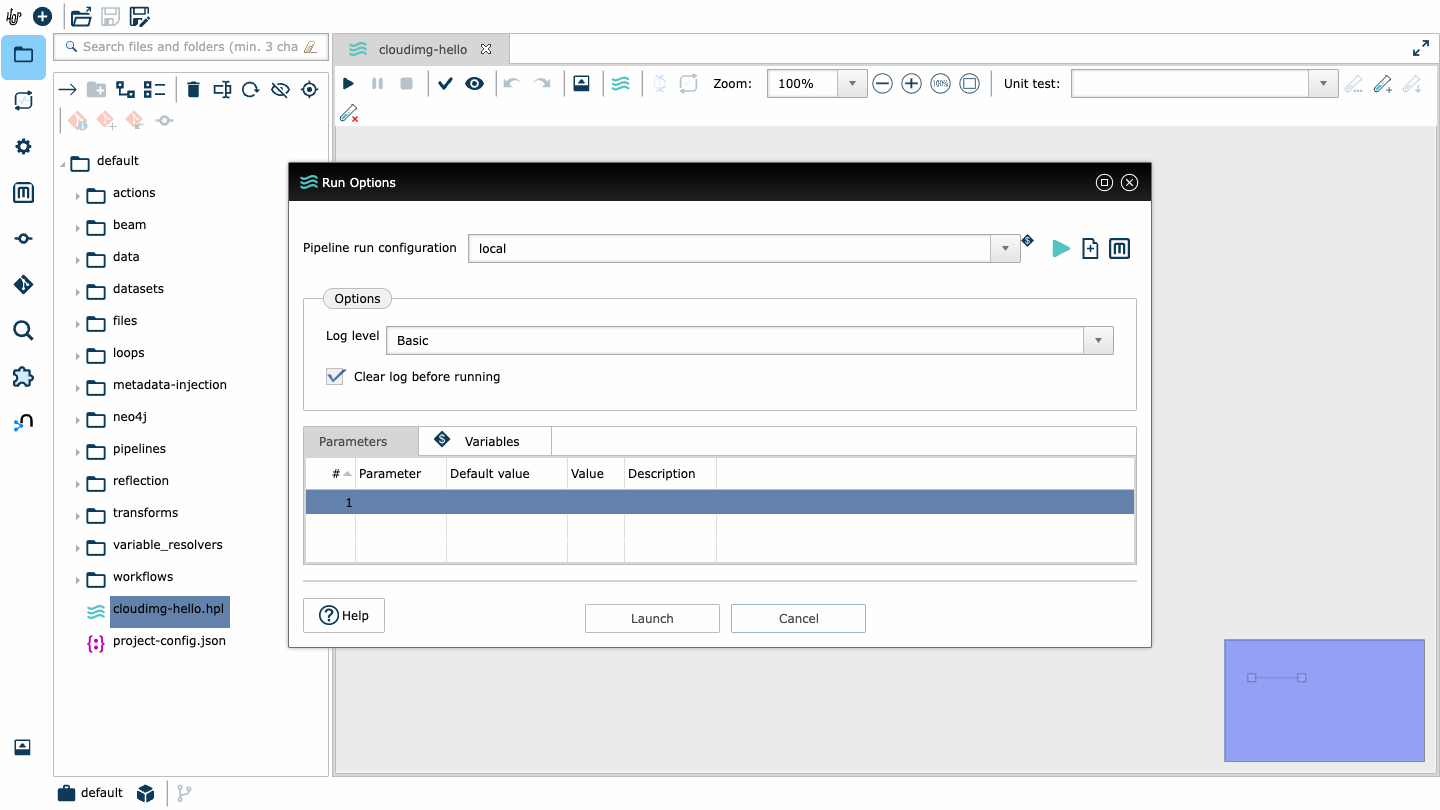
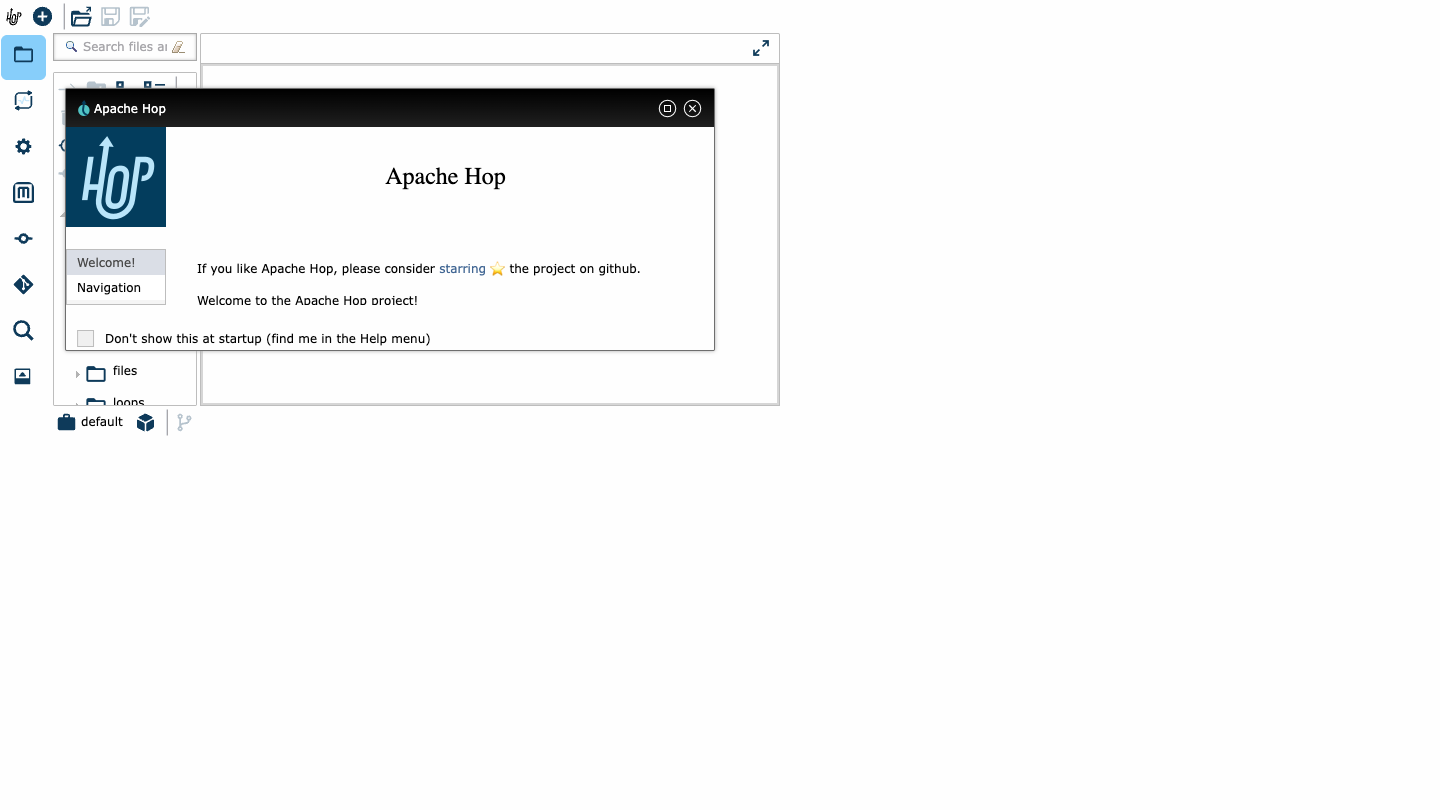
Real screenshots taken while testing this image against its deployment guide.
This is a repackaged open source software product wherein additional charges apply for cloudimg support services.
Overview
Apache Hop (the Hop Orchestration Platform) is an open source data engineering and data orchestration platform for visually designing and running data pipelines and workflows. It provides a browser-based, drag-and-drop editor to build, run and monitor data integration, transformation and orchestration logic, plus a headless execution server for scheduled and remote pipeline runs. This AMI delivers Hop fully installed and configured so a complete data orchestration platform is running within minutes of launch. The current release available is Apache Hop 2.18.1.
Why This AMI Over Alternatives
Unlike a bare Hop installation or a generic community image, this AMI eliminates the manual steps that slow down production readiness:
Application Stack
Apache Hop is installed from the official Apache distribution. The Hop Web visual editor runs as the official Apache Hop web container, reverse-proxied by nginx on port 80 with HTTP Basic authentication. The Hop Server execution server runs under a dedicated unprivileged service account and is reachable only through its own authenticated endpoint. Both runtimes bind the loopback interface and are fronted with authentication; the Hop projects, pipelines, workflows and server configuration live on a dedicated, independently resizable EBS data volume. Runs on OpenJDK 21.
Secure First Boot
On first boot a one-shot service generates a fresh password unique to that instance, applies it to both the web editor and the execution server, and writes the credentials to a root-only file. No shared or default credentials ship in the image. Because the Hop execution server can run pipelines remotely, replacing its stock default credentials on every instance is essential, and this AMI does it automatically.
Getting Started
1. Launch the AMI on your chosen EC2 instance type.
2. SSH into the instance and retrieve your generated credentials from the root-only file.
3. Browse to the instance public address and sign in to the Hop Web editor.
4. Open the bundled sample project, then design and run your first pipeline.
For evaluation, launch on a smaller instance type to explore the editor and test pipeline logic at minimal cost before scaling up for production workloads.
Example Use Case: Batch ETL Into a Data Warehouse
A data team can use Hop to read from operational databases and flat files, apply cleansing, lookups and transformations visually, and load the results into a warehouse or object storage on a schedule. The Hop Server runs the workflow unattended and exposes execution status, so engineers monitor and adjust pipelines without redeploying code.
Additional Use Cases
cloudimg Support
24/7 technical support by email and live chat. Our engineers assist with Hop deployment, upgrades, pipeline and workflow design, execution server configuration and performance tuning. Critical issues receive a one-hour average response time.
Apache Hop, Hop and Apache are trademarks of the Apache Software Foundation. All other product and company names are trademarks or registered trademarks of their respective holders. Use of them does not imply any affiliation with or endorsement by them.

This image runs Apache Airflow as a single node deployment. Airflow is installed into a dedicated Python virtual environ...

Apache Flink is the open source framework and distributed processing engine for stateful computations over unbounded and...

This image runs Apache NiFi, the open source dataflow automation platform, as a single node deployment.

This image runs Apache Spark 4.1.2 (built for Hadoop 3) as a single node standalone cluster.

Apache StreamPipes is a self service toolbox that lets domain experts connect, analyse and explore continuous data strea...

This image runs Apache Superset, the open source data exploration and business intelligence platform, as a complete sing...