Base
Hardened build
minimal ports, security patches applied at build time

OLake, the open source data replication engine that moves your operational databases into an analytics ready lakehouse, with a full sync and change data capture running from a web console on first boot.
OLake is a data replication platform that continuously moves data out of operational databases such as PostgreSQL, MySQL, MongoDB, Oracle and SQL Server and lands it in Apache Iceberg or as Parquet in object storage, where analytics engines can query it. It supports both full refresh loads, which copy a table in its entirety, and change data capture, which reads the database write ahead log so that inserts, updates and deletes stream into the lakehouse continuously without repeatedly rescanning the source.
Everything is driven from a web console: register a source, register a destination, discover the tables and columns available, choose which streams to replicate and in which mode, then run the job and watch its history. Each sync runs as an isolated connector process, so a large table replication cannot destabilise the console, and job runs, schedules and logs are all visible in one place. It suits teams building a lakehouse on open table formats, anyone offloading analytical queries away from a production database, and engineers who want an ingestion pipeline they run inside their own cloud account rather than a managed service.
OLake normally takes a multi container deployment and a set of published default credentials to stand up, so cloudimg ships it assembled, hardened and secure by default. Every image pins its components by digest rather than a floating tag, so what you run is exactly what was tested and scanned. On the first boot of every instance a unique console administrator password, database password, credential encryption key and object storage key pair are generated and written to a root only file, so no two instances share a login and none of the published defaults survive anywhere in the image; the console is reachable only through a single front door and refuses unauthenticated requests. To make the platform useful immediately, the image also carries its own demo source database, seeded on first boot with a synthetic dataset generated on the instance itself, and its own object storage destination, both already registered in the console, so a real end to end replication can be run within minutes of boot and before any of your own systems are connected. Every deployment comes with a paired deploy guide and 24/7 cloudimg support.
Real screenshots taken while testing this image against its deployment guide.
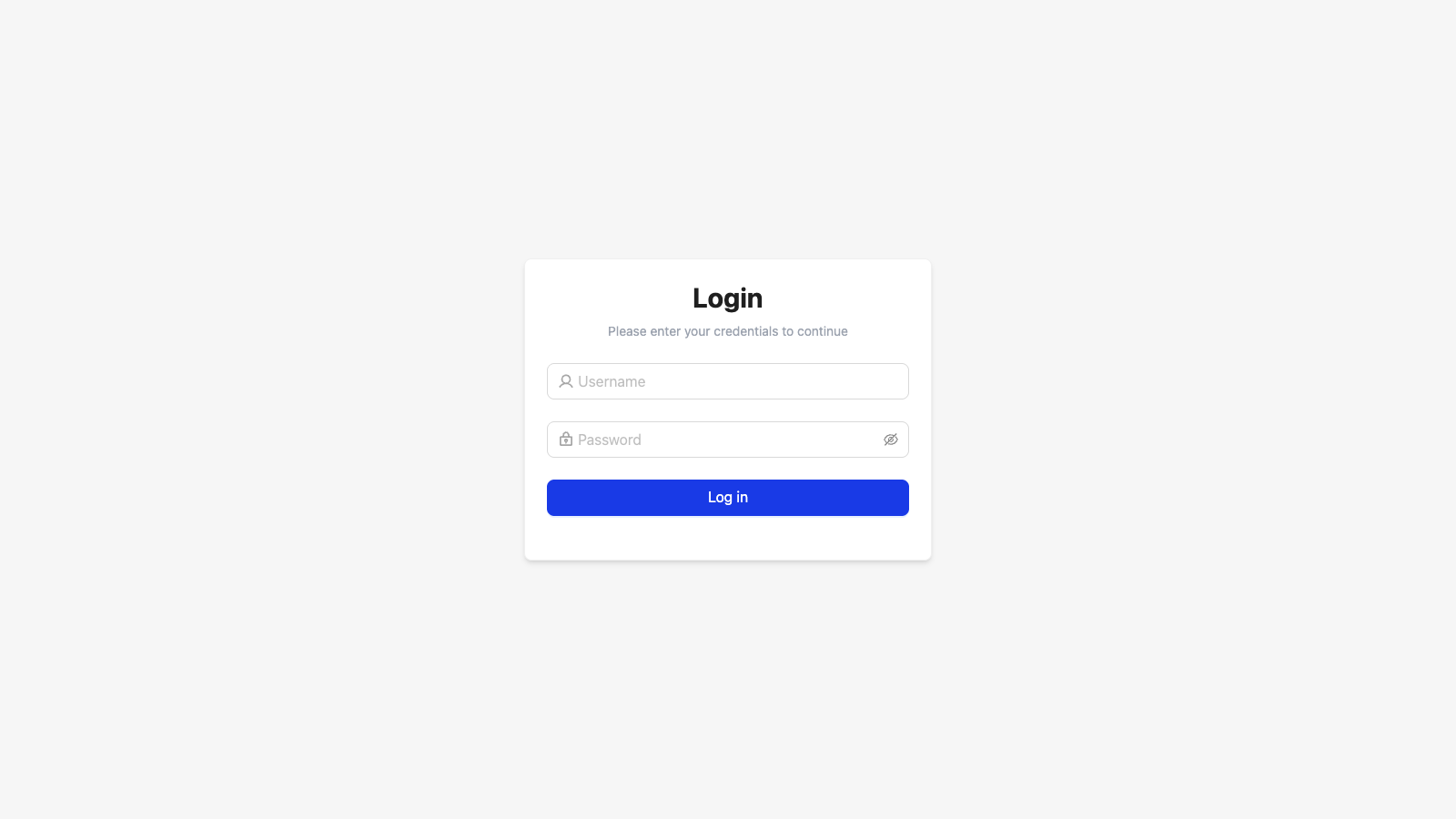
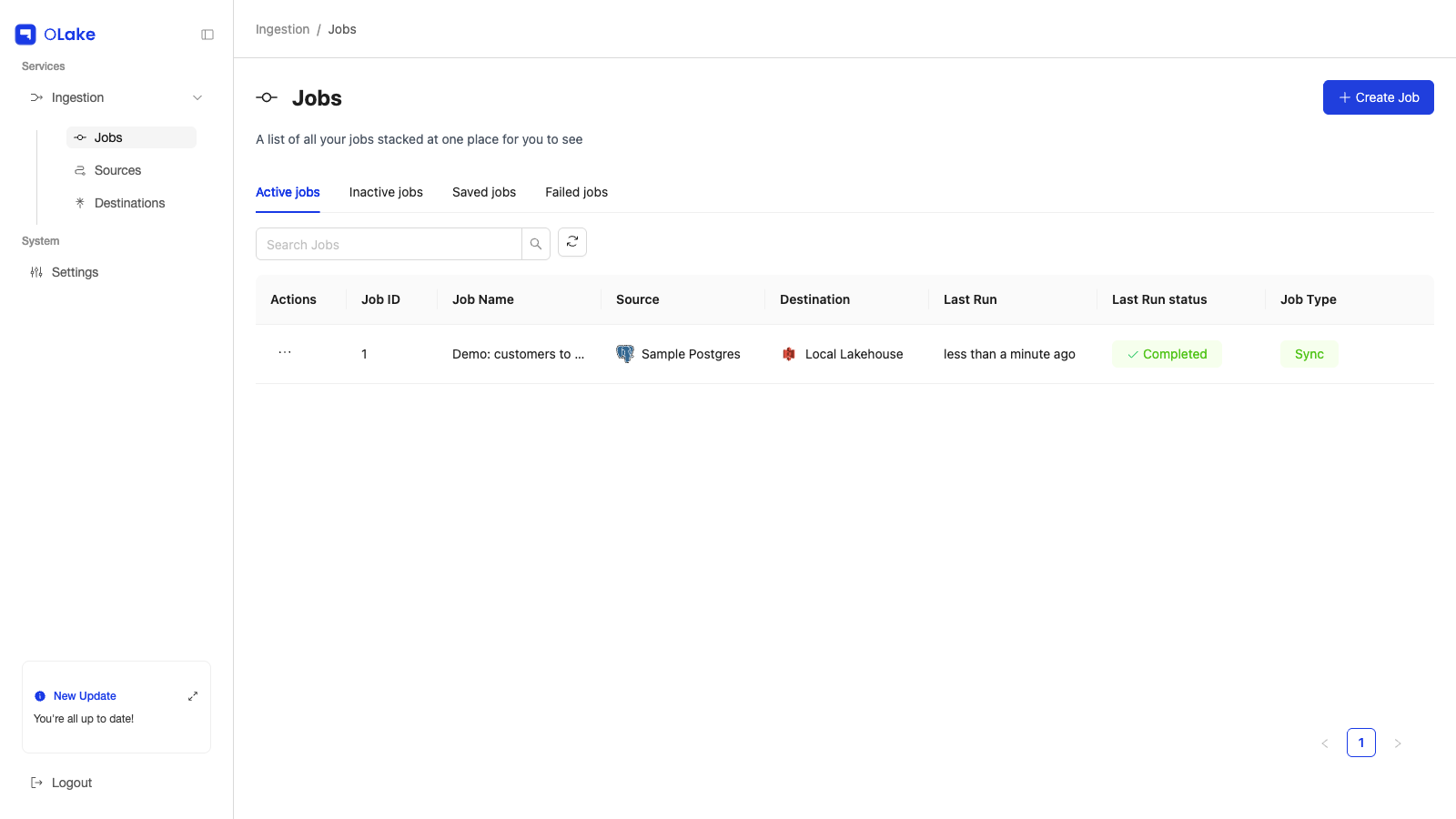
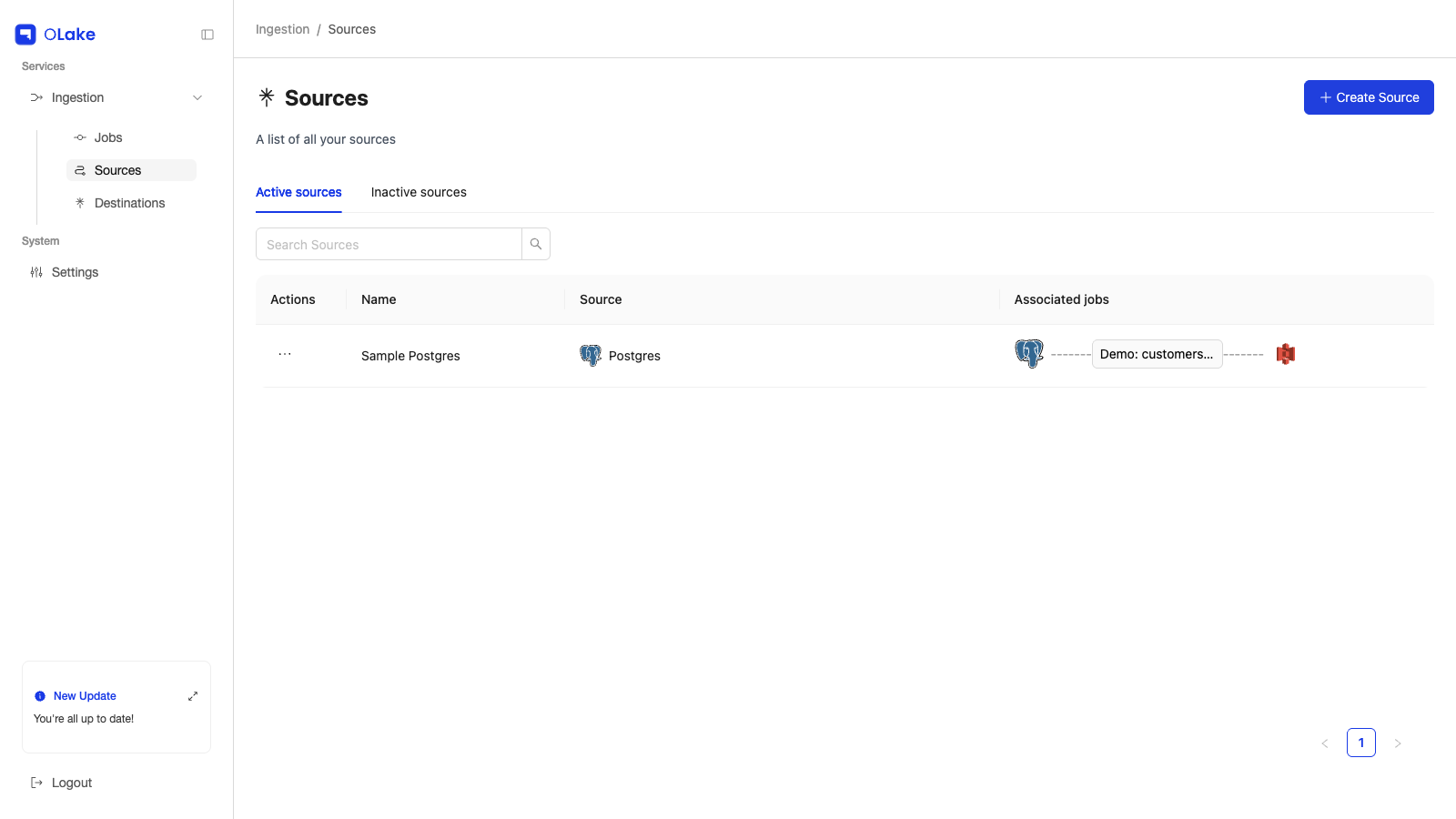
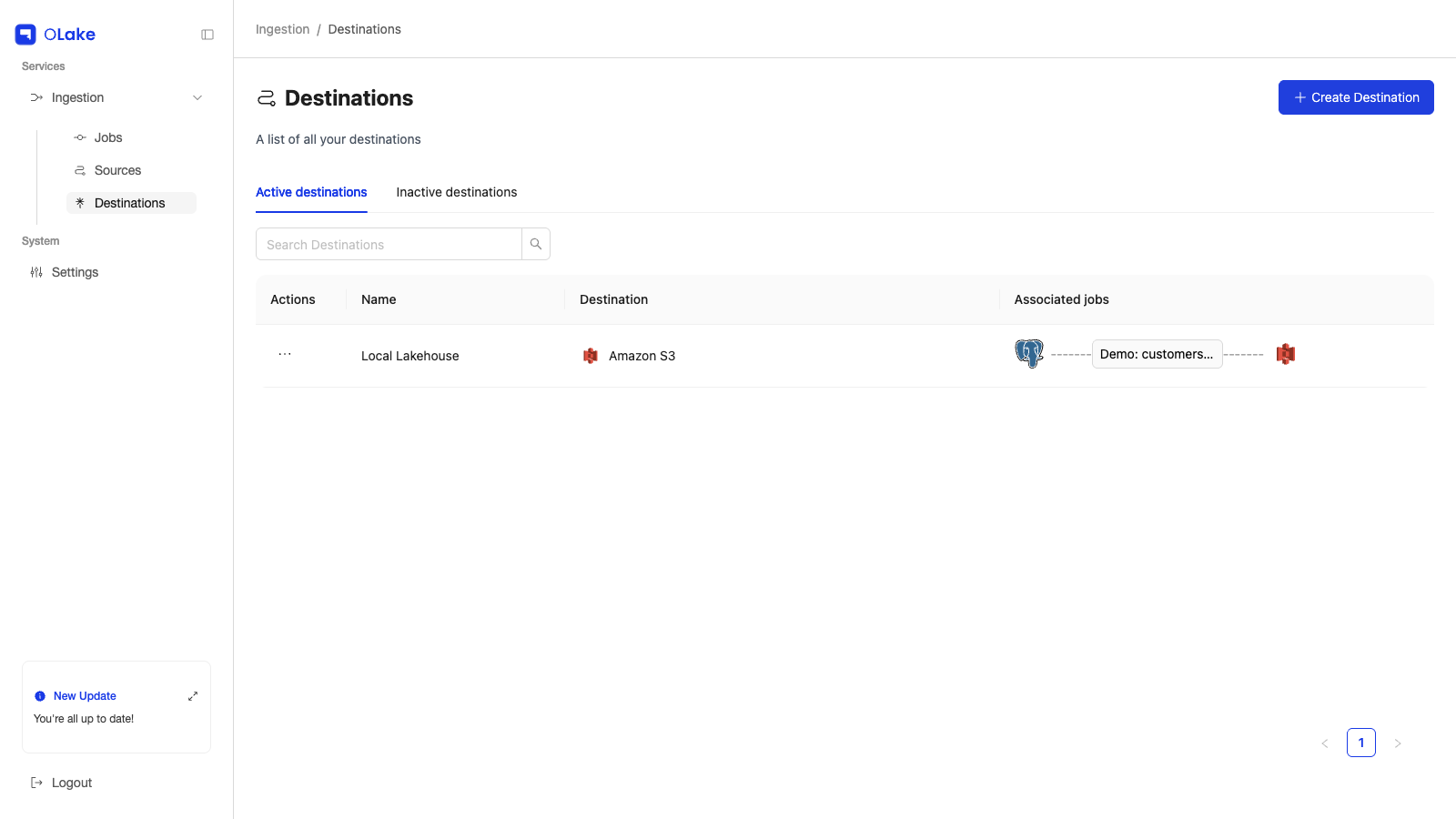
This is a repackaged open source software product wherein additional charges apply for cloudimg support services.
## Database to Lakehouse Replication in Minutes
OLake is an open source ETL and change data capture platform that continuously moves data out of operational databases such as PostgreSQL, MySQL, MongoDB, Oracle, and SQL Server and lands it in Apache Iceberg or as Parquet in object storage, where analytics engines can query it directly. Everything is driven from a web console: register a source, register a destination, discover the tables and columns available, choose which streams to replicate and in which mode, then run the job and watch its history. OLake supports both full refresh loads and change data capture (CDC), which reads the database write-ahead log so inserts, updates, and deletes stream into the lakehouse continuously without rescanning the source.
## Useful the Moment It Boots
To make the platform demonstrable immediately, the image bundles both ends of a pipeline: a demo PostgreSQL source seeded on first boot with a synthetic dataset generated on the instance itself, and an S3-compatible object store destination, both already registered in the console. A real end-to-end replication can be run within minutes of boot and before any of your own systems are connected. This built-in evaluation environment lets you validate the full workflow - source discovery, stream selection, job execution, and history review - without provisioning external infrastructure.
## Application Stack
## Secure by Default
Upstream ships published default credentials and an empty credential encryption key. This image ships none of them. Every instance generates its own console administrator password, database passwords, credential encryption key, and object storage key pair on first boot, written to a root-only file, so no two instances share a login and none of the published defaults survive anywhere in the image. The console refuses unauthenticated requests, and each component is pinned by image digest so what you run is exactly what was built, tested, and scanned.
## AWS Integration
Container image layers and volumes live on a dedicated, independently resizable EBS data volume rather than the OS disk, giving you flexibility to scale storage as replication workloads grow. OLake writes Parquet and Apache Iceberg output to S3-compatible storage, making it straightforward to point the destination at Amazon S3 for production lakehouse architectures queried by Amazon Athena, Amazon Redshift Spectrum, or other analytics engines.
## Get Started
Launch the AMI, retrieve your unique per-instance credentials from the root-only credentials file, log into the web console, and run your first replication against the bundled demo source in minutes. When you are ready for production, register your own database sources and point the destination at your S3 bucket. Every deployment is backed by 24/7 cloudimg support and a paired step-by-step deployment guide to help you through initial setup and ongoing operations.

This image runs Apache Airflow as a single node deployment. Airflow is installed into a dedicated Python virtual environ...

Apache Flink is the open source framework and distributed processing engine for stateful computations over unbounded and...

This image runs Apache Hop, the Hop Orchestration Platform, an open source data engineering and data orchestration platf...

This image runs Apache NiFi, the open source dataflow automation platform, as a single node deployment.

This image runs Apache Spark 4.1.2 (built for Hadoop 3) as a single node standalone cluster.

Apache StreamPipes is a self service toolbox that lets domain experts connect, analyse and explore continuous data strea...