Base
Hardened build
minimal ports, security patches applied at build time

Orthanc, a lightweight standalone DICOM server that receives, stores and shares medical images over the protocols imaging equipment already speaks.
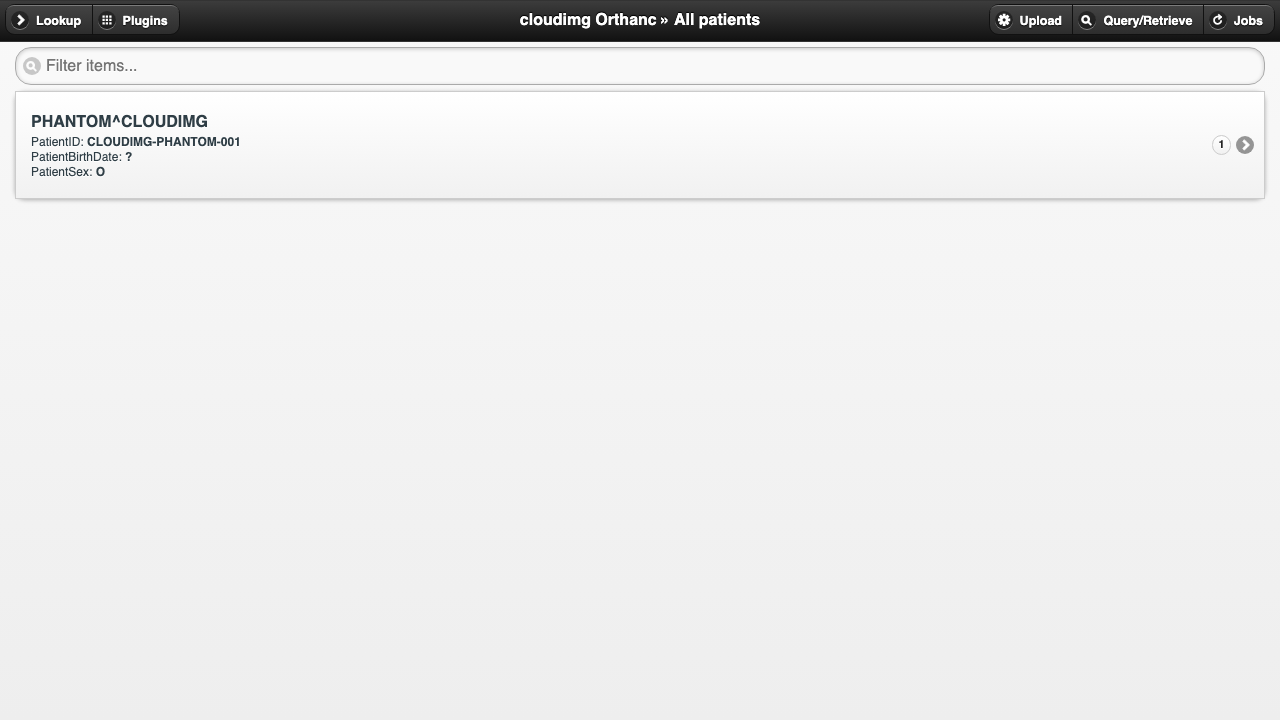
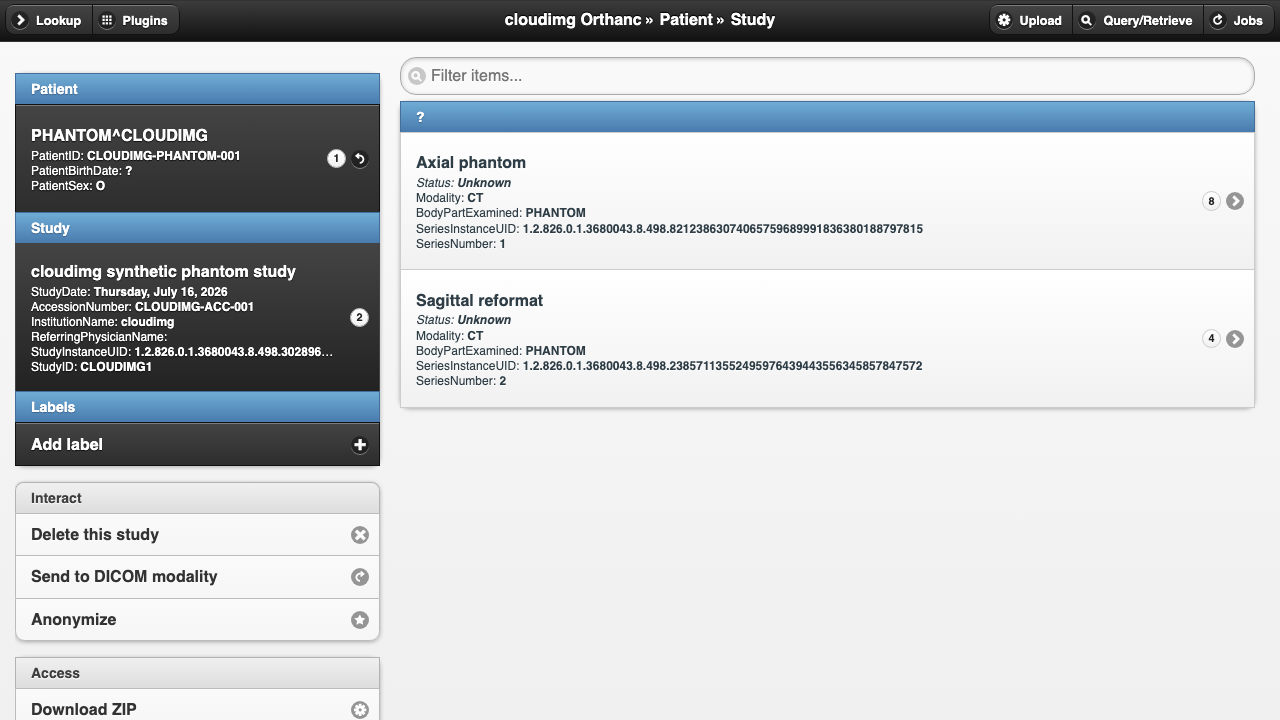
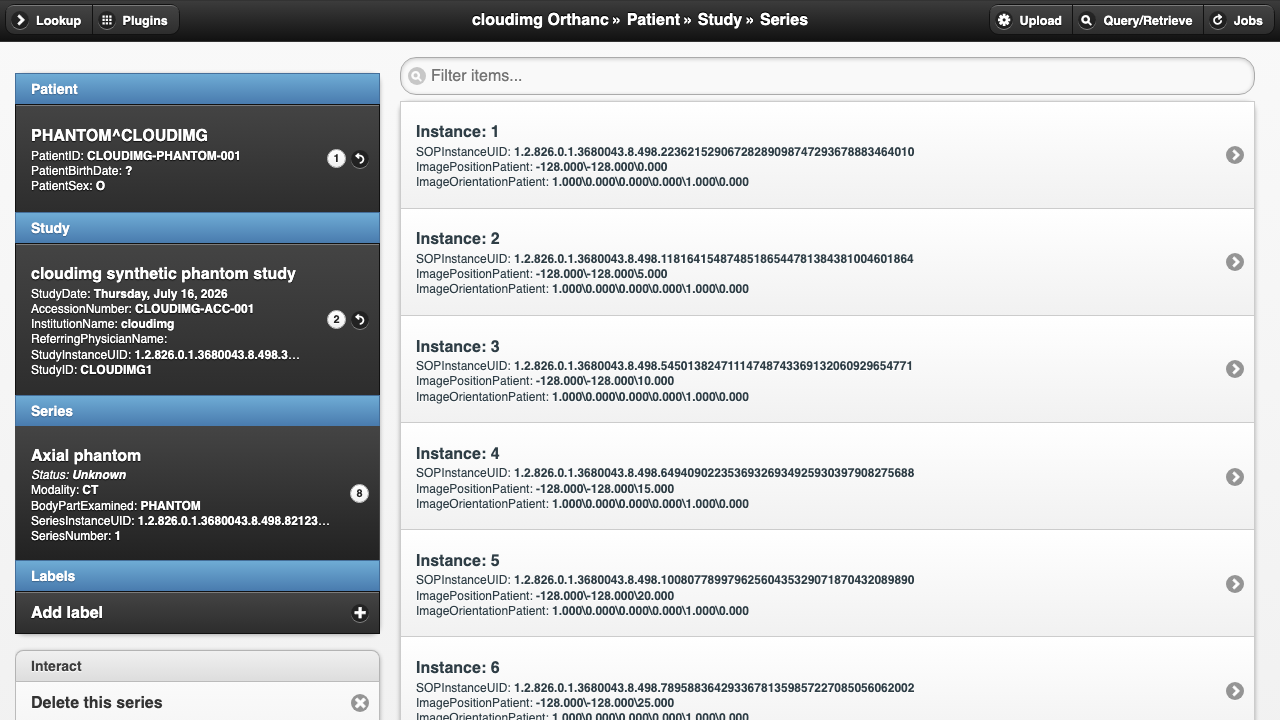
Orthanc is a standalone DICOM server for medical imaging. Scanners, ultrasound machines and other imaging equipment speak DICOM, and Orthanc gives them somewhere to send studies: it listens on the DICOM protocol, indexes every patient, study, series and instance it receives, and makes them browsable in a built in web interface called Orthanc Explorer.
Alongside that it exposes a full REST API over the same catalogue, so images and metadata can be pulled into research pipelines, teaching archives, reporting tools or your own applications without touching a heavyweight vendor stack. It runs as one self contained service backed by an embedded database, which makes it a practical archive for departments, clinics, research groups and teleradiology projects that need a real DICOM node without operating a full enterprise picture archiving system.
cloudimg builds Orthanc from the official upstream release against the operating system's own libraries, rather than shipping the prebuilt binary that freezes its own private copies of OpenSSL and the DICOM toolkit inside it. That is the difference between an image whose cryptography and image parsing keep receiving security updates on your machine and one where they can never be patched at all. The release is current, so it carries the nine security fixes published in April 2026, and a full dependency vulnerability scan is gated at build time and recorded on the image.
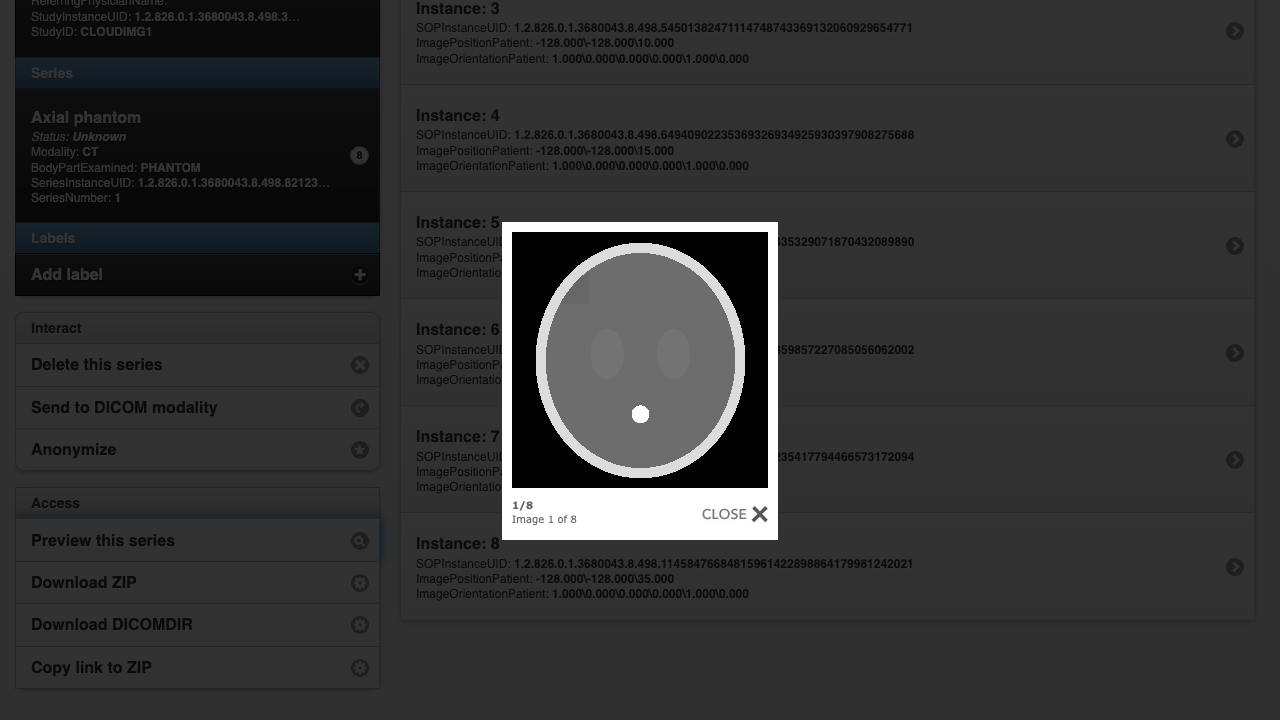
Because this is a store of medical images, it is secure by default in a way that matters: no credential of any kind ships in the image. Orthanc's packaged builds are widely known for a default administrator login, and this image has none. A unique administrator password is generated on the first boot of every instance, and until that happens the server refuses every request rather than serving the archive openly. Orthanc runs behind a reverse proxy on the loopback interface with authentication explicitly enforced, there is an unauthenticated health endpoint for load balancer probes, and a synthetic phantom study ships so you can prove the DICOM protocol works end to end in one command. The base is fully patched, the complete corresponding source ships on the image to satisfy the licence, and every image is paired with a step by step deploy guide and 24/7 support.
Real screenshots taken while testing this image against its deployment guide.

Actual Budget is a free, open source, local first personal finance application built around the proven envelope budgetin...

Admidio is the open source membership management platform for clubs, associations and non profit organisations.

AdventureLog is a self-hosted travel companion. It lets you log the countries and regions you have visited, plan future ...
Aim is an open-source ML experiment tracker: your training code logs metrics, hyperparameters and other artifacts as it ...

The cloudimg image ships the free and open source, GPL-3.0 licensed AirTrail application, run the officially supported w...
Akkoma is a lightweight, highly customisable open-source server for the fediverse: a self-hosted, federated microbloggin...