Base
Hardened build
minimal ports, security patches applied at build time

Seal Report, an open source database reporting and dashboard tool for building, scheduling and publishing SQL and NoSQL reports and interactive dashboards through a web report server.
Seal Report is a free, open source framework for producing database reports and dashboards. It connects to your SQL and NoSQL data sources, lets you design reports and dynamic dashboards from a metadata model with LINQ and Razor templating, and publishes them through a web report server with a browser interface. Reports can pivot, chart, drill down and render as HTML, PDF, Excel or CSV, and a task scheduler can run them on a schedule and distribute the results by email or to a folder. A repository of shared connections and elements lets report authors reuse data definitions across many reports, so a whole reporting layer over your existing databases lives behind one private web application inside your own cloud account.
cloudimg ships Seal Report built from the official open source release and secure by default. A stock demo repository lets a blank user name sign in anonymously, ships a hardcoded backdoor account and a set of demo logins; this image removes all of them, replaces the security script with one that only authenticates a real login, and defines a single administrator in a full rights group. The web report server is bound to loopback behind an nginx reverse proxy, and that public entry point is only brought up after a unique administrator password is generated on each instance's first boot and hashed into the configuration exactly the way Seal Report stores passwords, with the plain value written to a root only file. The .NET runtime is the Ubuntu native package, security patched by the operating system, and every deployment carries a paired deploy guide and 24/7 support.
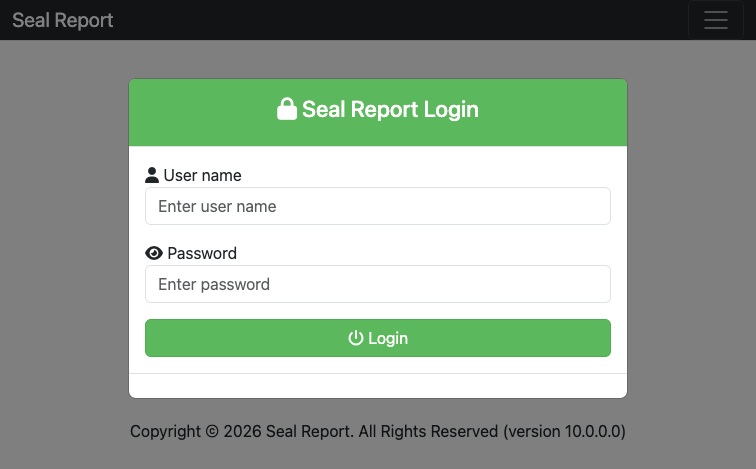
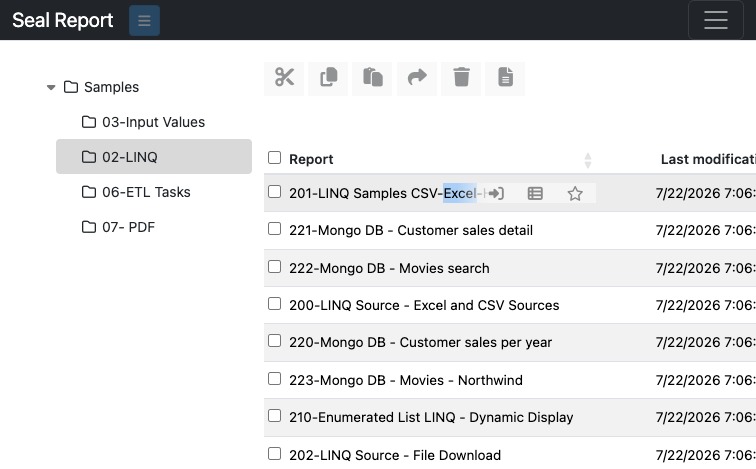
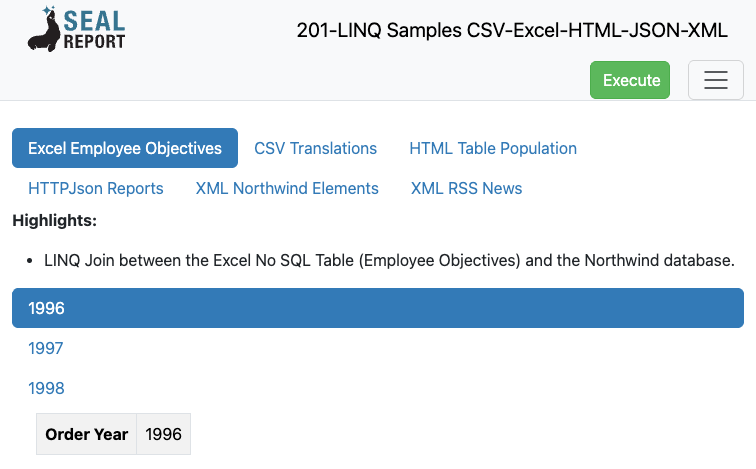
Real screenshots taken while testing this image against its deployment guide.
This is a repackaged open source software product wherein additional charges apply for cloudimg support services.
Seal Report is a popular open source framework for producing database reports and dashboards. It connects to your SQL and NoSQL data sources, lets you design reports and dynamic dashboards from a metadata model with LINQ and Razor templating, and publishes them through a web report server with a browser interface. Reports can pivot, chart, drill down and render as HTML, PDF, Excel or CSV, and a task scheduler can run them on a schedule and distribute the results by email or to a folder. A repository of shared connections and elements lets report authors reuse data definitions across many reports.
This image delivers the Seal Report Web Report Server fully built and running so a working report server is operational within minutes of launch, with no package installation, no runtime version wrangling and no service configuration required. The web report server is built from the official open source release and runs as a dedicated unprivileged system user under systemd with automatic restarts, clean logging and a hardened service sandbox on the native .NET runtime, which is security patched by the operating system.
Unlike a bare deployment, this image is secure by default. A stock Seal Report demo repository ships a security script that lets a blank user name sign in anonymously, a hardcoded backdoor account, and a set of demo logins. This image removes all of them: it replaces the security script with one that does nothing but authenticate a real login, deletes every demo account, and defines a single administrator in a full rights group. Seal Report is kept bound to the local loopback interface behind a reverse proxy, and that public entry point is only brought up after a unique administrator password has been generated on each instance's first boot and hashed into the configuration exactly the way Seal Report stores passwords. The plain values are placed in a root only file for the administrator to read. Nothing usable is baked into the image, so no two deployments ever share a credential and there is never a window in which an unauthenticated instance is exposed to the network.
An unauthenticated health endpoint is provided for load balancer probes, so monitoring needs no credential even though the interface does. The base is fully patched with unattended security upgrades enabled, and every deployment is paired with a step by step deploy guide and backed by 24/7 cloudimg support.
This is a repackaged open source software product with additional charges for cloudimg support services. Seal Report is a trademark of its respective owner. All product and company names are trademarks or registered trademarks of their respective holders. Use of them does not imply any affiliation with or endorsement by them.

This image runs Apache Airflow as a single node deployment. Airflow is installed into a dedicated Python virtual environ...

Apache Flink is the open source framework and distributed processing engine for stateful computations over unbounded and...

This image runs Apache Hop, the Hop Orchestration Platform, an open source data engineering and data orchestration platf...

This image runs Apache NiFi, the open source dataflow automation platform, as a single node deployment.

This image runs Apache Spark 4.1.2 (built for Hadoop 3) as a single node standalone cluster.

Apache StreamPipes is a self service toolbox that lets domain experts connect, analyse and explore continuous data strea...