Base
Hardened build
minimal ports, security patches applied at build time

Redash, the open source platform for data visualisation, SQL queries and shareable dashboards, ready on first boot.
Redash is an open source data visualisation, SQL query and dashboard platform. Connect to a data source, write a query in the shared SQL editor, turn the result into a chart, and combine charts onto interactive dashboards you can schedule and share. It connects to PostgreSQL, MySQL, SQL Server, Amazon Redshift, Amazon Athena, BigQuery, Elasticsearch and dozens more. This image runs the official production stack with the web server, scheduler, workers, PostgreSQL and Redis behind an nginx proxy.
The cloudimg image ships the official production stack pinned to a fixed release and completes setup automatically, so Redash is ready to use on first boot. Every secret and a unique administrator account are generated on first boot with the login stored in a root only file, so no default credentials ship. The metadata database and Redis run on a dedicated, independently resizable data volume. Backed by 24/7 cloudimg support for data source configuration, upgrades and TLS termination.
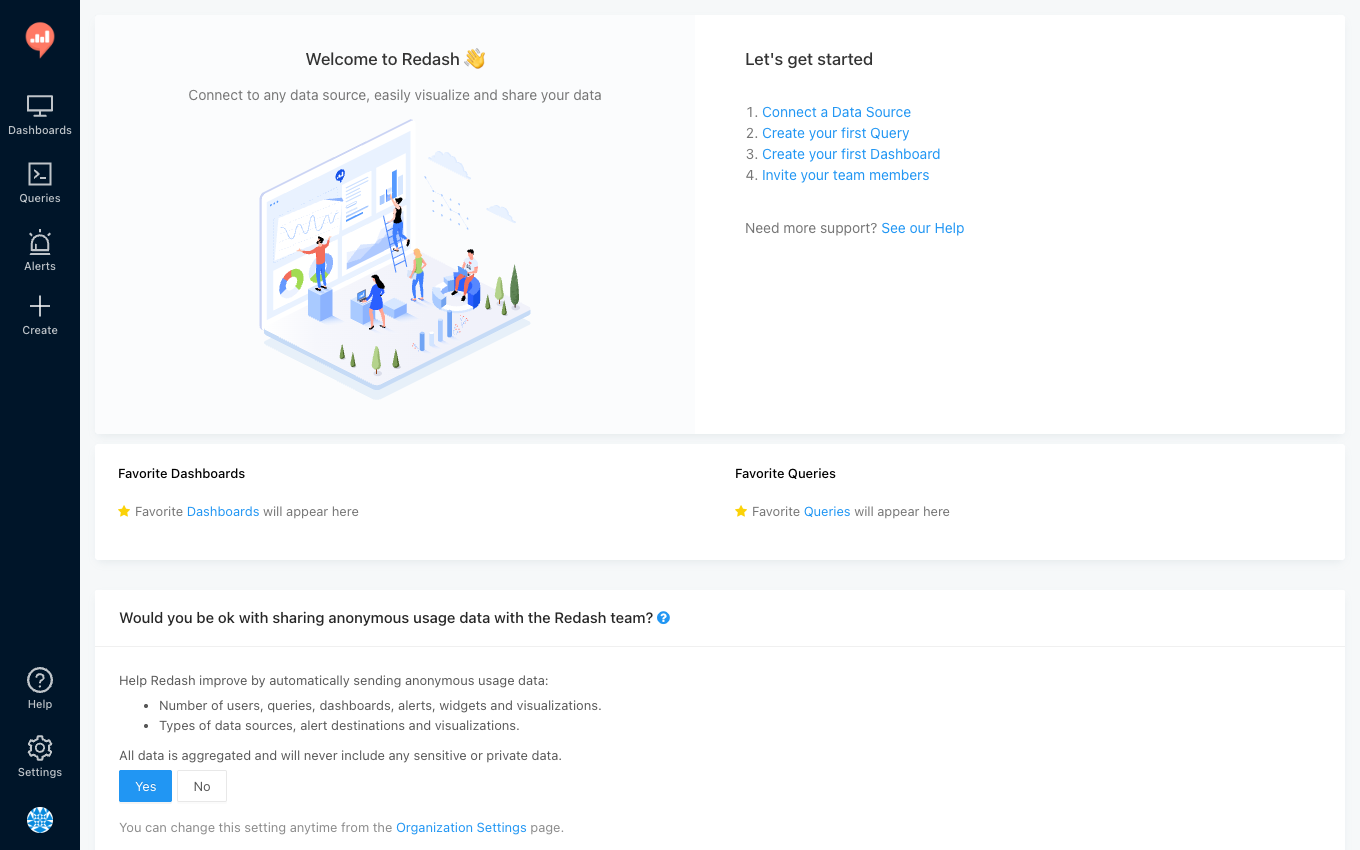
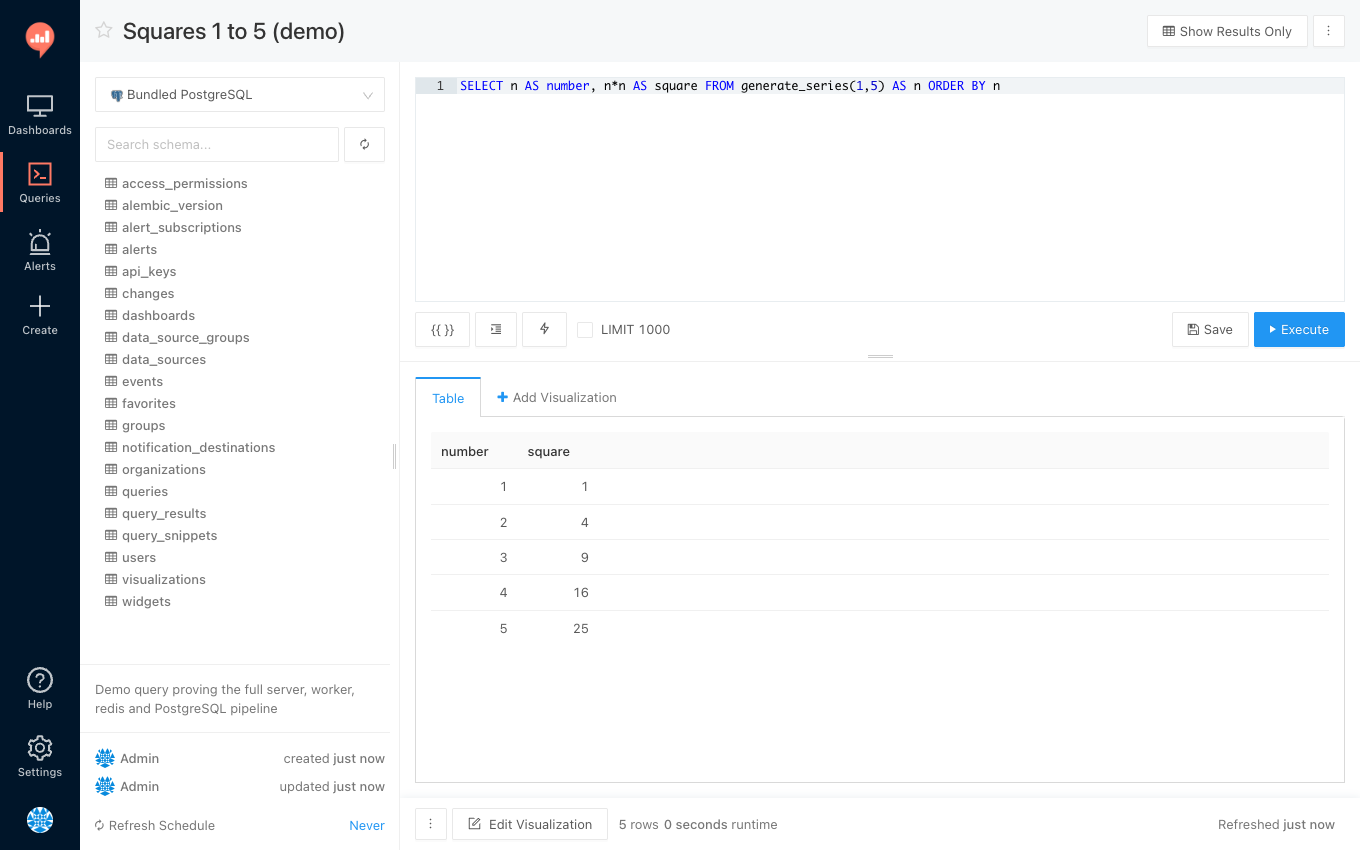
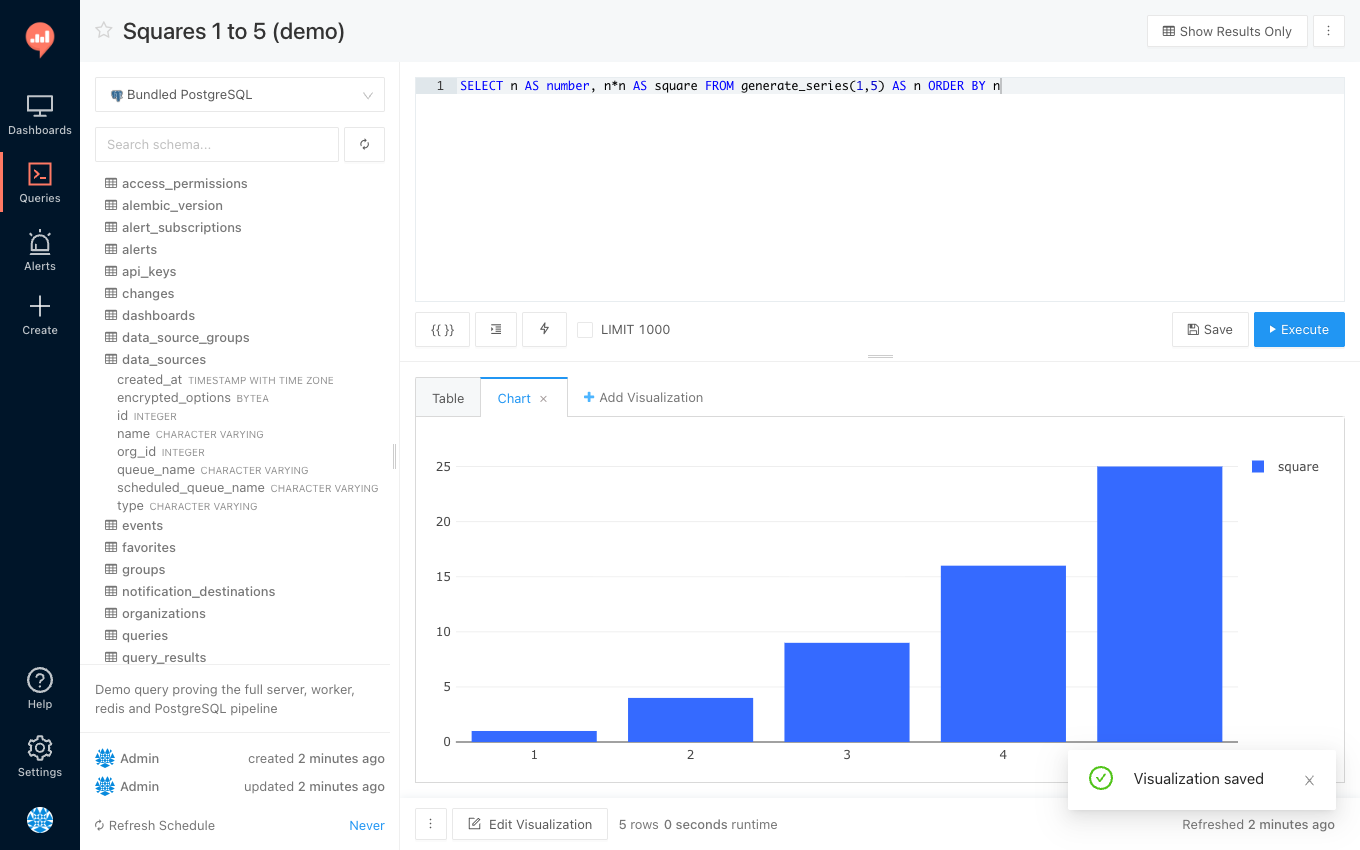
Real screenshots taken while testing this image against its deployment guide.
This is a repackaged open source software product wherein additional charges apply for cloudimg support services.
Redash is an open source data visualisation, SQL query and dashboard platform that lets anyone on a team connect to a data source, write a query, and turn the result into a chart or an interactive dashboard. It supports dozens of data sources including PostgreSQL, MySQL, SQL Server, Amazon Redshift, Amazon Athena, BigQuery, Elasticsearch and many more, with a shared query editor, scheduled query refreshes, alerts and shareable dashboards. This image delivers it fully installed and running, so a working Redash instance is serving on port 80 within minutes of launch, with no setup wizard to complete before you can create your first data source and run your first query.
The appliance is the official Redash production Docker Compose stack, pinned to a fixed release so the image never silently upgrades under you. It runs the Redash web server, the scheduler and two celery workers alongside a PostgreSQL metadata database and a Redis broker, all wired together on a private Docker network. A system nginx reverse proxy is the only thing exposed on the public interface: it terminates port 80 and forwards to the Redash server on loopback, while PostgreSQL and Redis are never published to the network. An unauthenticated health endpoint is served for load balancer and readiness probes.
Unlike a bare deployment, this image is secure by default. There is no default password baked into the image: on this instance's first boot a fresh Redash secret key, cookie secret and database password are generated, the metadata database is initialised empty, and a unique administrator account is created and written only to a root-owned credentials file. The stateful PostgreSQL and Redis data live on a dedicated, independently resizable data volume mounted separately from the operating system disk, so your queries, dashboards and cached results survive and scale independently of the root volume. The operating system ships fully patched with unattended security updates enabled.
Use Redash to build self service dashboards for your team, to give analysts a shared SQL workspace across your databases and warehouses, and to schedule reports and alerts on live data. The current release available is version 10.1.0.
This is a repackaged open source software product with additional charges for cloudimg support services. Redash is distributed under the BSD 2-Clause License. The bundled Redis component is provided under the Server Side Public License v1; its verbatim licence text ships inside the image. cloudimg is not affiliated with or endorsed by the Redash project or its maintainers. All product and company names are trademarks or registered trademarks of their respective holders. Use of them does not imply any affiliation with or endorsement by them.

This image runs Apache Airflow as a single node deployment. Airflow is installed into a dedicated Python virtual environ...

Apache Flink is the open source framework and distributed processing engine for stateful computations over unbounded and...

This image runs Apache Hop, the Hop Orchestration Platform, an open source data engineering and data orchestration platf...

This image runs Apache NiFi, the open source dataflow automation platform, as a single node deployment.

This image runs Apache Spark 4.1.2 (built for Hadoop 3) as a single node standalone cluster.

Apache StreamPipes is a self service toolbox that lets domain experts connect, analyse and explore continuous data strea...